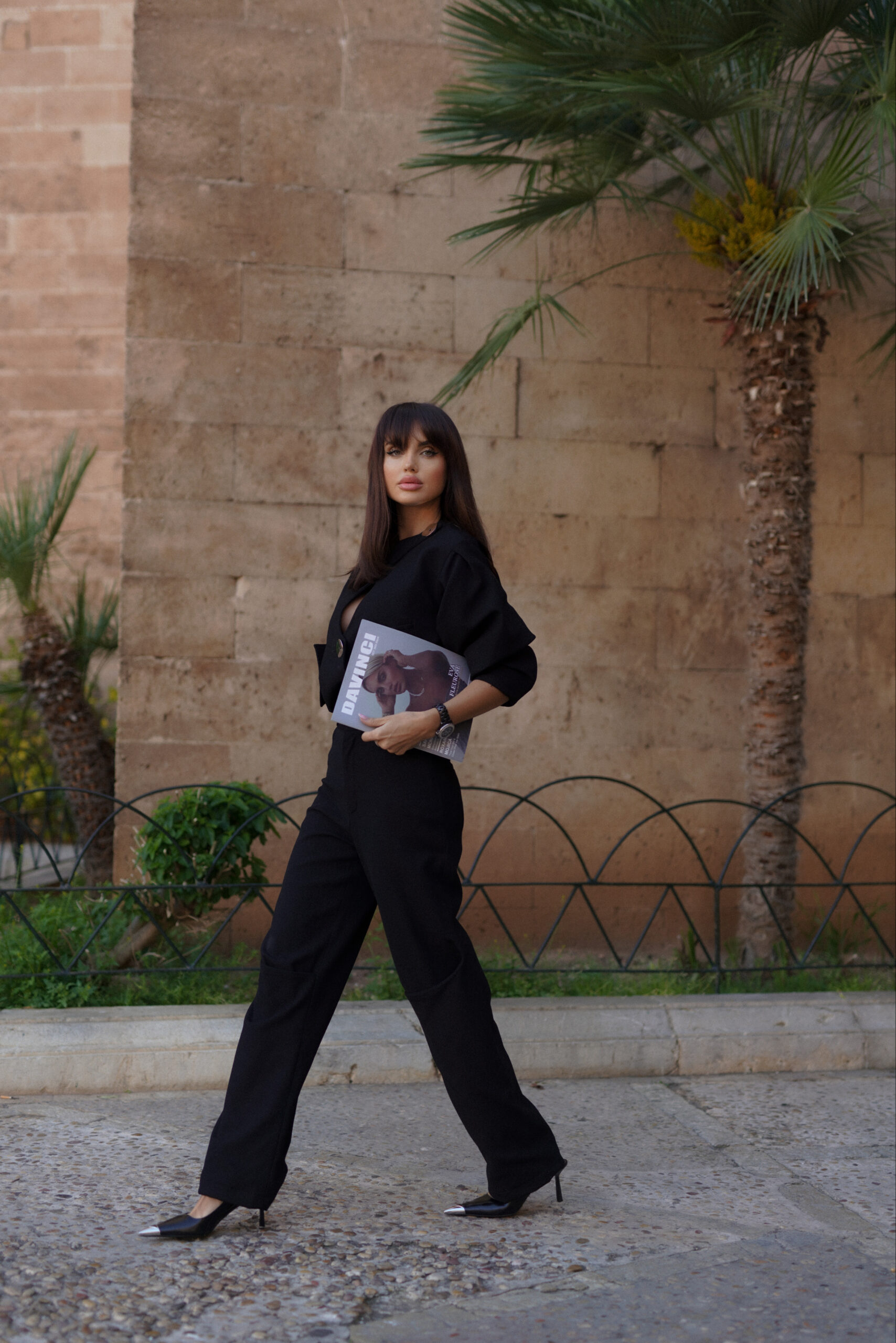


Inside Dio Horia, an Athens gallerist makes the case for artists the international market has yet to recognize.
By Peter Koloff
Marina Vranopoulou laughed when I asked her to imagine discovering an artist whose work might become culturally important fifty years from now, even if there was little commercial interest today.
“This is my reality,” she replied.
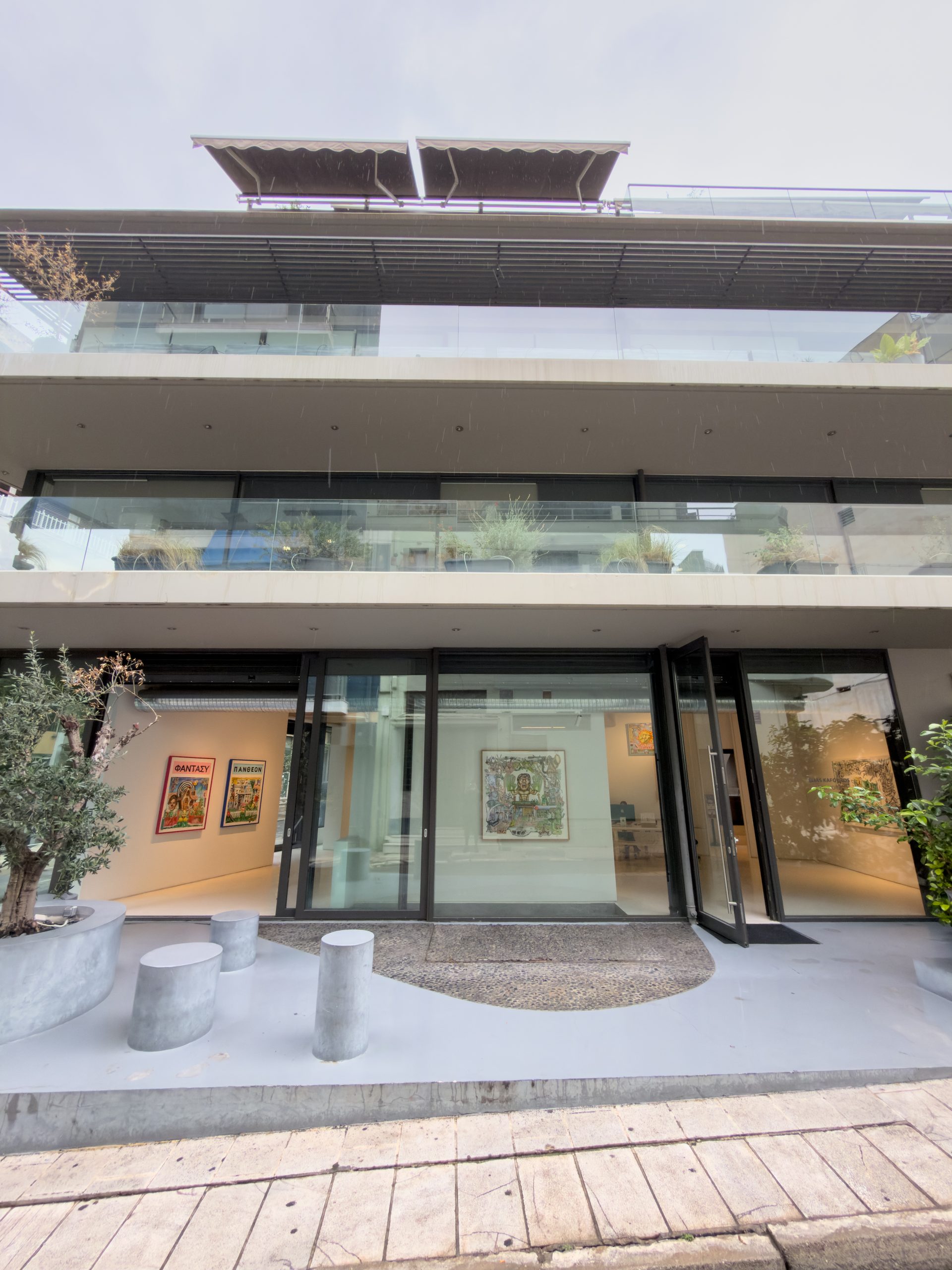
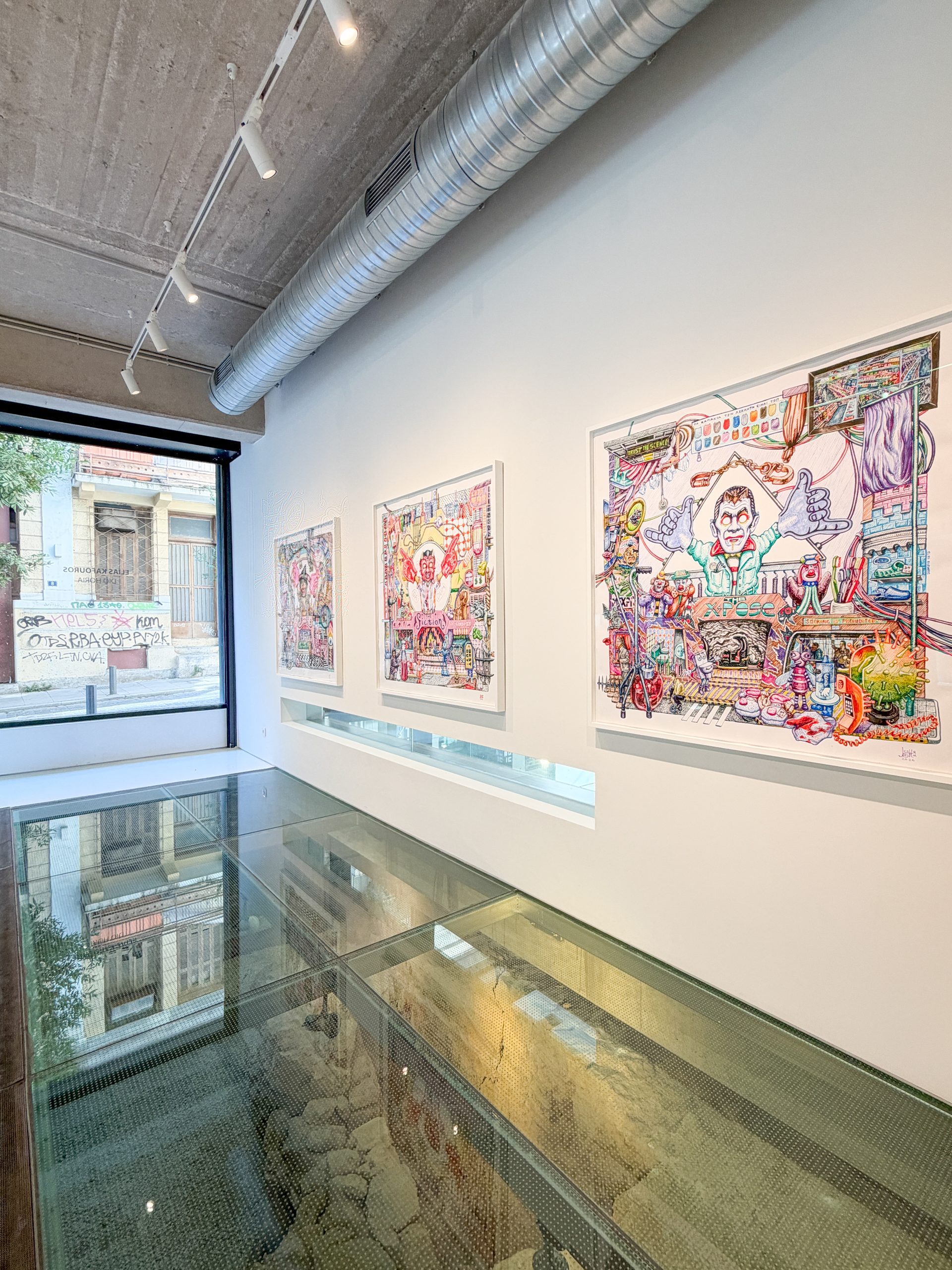
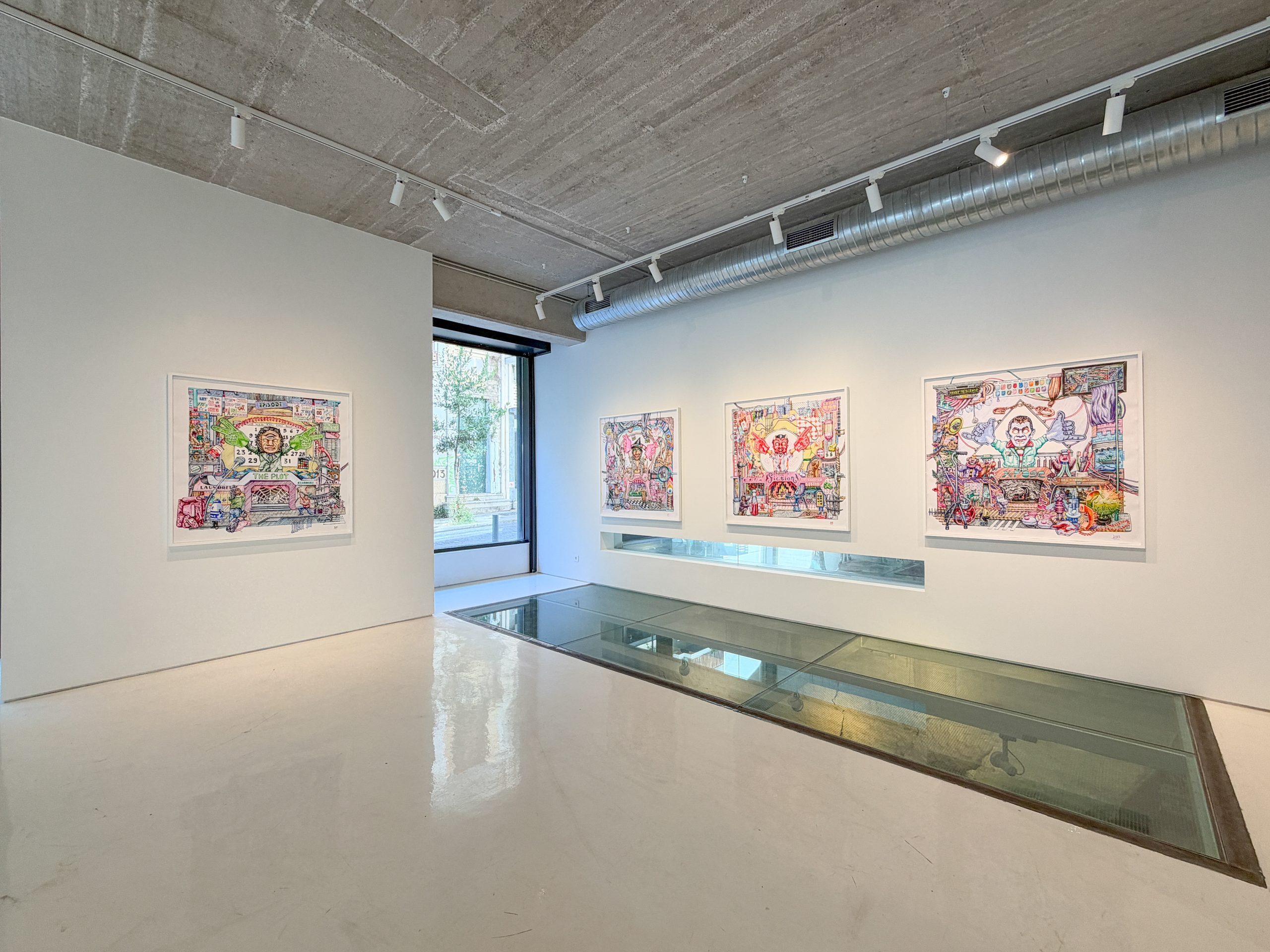
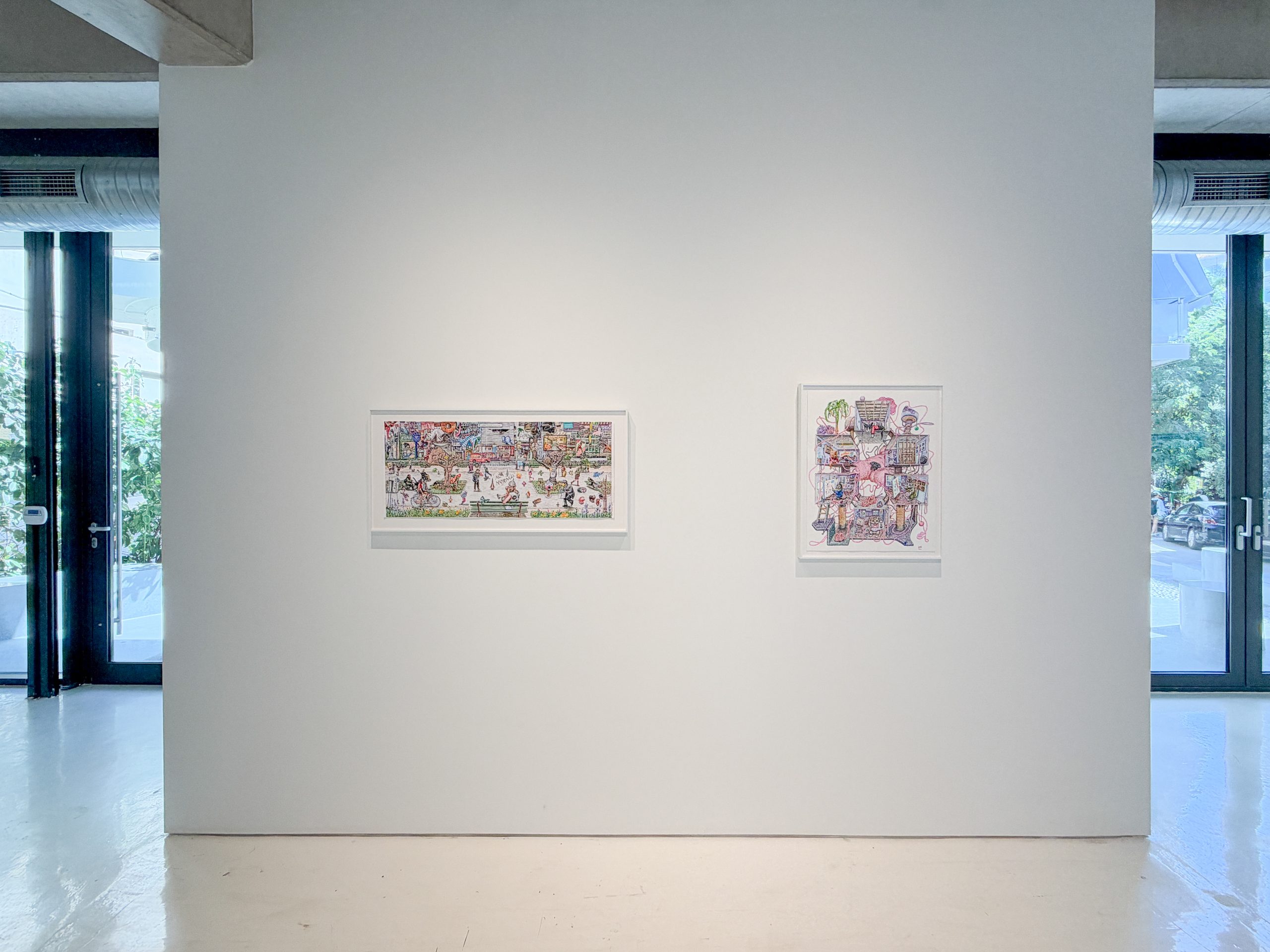
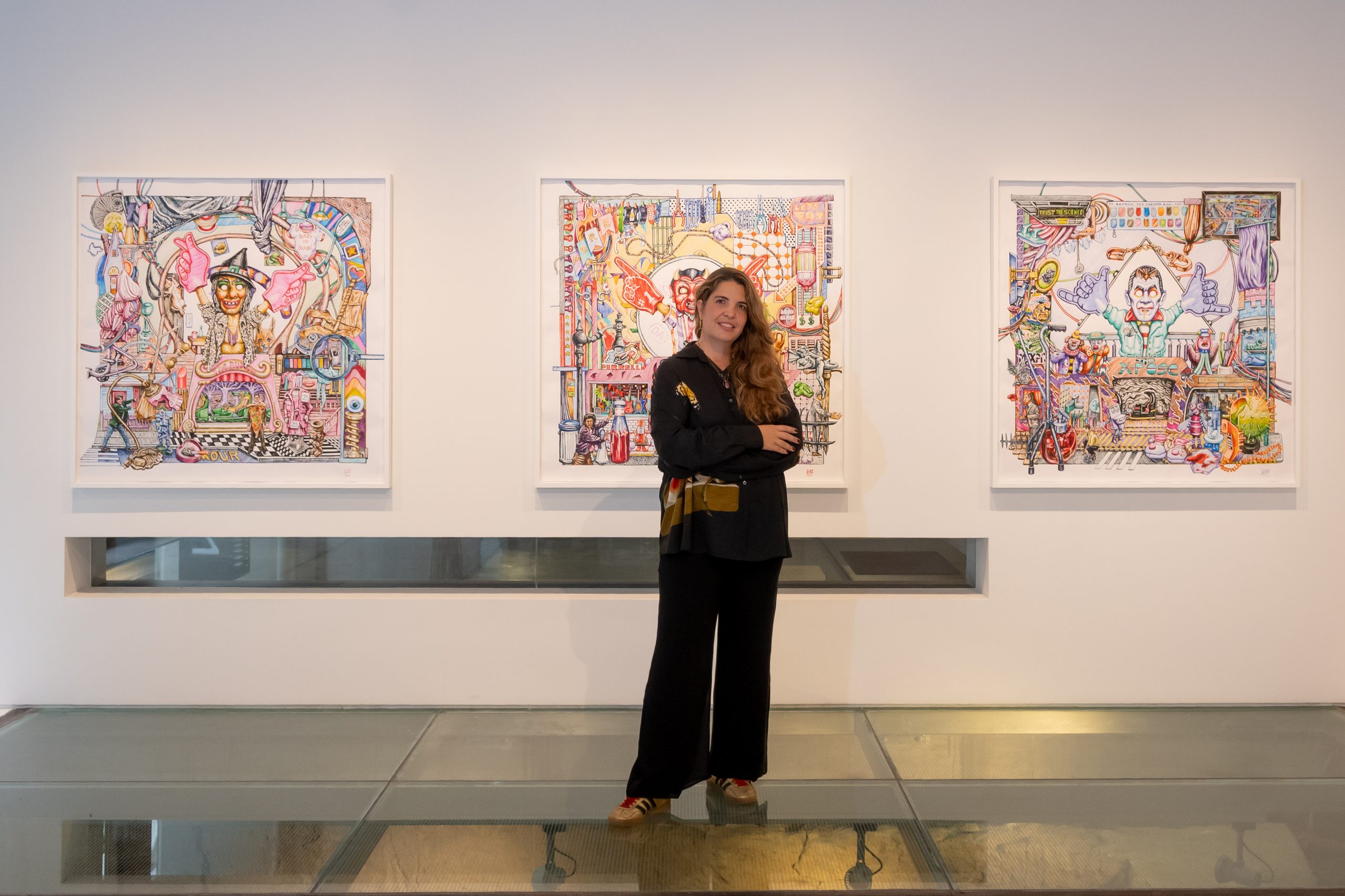
We were inside Dio Horia, her contemporary art gallery in Athens, surrounded by the densely populated paintings of Greek artist Elias Kafouros in his exhibition Deeply Dramatic Art. In one, a cartoonlike figure raises both hands in a shaka gesture, surrounded by a chaotic collection of signs, objects and smaller figures. The work’s visual intensity contrasts with the gallery’s white walls, exposed concrete ceiling and glass floor.
Through Dio Horia, Vranopoulou brings Greek and Balkan artists into international markets. Many have small collector bases and little representation abroad, and their work is often new to the collectors who see it. At major art fairs, particularly in the United States, they show alongside internationally established names with far greater recognition.
“We are the underdogs,” she said.
Some collectors are curious enough to seek out artists they don’t know. Others gravitate toward familiar names, leaving little room for work from countries whose artistic and cultural landscapes remain less visible internationally.
“I think that’s the role of the galleries, to actually offer visibility to those who don’t have it yet.”
“What’s the point of constantly exhibiting a well-known artist?” she asked.
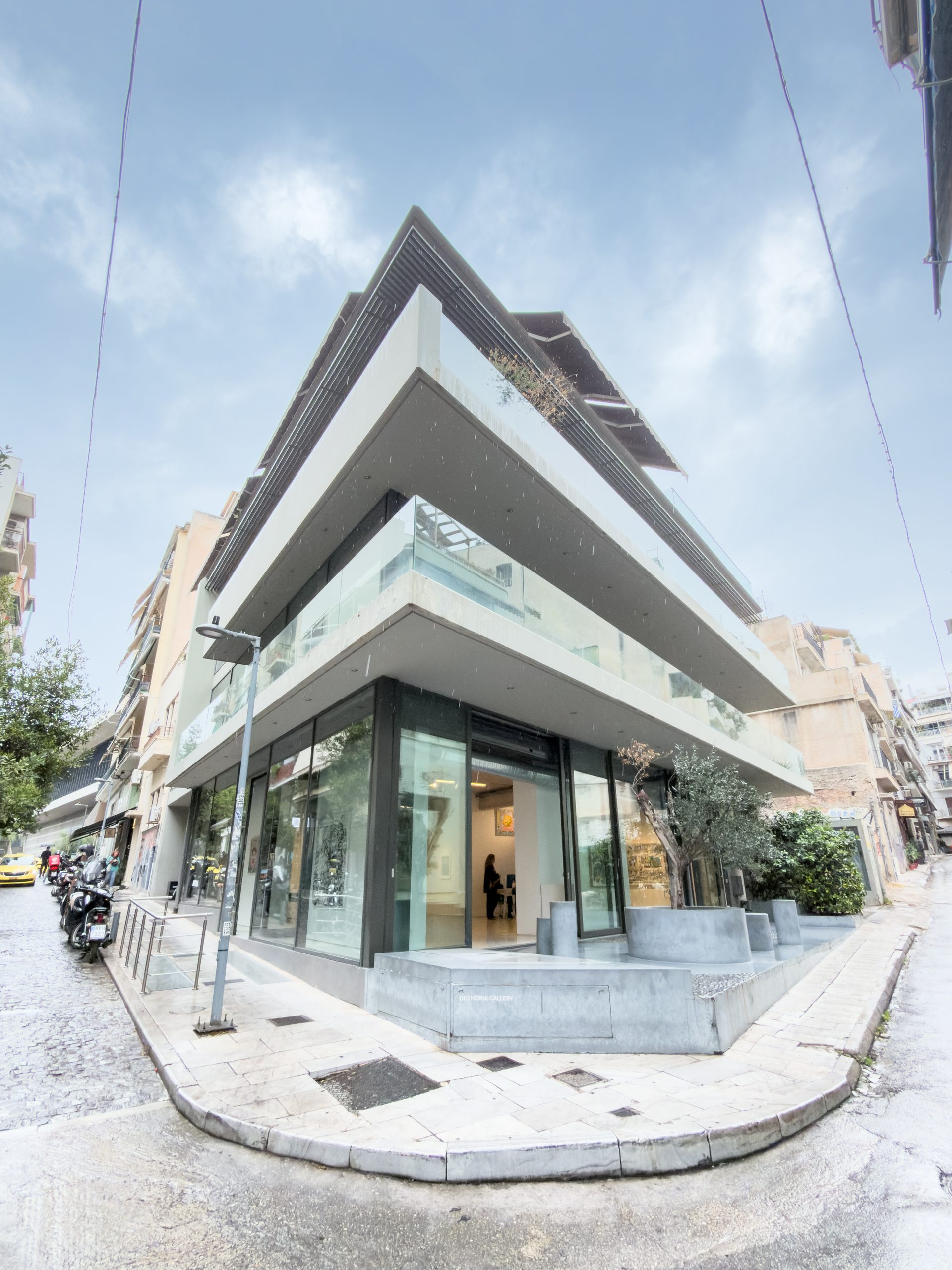
The name Dio Horia means two villages, and the traffic runs both ways. The gallery also brings established American and international artists to Greece for exhibitions and residencies, giving students, collectors and local audiences access to work they might otherwise have to travel abroad to see.
Vranopoulou founded Dio Horia in Mykonos in 2015 while working with the DESTE Foundation. She was curious about what artists of her generation were making, particularly experimental painting and digital art.
“I’m always interested in what’s new and innovative,” she said, “but I’m more interested in what you achieve with this.”
“I’m older, so I don’t care so much about the technique,” she continued. “But what are you saying?”
When I asked how she considered the cultural significance of an exhibition decades into the future, she returned to the present.
“I’m asking why it’s interesting now.”
She described Dio Horia’s program as centered on the human condition, freedom, identity and politics.
“It’s very anthropocentric and about now,” she said.
Some of her relationships with artists have lasted nearly a decade. She recognizes that an artist experimenting with a new direction, or experiencing personal or commercial difficulties, may need room to work without immediate judgment. She visits studios, follows works in progress and participates in discussions about changes in their practices.
“I would hate it if they just brought me works here to sell,” she said.
After photographing her, I offered to show her the images. She declined. There was no need, she told me.
When I asked about Athens, Vranopoulou described Greek artists, curators and gallerists as knowledgeable and engaged with developments internationally. Greece’s position between Western and Eastern cultural influences also informs the work produced here.
In 2017, documenta 14, one of the world’s most influential contemporary art exhibitions, expanded beyond its traditional home in Germany to Athens, bringing international artists, curators and attention to the Greek capital.
“Something is brewing,” she said.
During my visit to Athens, Vranopoulou introduced me by email to Lakis and Aris Ionas, the brothers behind The Callas, whose work spans music, performance and visual art. I later met them at an event at Velvet Room, their longtime studio and independent cultural space in central Athens.
Yet Vranopoulou sees significant obstacles. She said there is essentially no private or state funding to support Greek artists exhibiting at international fairs, and that institutional support remains limited.
“We have the talent to do it, but we are not there yet.”
Among the exhibitions Vranopoulou hopes to organize is a major international presentation of contemporary Greek and Balkan art. She also wants to bring together artists who have participated in Dio Horia’s residency program, showing what they created then and how their practices have developed since.
She would like to return to Mykonos with a noncommercial exhibition space, responding to the island’s increasing commodification.
One project occupied her thoughts more personally: an exhibition for teenagers.
She spoke about young people navigating screens, war, politics and questions of identity. She imagines an exhibition involving interactive or digital art that would address their concerns in a language they recognize.
“Not educational and boring,” she said.
She doesn’t yet know whom she would work with to realize the exhibition, but she wants to do it.
As for her own legacy, Vranopoulou hopes the artists Dio Horia supported early in their careers will eventually achieve institutional recognition. She was less interested in talking about the gallery’s own future than about what happens inside it. She spoke about people staying home and watching screens, and about exhibitions bringing them into contact with people they might otherwise never meet. She wants visitors to leave with memories of the art, the conversations and the people they met, and for those experiences to have mattered.
“And to have had some fun,” she said. “First of all.”
Photography: Peter Koloff
Related Reading: What Stopped Me at Affordable Art Fair New York