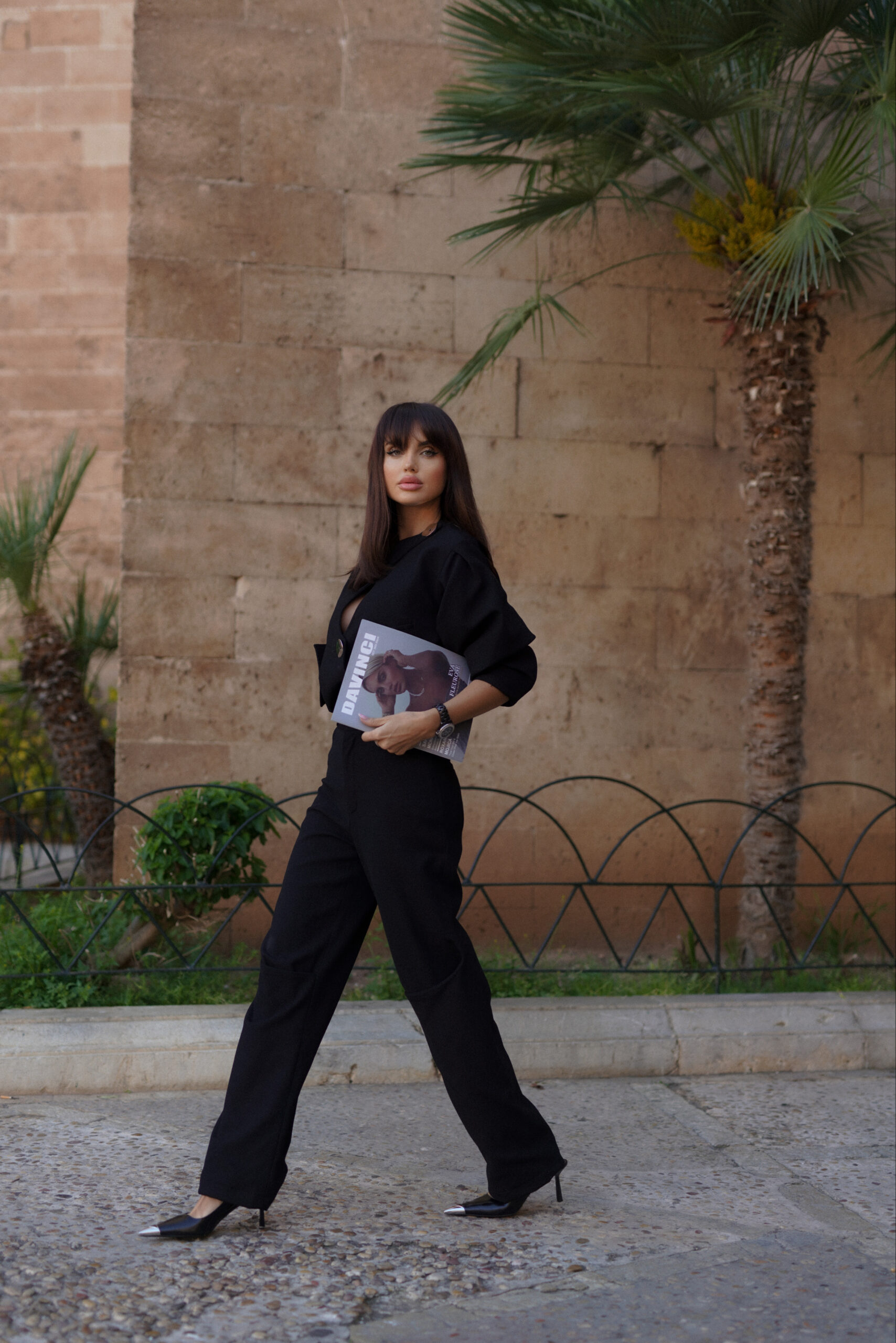


A first collection is more than an introduction. It is a declaration of direction: a designer showing not only what he can make, but what he hopes to become. For Filipino designer Brandon Chan, a 10-piece runway debut at Asian New York Fashion Week gave that declaration a clear organizing principle. Personal growth.
The collection traces an emotional passage from uncertainty toward possibility. Its silhouettes and colors make the theme visible, while Chan’s own path from corporate work to fashion gives it a human point of origin. In New York, those two narratives met: a designer beginning to define his visual language, and a Filipino creative claiming space in a market where international attention remains an important form of recognition.
The scale was concise. The intent was not.
A palette that moves from doubt to possibility
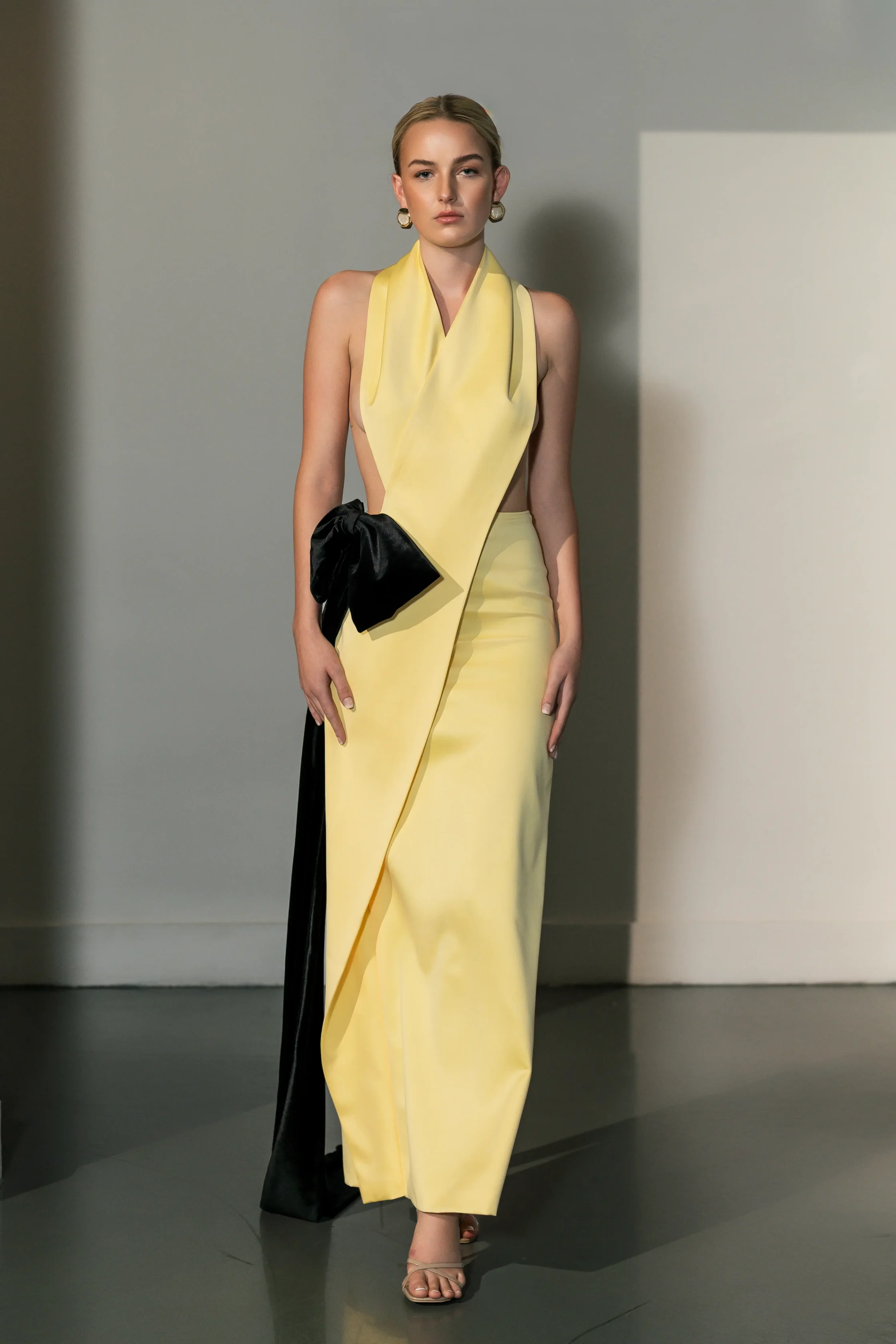
Chan built the collection around a color progression. Black dresses open the story, representing uncertainty and the sense of being stuck. Brown continues the darker register. Then blue and yellow arrive, bringing brightness and contrast. In the collection’s sequence, color becomes more than decoration: it is a way to make change legible.
That narrative carries a quiet reassurance. A period of stagnation, Chan has said, need not be permanent. “You will soon find the palette suited for you, and you’ll thrive,” he reflected on the possibility of change. The metaphor is especially apt for a collection in which the palette shifts as the looks unfold.
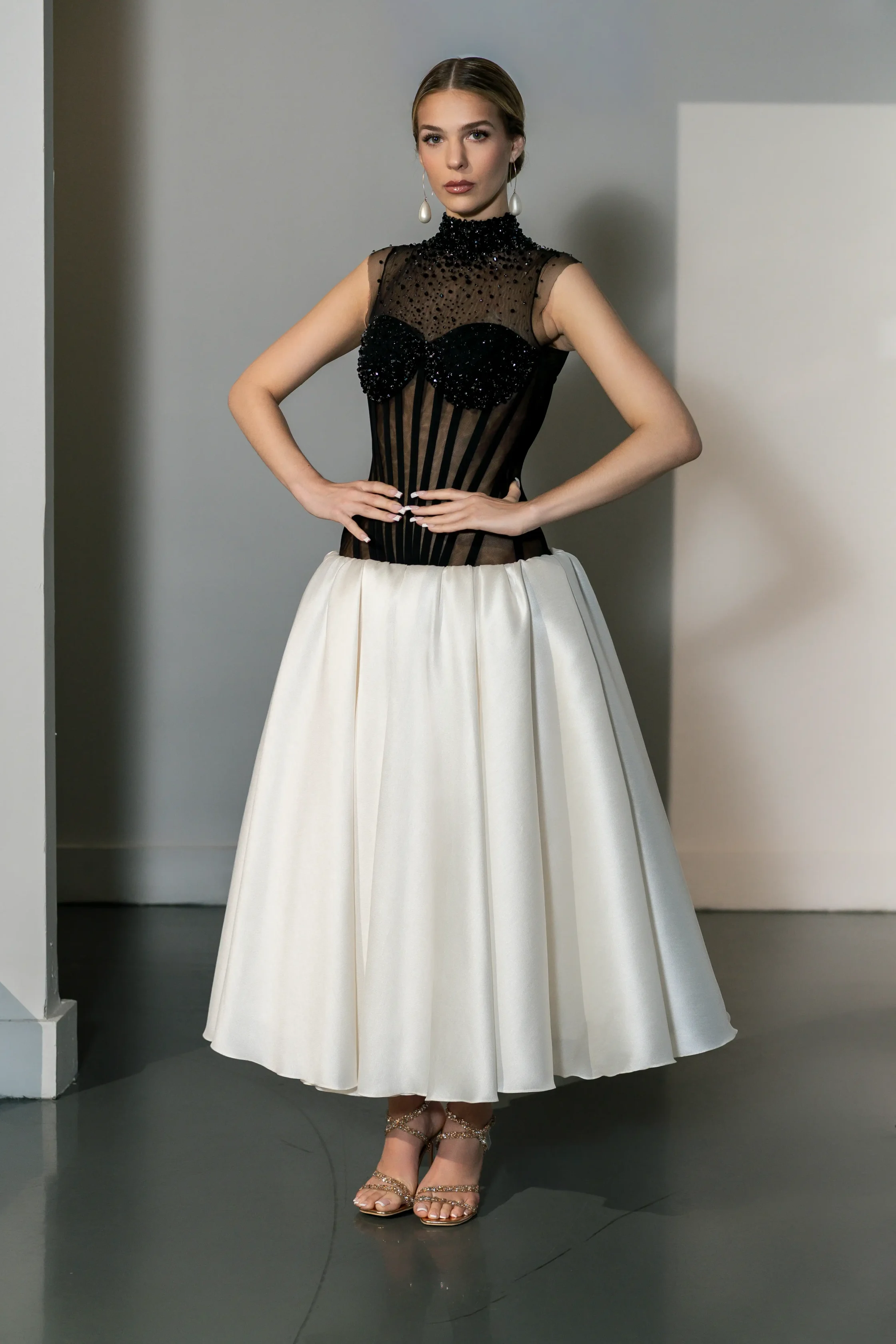
The clothes give that movement a tactile dimension. Chan’s design vocabulary includes close-to-body shapes, corseted bodices and sweeping skirts, with draping and volume altering the line. Asymmetry adds an unsettled edge; sheer finishes and beading introduce flashes of light. The result balances control with movement: a fitted torso may give way to a skirt that opens into a larger, more expressive shape.
There is an interesting tension here. Corsetry has long been associated with structure and restraint, but in Chan’s collection it sits within a story about transformation and self-possession. The clothes frame the body without reducing the wearer to a silhouette. Their confidence comes from construction as much as from exposure or embellishment.
The most technically demanding pieces included a fringe dress and a fully beaded gown. Chan has credited the work of making them with his team as an exercise in persistence, saying the process showed him “what grit and determination can do.” It is a useful detail in a debut shaped by an idea of growth: the narrative is not only printed in the palette but carried through the labor of bringing difficult garments to the runway.
Collection imagery courtesy of Brandon Chan; photographed by Jayson Silva, Jennelle Ledesma and Dhruv Pandiri.
The leap behind the looks
Chan’s route into fashion did not begin with a runway. He spent years in the corporate world before choosing to pursue design full-time, turning an interest in art and creativity into a professional practice. The available details of his biography are limited, but that transition is central to the story he has told about his work: a decision to move toward the life that felt more aligned with his creative ambitions.
His debut also drew on the women who shaped his view of strength. Chan has described growing up around powerful, supportive women, whose influence informed his desire to make clothes that help women feel confident and beautiful. In his words, the collection’s inspiration had “to be something that exudes power and confidence.” He framed the work as a way of returning the support he had received: empowering women through his craft.
That perspective gives the collection an emotional anchor beyond the familiar language of “dressing for confidence.” The idea is not simply that clothes can make a wearer look powerful. It is that the person wearing them should feel able to inhabit her own identity. Chan’s work, which he describes as contemporary, clean and precise, seeks to hold his design point of view alongside the needs and preferences of clients.
For an emerging label, that balance is a practical as well as an artistic question. A designer must develop recognizable codes without making the clothes feel remote from the people who might wear them. Chan’s first runway collection begins that negotiation through a concise vocabulary: sculpted bodices, close silhouettes, flowing volume and a palette that changes with the story.
A debut with a wider horizon
Fashion’s international conversation is not a single, uniform “Asian wave.” Designers arrive with distinct histories, practices and ambitions. Yet when Asian and Asian-diaspora creatives appear on American platforms, each debut can widen the frame through which audiences encounter contemporary design.
Chan’s collection offers one specific perspective: Filipino identity expressed through personal experience, womenswear and a developing design language, rather than reduced to a checklist of expected cultural references. His story also makes visible the distance between aspiration and access. “Growing up in the province, I never thought that doors like this would open for me,” he said. “It makes me more hopeful for Filipino creatives.”
The significance of that statement is not that one runway appearance resolves the barriers faced by emerging designers. It does not. Rather, the debut makes an opportunity tangible, and, in doing so, gives other creatives a point of reference. A runway can function as a stage for clothes, but also as evidence that a once-distant possibility can be reached.
This is a conversation Davinci Magazine continues to follow through its coverage of designers bringing Filipino perspectives to American audiences, including Oliver Tolentino’s New York Fashion Week presentation and 831MINHLE’s runway tribute to legacy. These designers are not interchangeable, and their work should not be collapsed into a single aesthetic category. Their presence instead points to a broader editorial responsibility: to introduce individual creative voices with the context and specificity they deserve.
Chan’s next chapter, by his account, is about making his identity as a designer clearer: strengthening his aesthetic, vision and brand. That work follows the runway, rather than ending with it. A debut can announce a direction; sustained practice gives it definition.
The ten looks offered an initial map. Black and brown marked uncertainty, while blue and yellow suggested change; precise corsetry, drape and ornament gave the story physical form. Beneath the clothes ran a more universal thread: growth rarely arrives fully formed. It is made through choices, effort and the willingness to begin again.
For Chan, the New York appearance was a personal milestone and a message of possibility for Filipino creatives. For American audiences, it was an invitation to meet a designer at the moment he begins to articulate who he is. That exchange (specific in its origins, expansive in its reach) is part of the evolving roadmap of global fashion.