

By Peter Koloff
I had been inside 260 Madison before, although not like this.
Years ago, I had been in the building for work connected to Champion, the sportswear company. Back then it was an office. People worked there. Rooms had functions. Everything was organized around routine.
This time, the elevator opened onto the vacant 14th floor and for a second I had the strange feeling that I had arrived years too late.
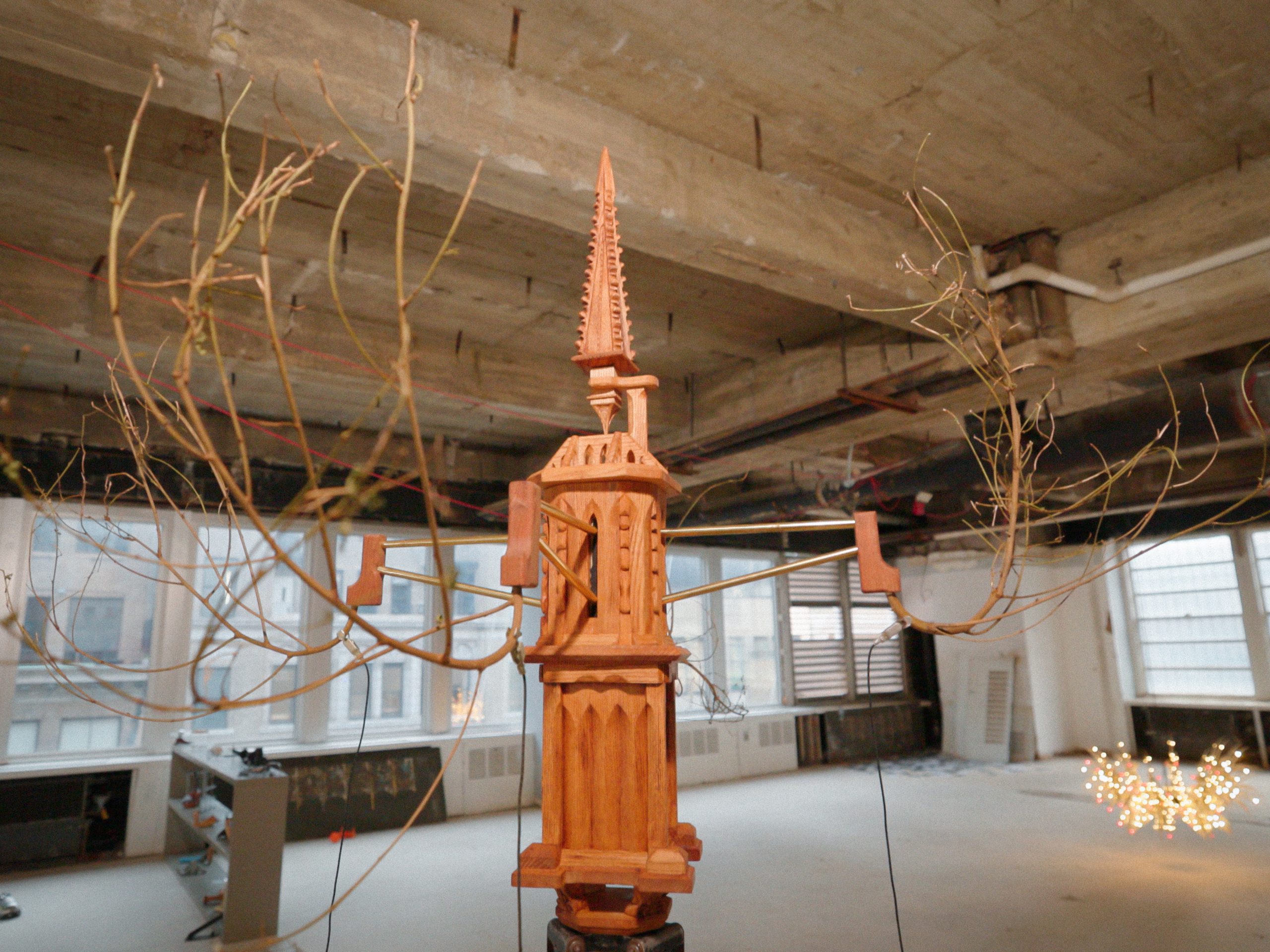
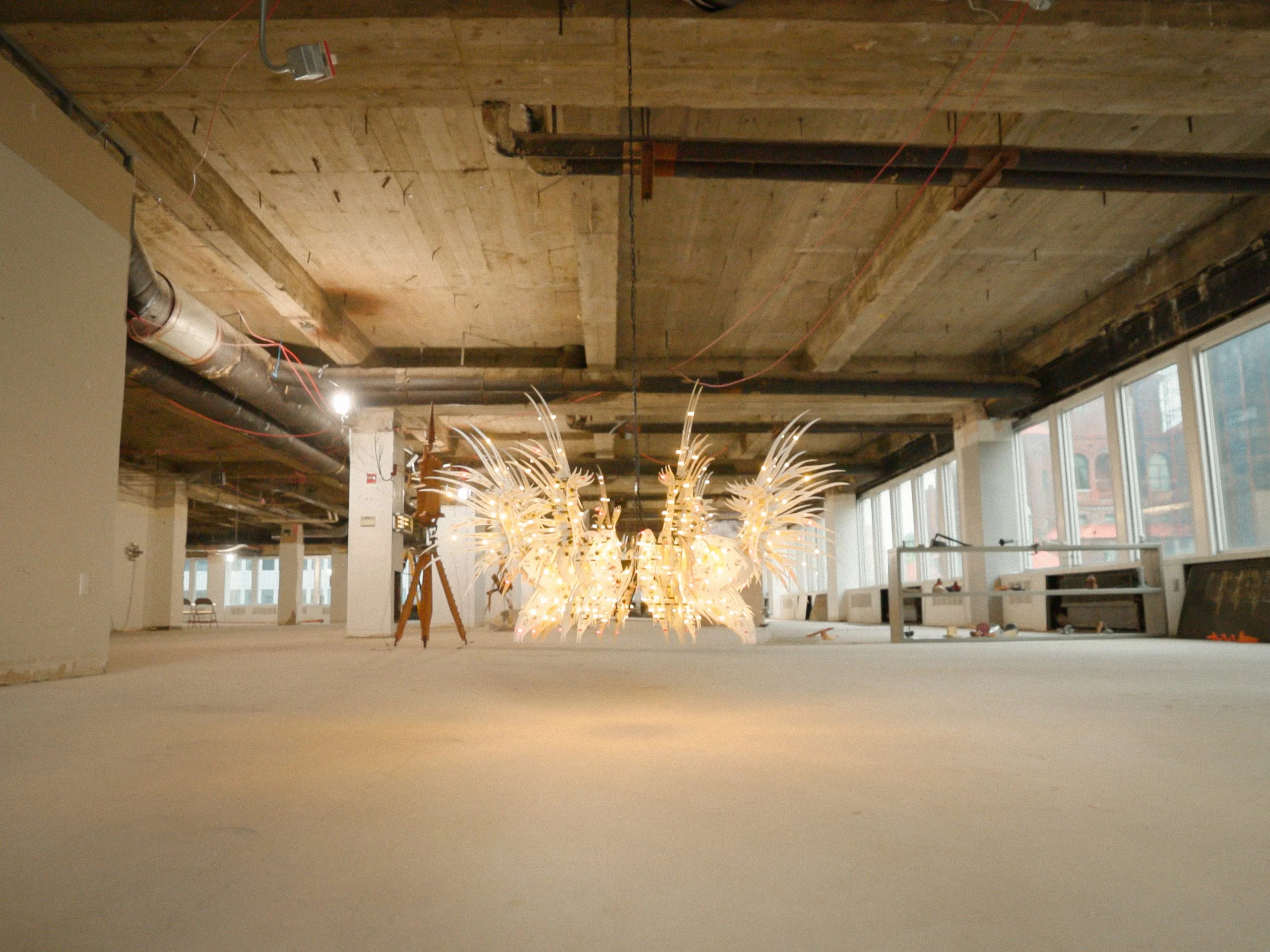
The rest of 260 Madison is still an active office building, owned and operated by AmTrustRE. The 14th floor is empty, and 260 Madison, an exhibition of more than fifty artists, makes that emptiness part of the work. Curated by DemonLovers Inc. and Shaina Tabak, the exhibition runs through November 22. 260 Madison official exhibition page
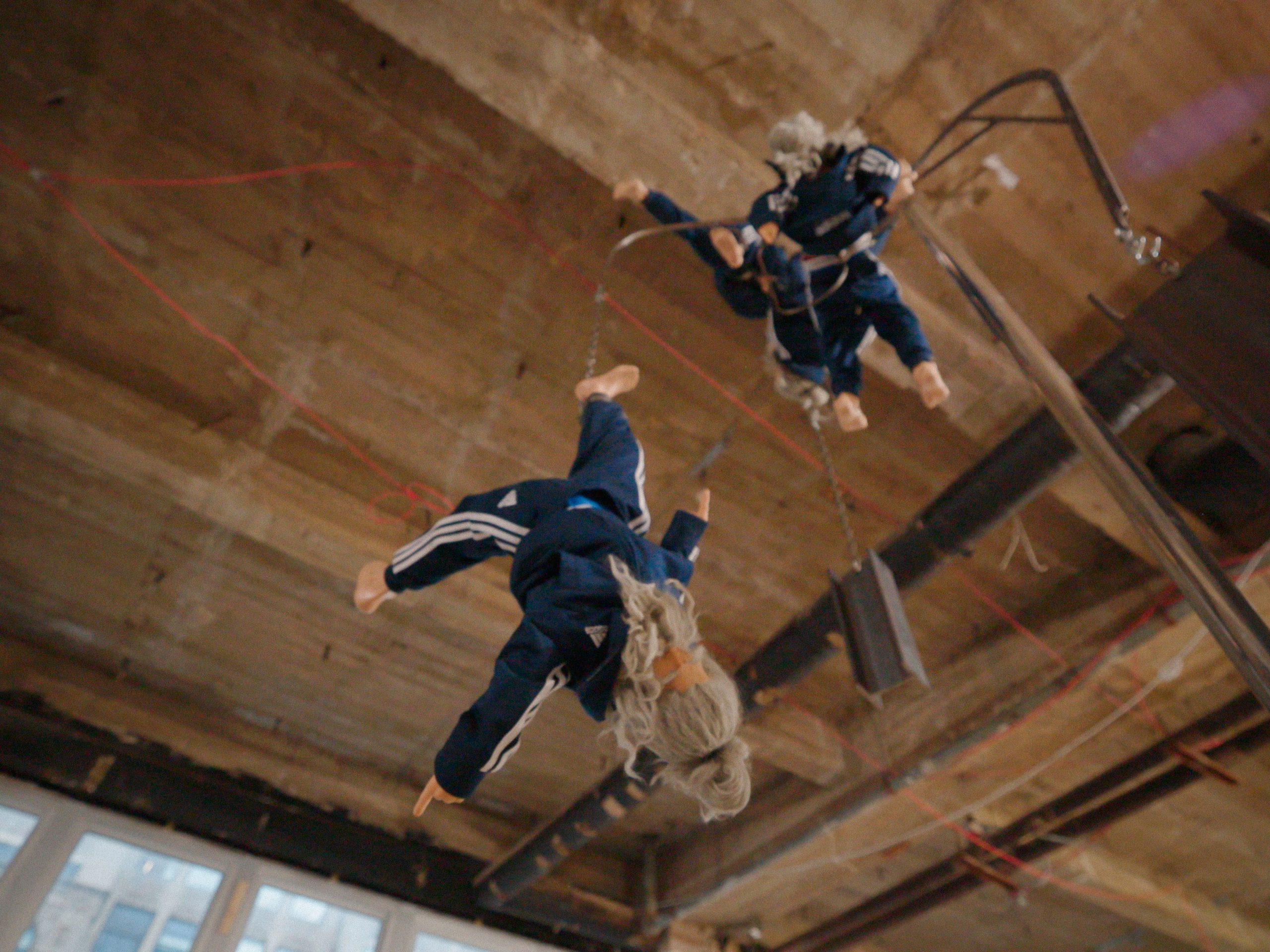
Upstairs, the ceiling is exposed. Wires and ventilation systems run overhead. The desks and cubicles are gone, but the architecture still remembers what the floor used to be.
Then you start noticing the art.
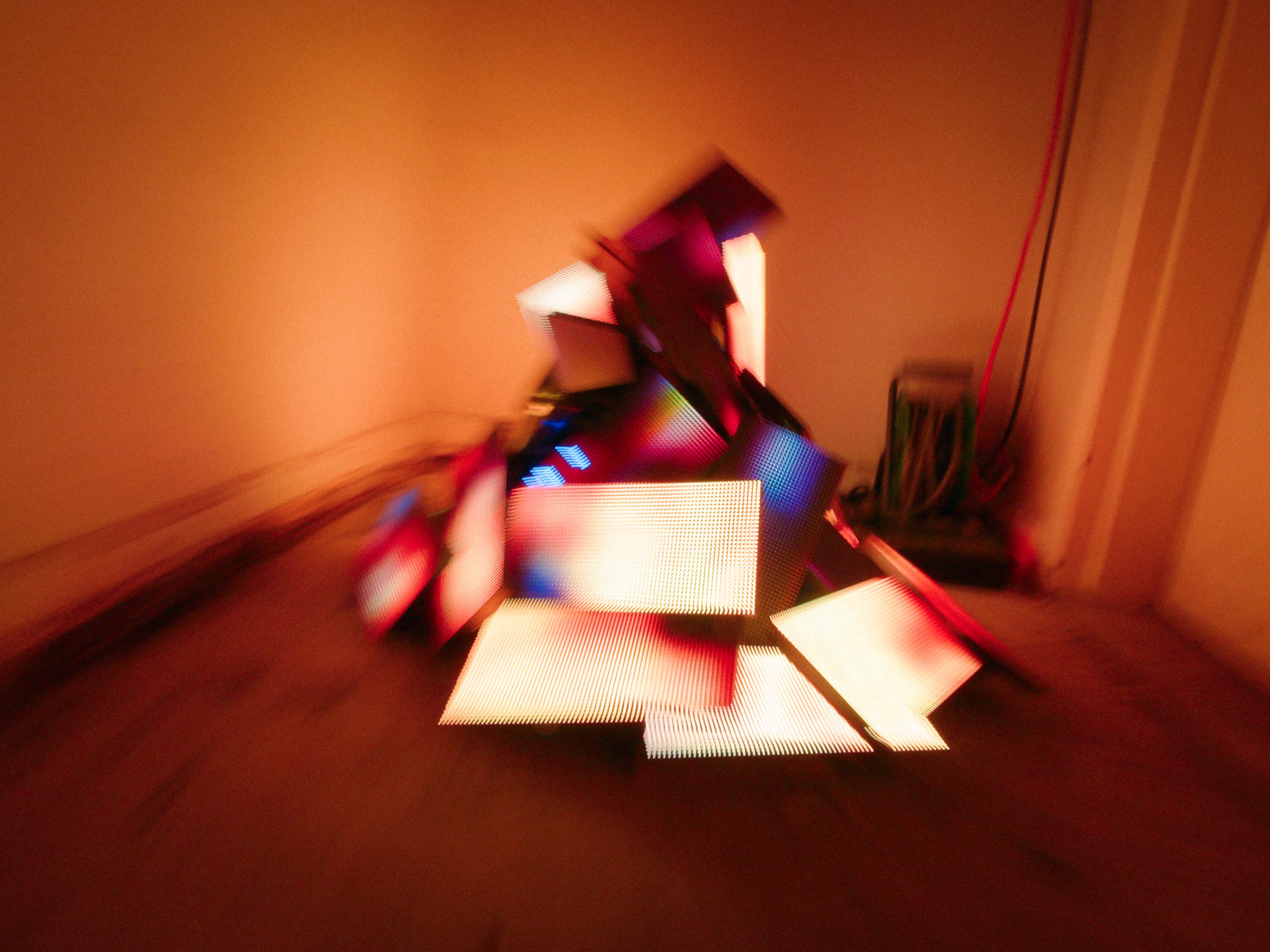
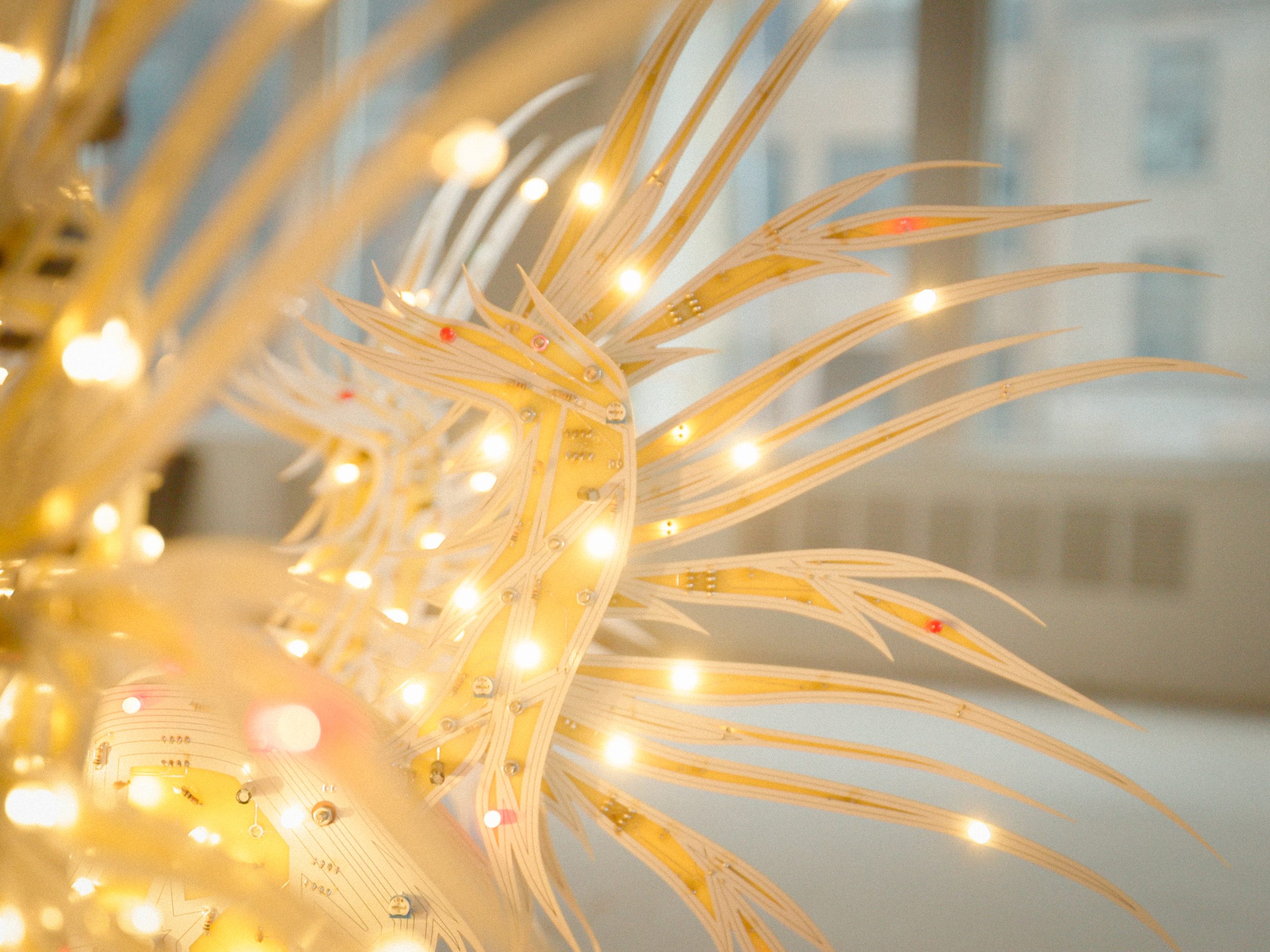
Machines, screens, lights, furniture, pieces of metal, strange domestic objects. Some things look handmade and fragile. Others move or respond without anyone touching them.
It did not feel like walking through an exhibition with fifty different artists.
It felt like one continuous performance.
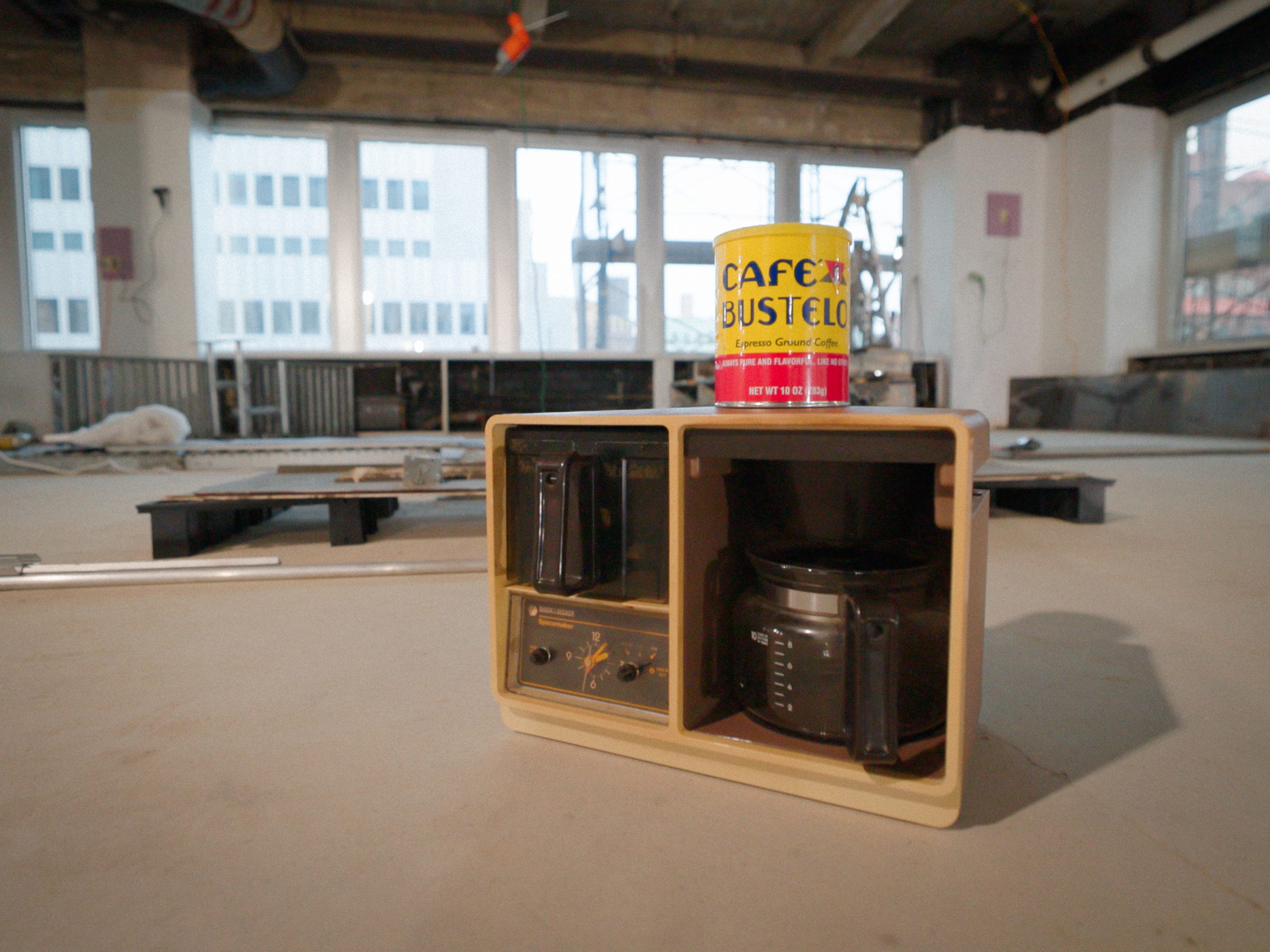
Shaina Tabak walked me through the floor and explained how the exhibition ended up there. Earlier plans had involved other vacant commercial spaces in the building, including former Duane Reade and Starbucks locations. Those spaces had pushed some of the original thinking toward pharmaceuticals, retail, commerce and capitalism. Construction changed the plan, and eventually the vacant 14th floor became the setting.
The detour may have made the show stronger.
The unfinished office is not just where the art happens. After a while, it becomes part of the art.
Shaina talked about technology, the internet, artificial intelligence, manufacturing and the 9-to-5 world. All of that is there, but what struck me was how little the exhibition felt like some polished vision of the future.
The future here looked used.
At one point I told her the floor felt abandoned in a way I couldn’t completely explain.
She asked if I had seen Andrei Tarkovsky’s Stalker.
I had.
And suddenly the comparison made sense.
Not because the exhibition looked like the film. It was the feeling of entering a place that should be familiar but somehow operates by different rules. In Stalker, the Zone is one place, but everything inside it feels uncertain. You move through it differently because you’re never completely sure what the place is doing to you.
The 14th floor had some of that feeling.
There were a few other people walking around while I was there, but the space was large enough that I could turn a corner and suddenly be alone again. Being alone made some of the stranger objects feel even stranger.
Michael Candy’s Chair 2 is a robotic chair made with motors, sensors, electronics and LED lighting. His Persistence of Vision uses a computer-vision camera and a motorized spotlight.
A chair is one of the most ordinary things you could find in an office. Give it the ability to move or sense something on its own, and suddenly it isn’t ordinary anymore.
That kept happening.
Objects I knew were behaving in ways I didn’t expect.
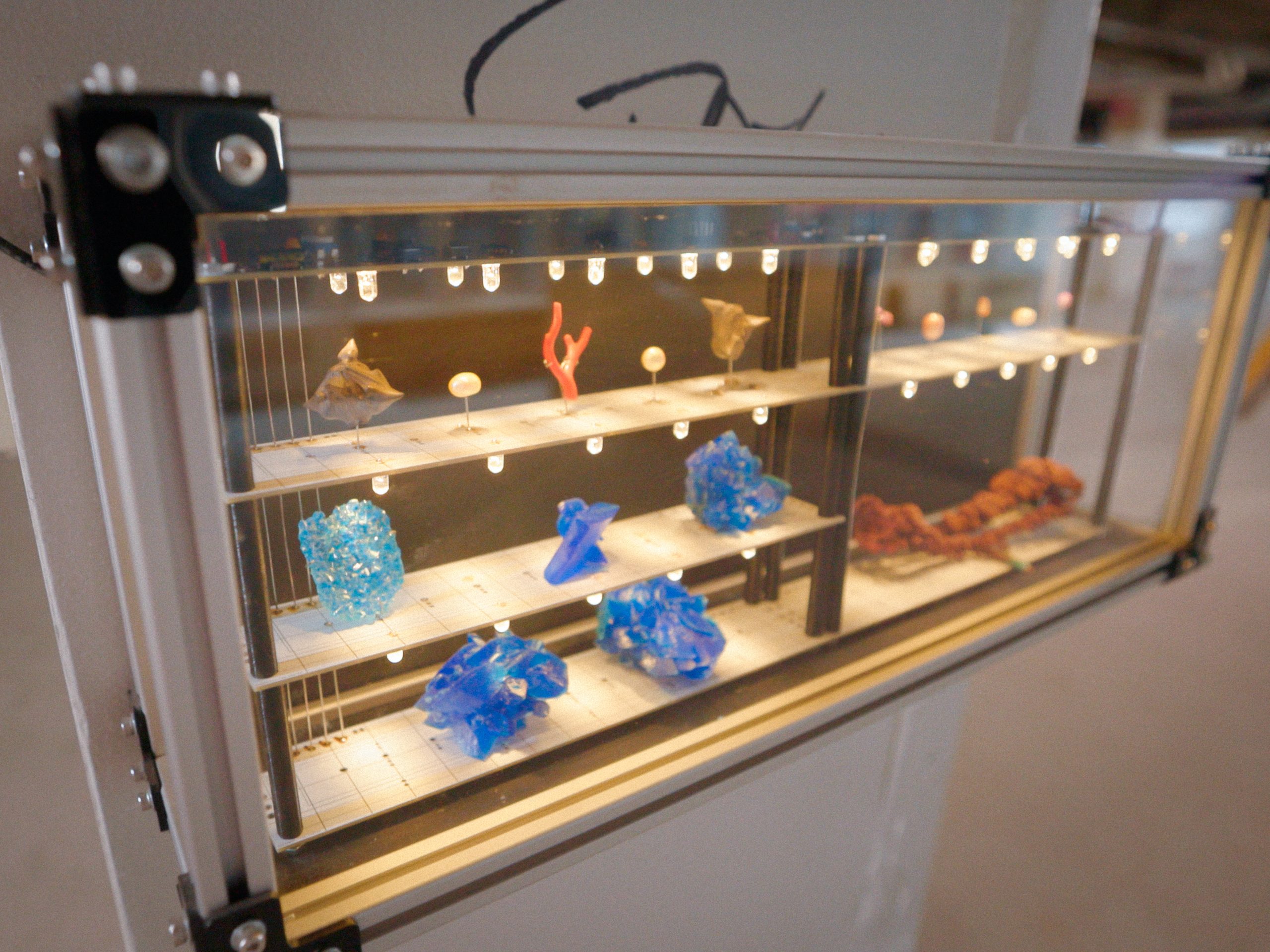
Brian Oakes’s display cases had the opposite effect. They were quiet, almost scientific. Inside were crystals, minerals, coral, pearls, amber and other specimens. One included copper sulfate crystals grown by the artist and homemade rubies. Another contained fordite, layers of automotive paint that accumulated inside factories until the industrial waste began to resemble stone.
I loved that detail.
Something created accidentally by manufacturing ends up looking like something formed by nature.
And that seemed to be happening throughout the show. Technology beside craft. Industrial material beside something handmade. Screens beside wood and metal. Things made by machines beside things that still carried evidence of someone’s hand.
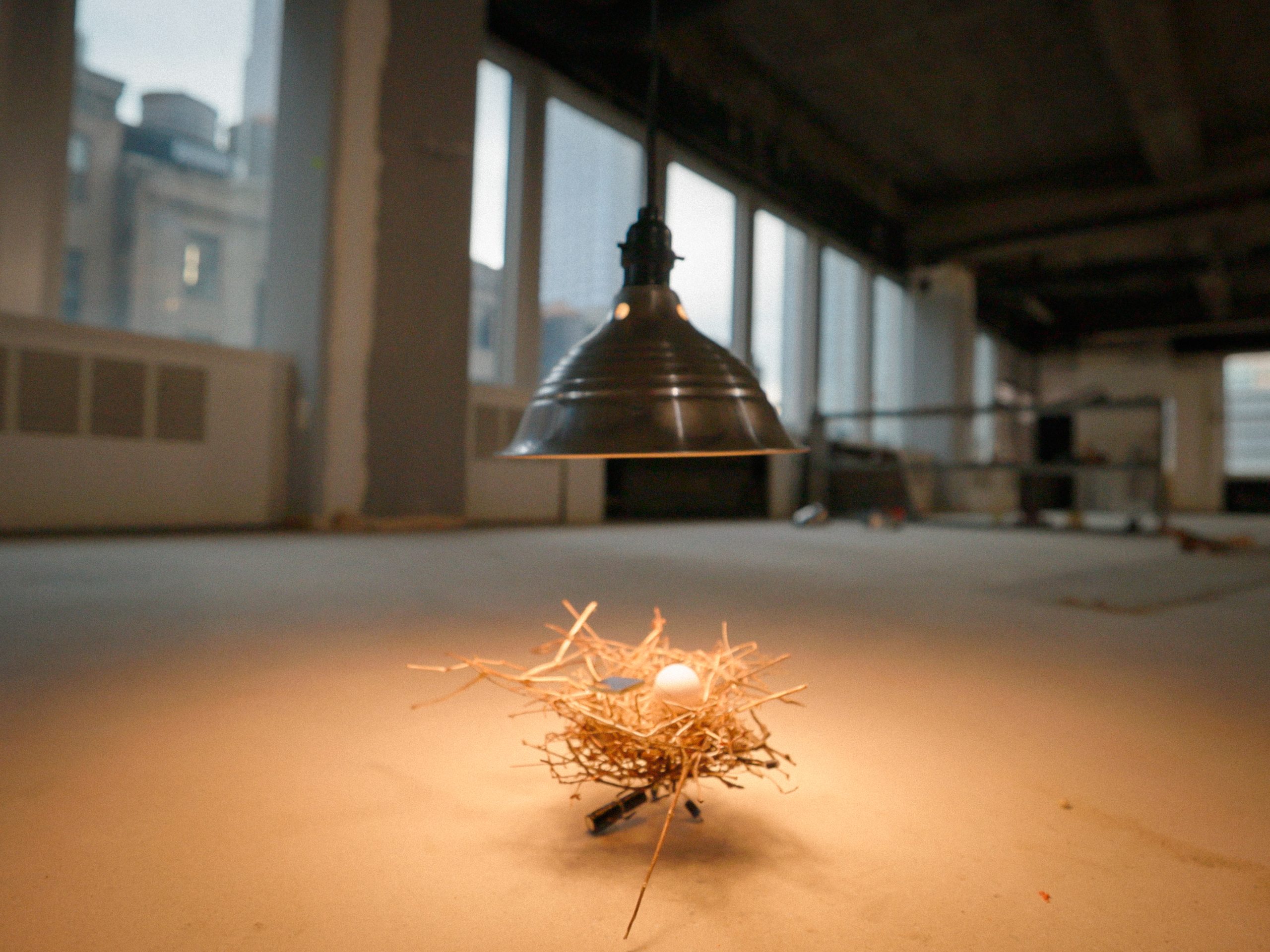
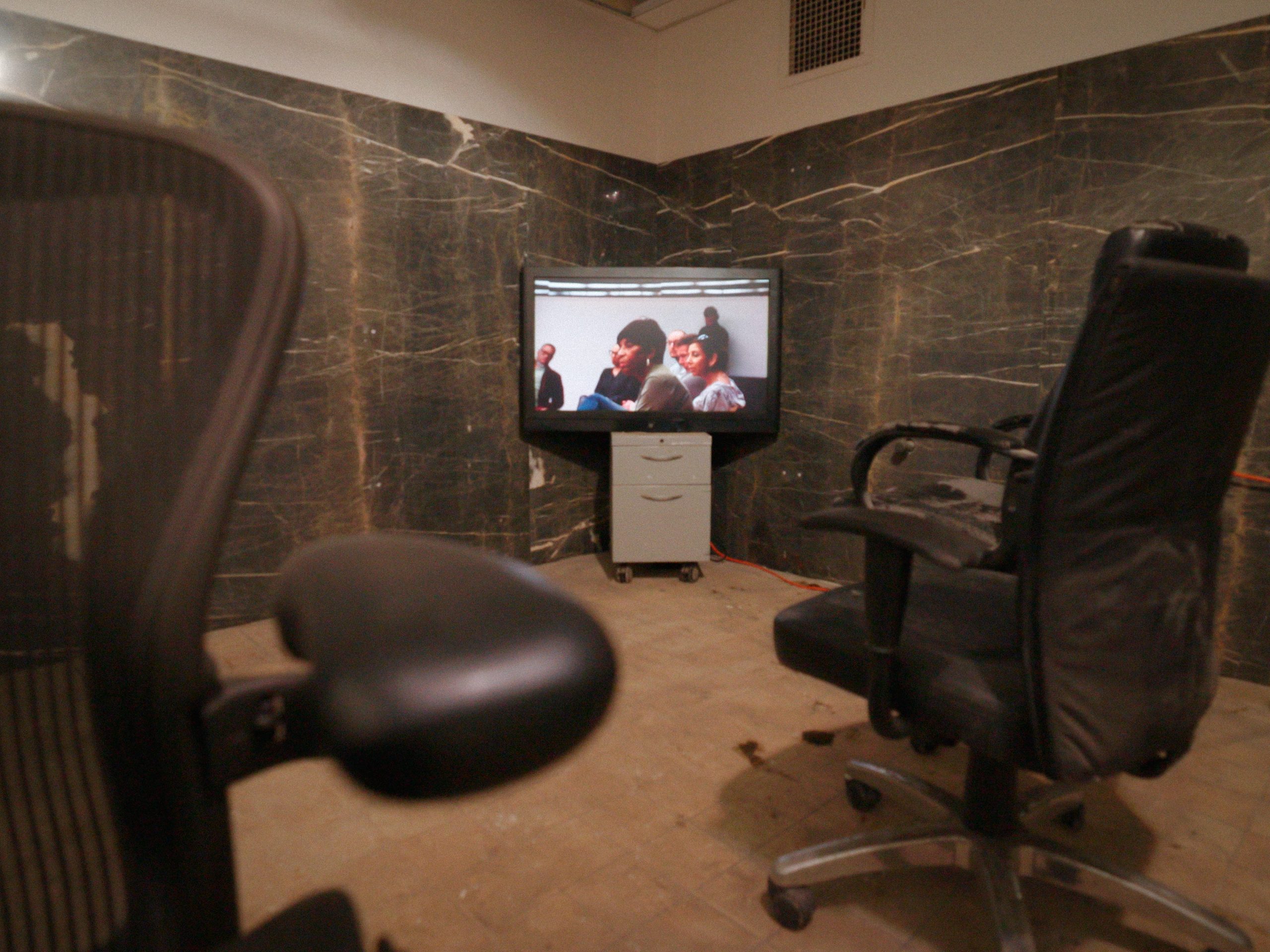
Elsewhere, the exhibition kept slipping between the familiar and the absurd. Eva and Franco Mattes’s Long Cat stretched vertically against the architecture, as if something from the internet had wandered into the building. A television glowed inside a small room. A nest appeared beneath a lamp. Flowers came out of glass tubes. Furniture kept showing up in ways that made me look at it twice.
Some things looked as though somebody had left the office one night and never come back.
Others looked as though they had been waiting for that to happen.
Then there was Ben Shirken’s 41.0894, -74.1485.
LED panels display predictions for the following day’s stock exchange while a speaker vibrates the drywall with a field recording from the New York Stock Exchange data center.
You don’t really see finance.
Most of the time it exists somewhere else, inside numbers, servers, screens and buildings most of us never enter.
Here it became physical.
You could hear it. You could feel it through a wall.
But I never thought of 260 Madison as a technology exhibition.
There was too much humor and too much weirdness for that.
The longer I stayed, the less interested I became in separating everything by artist.
Normally, in a group show, I am looking for the individual work that stops me. Here I started looking at the floor as one thing.
That is probably why the Stalker reference stayed with me.
The Zone isn’t a collection of individual objects. The place itself becomes the experience.
The same thing was happening here.
When I finally took the elevator back downstairs, I thought the experience was over.
The doors opened on the ground floor and for a second I couldn’t see the exit.
I knew I was downstairs. I knew I had just come out of an elevator. But I couldn’t immediately figure out where I was supposed to go.
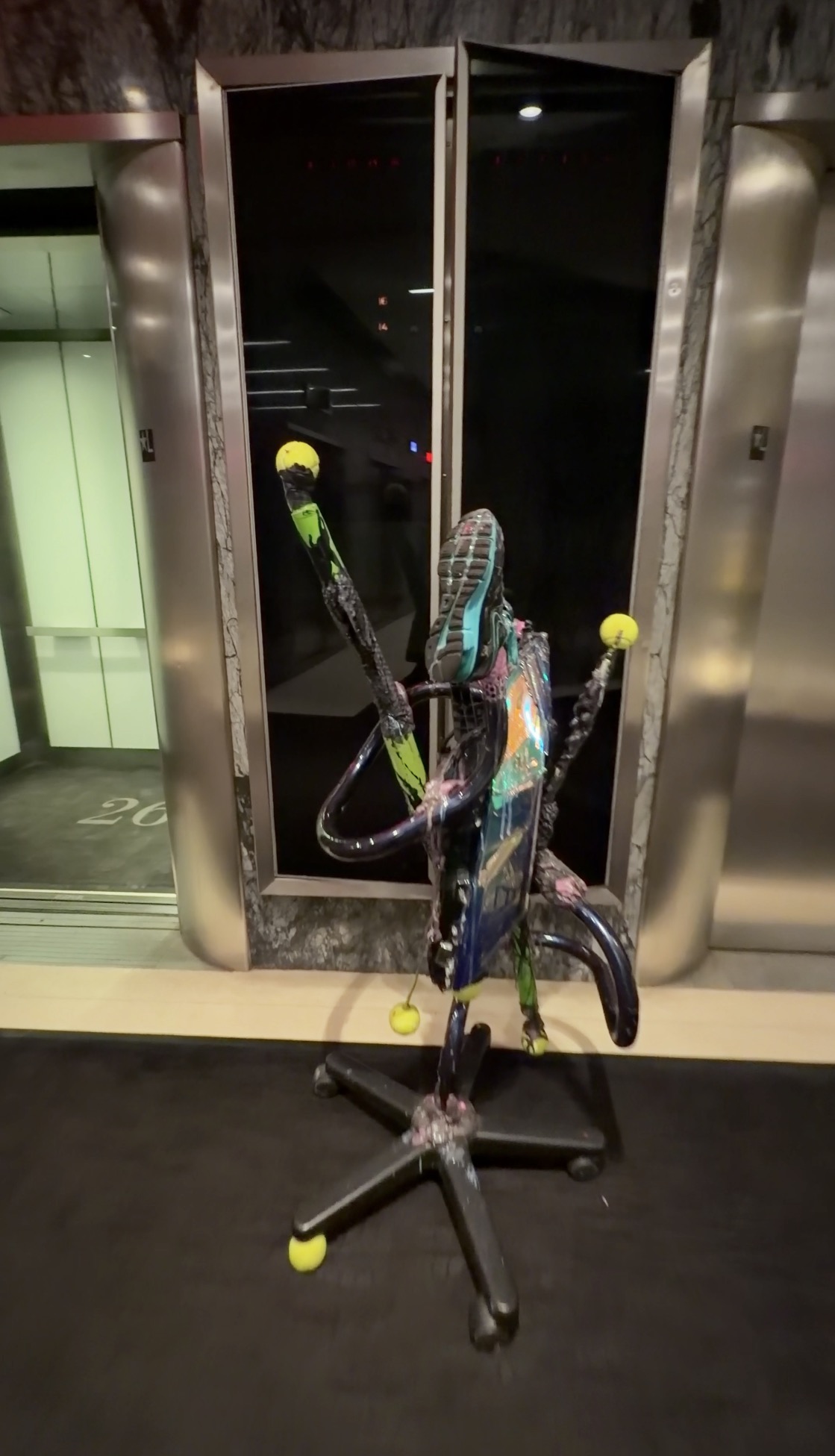
Directly in front of me was Magdalena Petroni’s Say Chees! 3 (2026).
It was this strange sculpture made from sneakers, office-chair parts, wheels, tubing, tennis balls and other pieces I couldn’t immediately identify.
For a few seconds I felt genuinely confused.
A little scared, even.
My mind went straight to the Backrooms, that weird internet idea of accidentally slipping out of normal reality and ending up somewhere that looks familiar but doesn’t feel right.
An elevator. Shoes. Wheels. Parts of a chair.
I remembered the building.
I remembered what an office is supposed to feel like.
But somewhere between those two elevator rides, the familiar had become strange.
And for a moment, standing there on the ground floor, I wasn’t completely sure where the exhibition ended and the building began.
All images courtesy of 260 Madison.
Continued Reading
Looking Into Yoshitomo Nara’s Eyes
Inside Art Basel Miami: A Reflection on Art, Culture and the Human Presence