

At Galerie Emmanuelle Grelier, Beatriz Guzman Catena paints the places memory keeps, while Laurence Perratzi sculpts the bodies that have to stand inside them.
By Peter Koloff
Chelsea had several openings happening that night, but Galerie Emmanuelle Grelier felt especially full. The large third-floor space stayed crowded, with people actually slowing down to look rather than simply drifting through on their way to the next room.
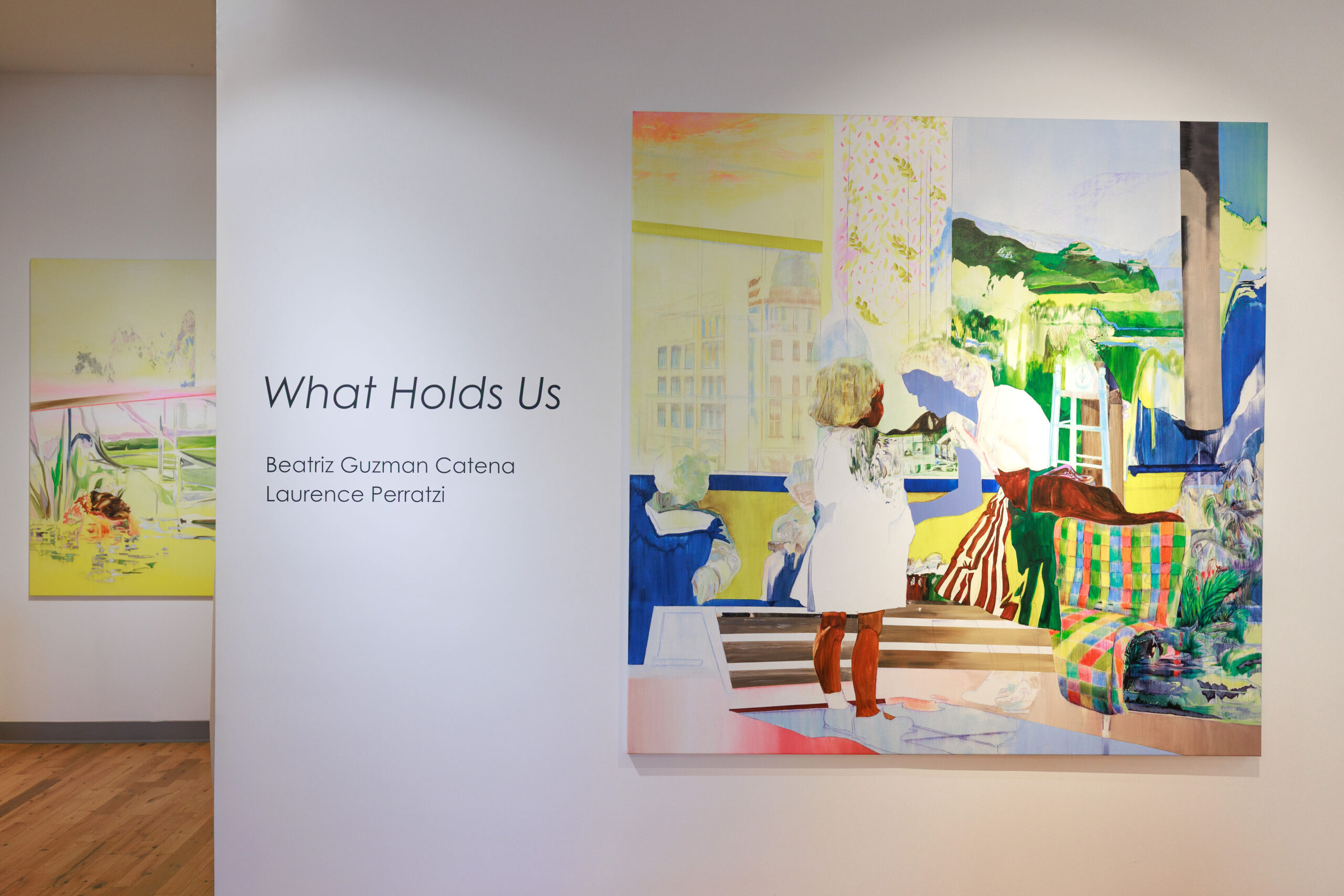
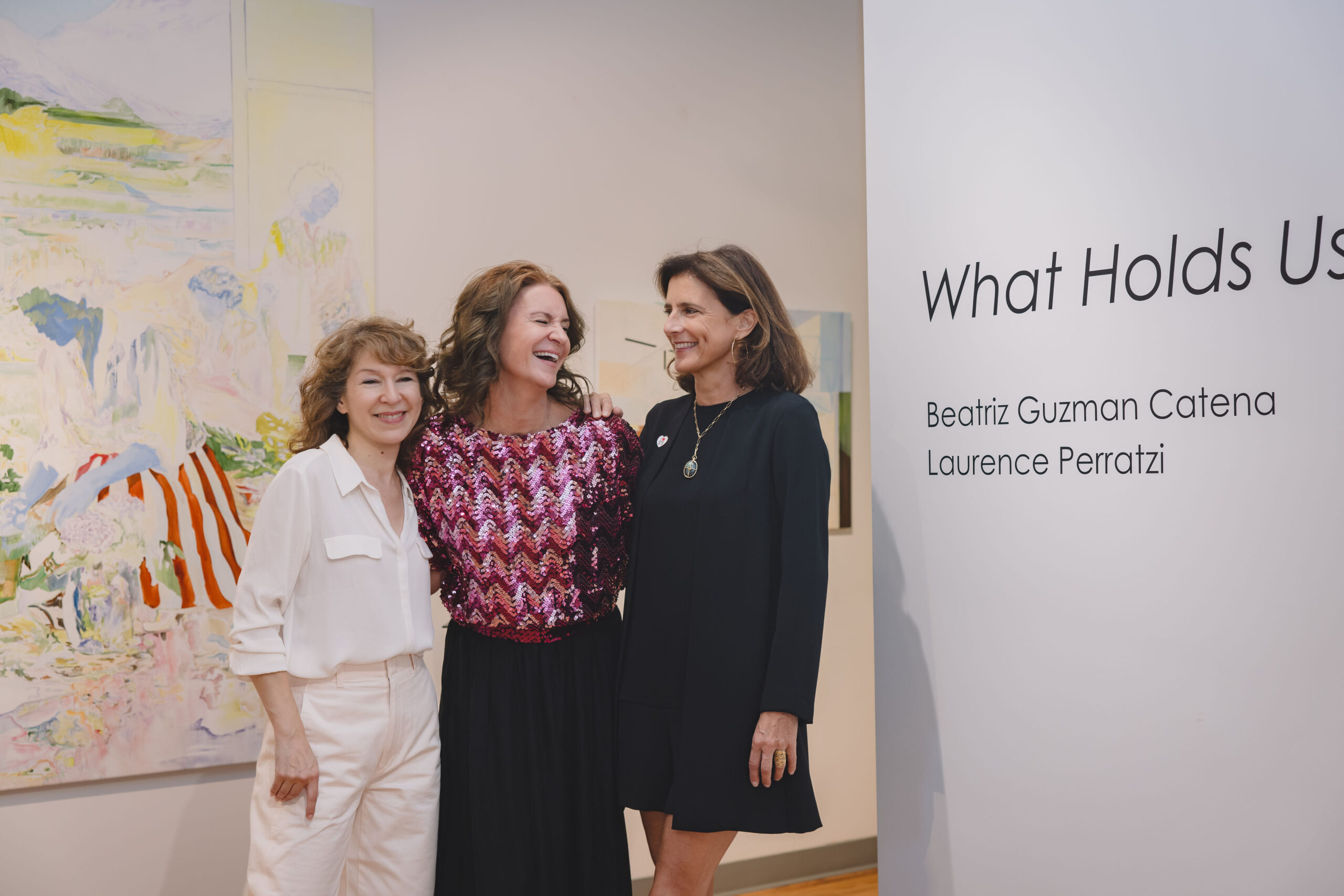
The exhibition, What Holds Us, brings together Beatriz Guzman Catena and Laurence Perratzi, two artists whose work initially seems to operate in different worlds. Guzman Catena paints architecture, interiors, gardens and memory. Perratzi works through the body, balance and gravity. What makes the show work is how naturally those two languages begin to belong to each other.
My reaction to Guzman Catena’s paintings was immediate. I wanted to be in those places.
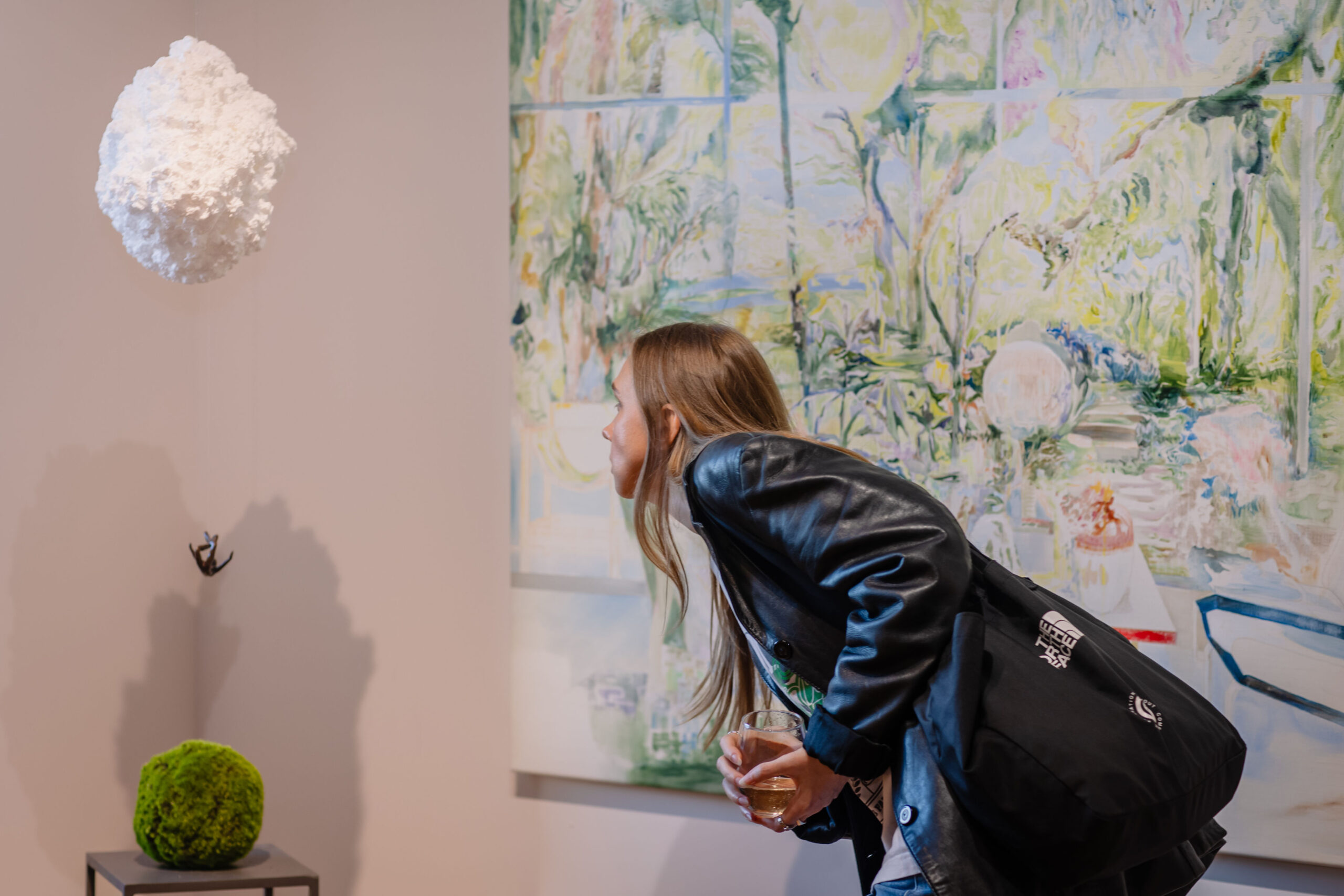
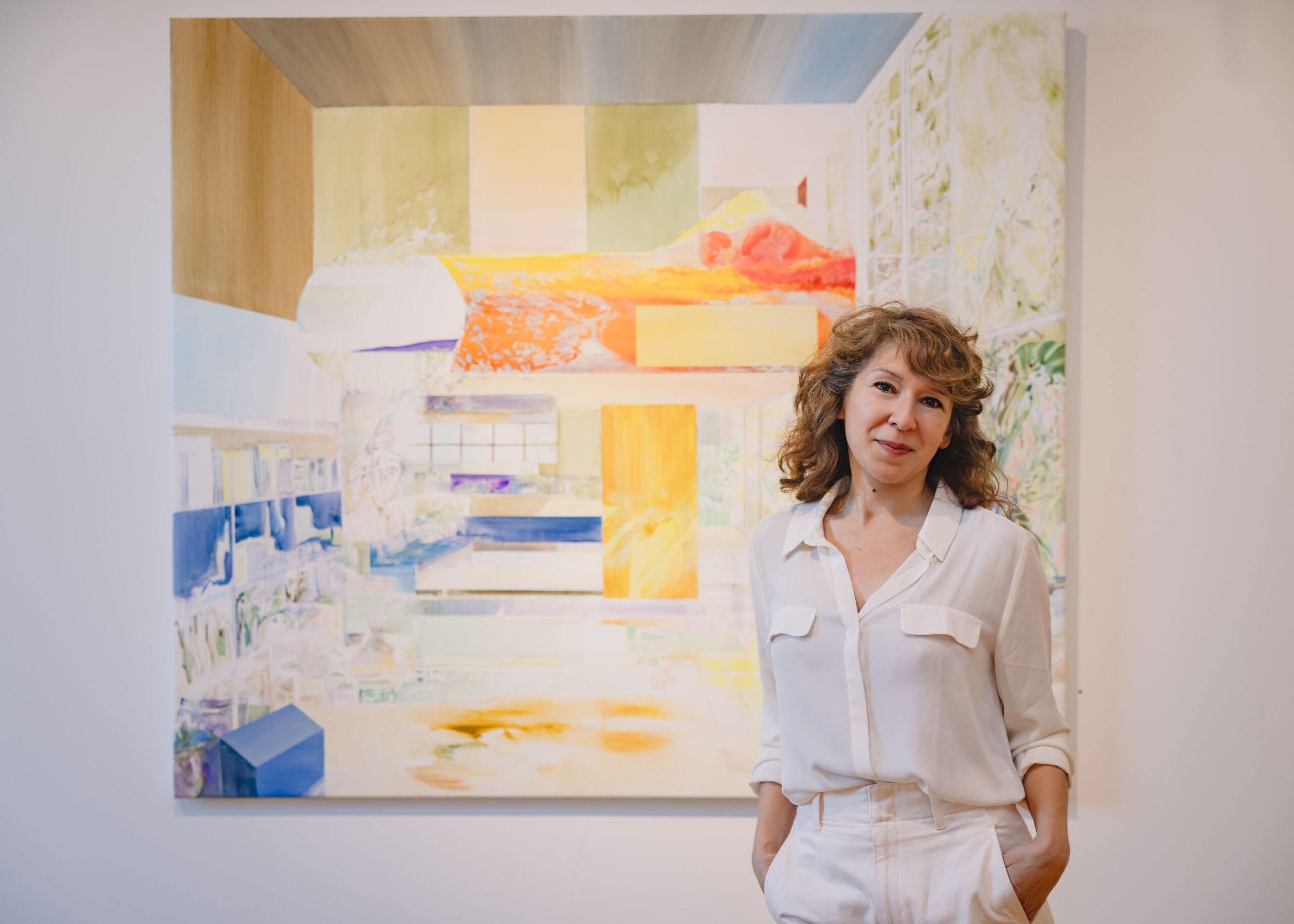
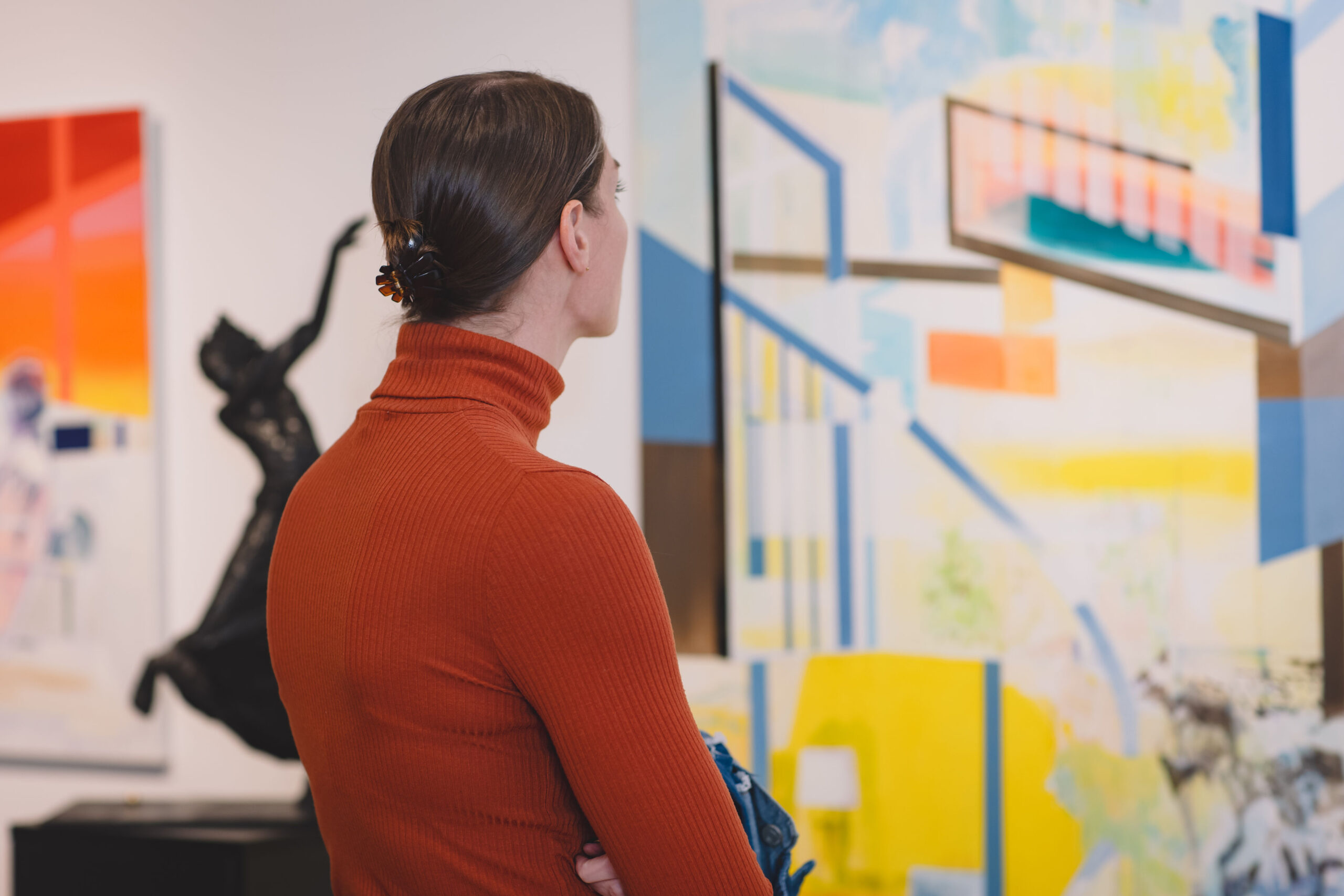
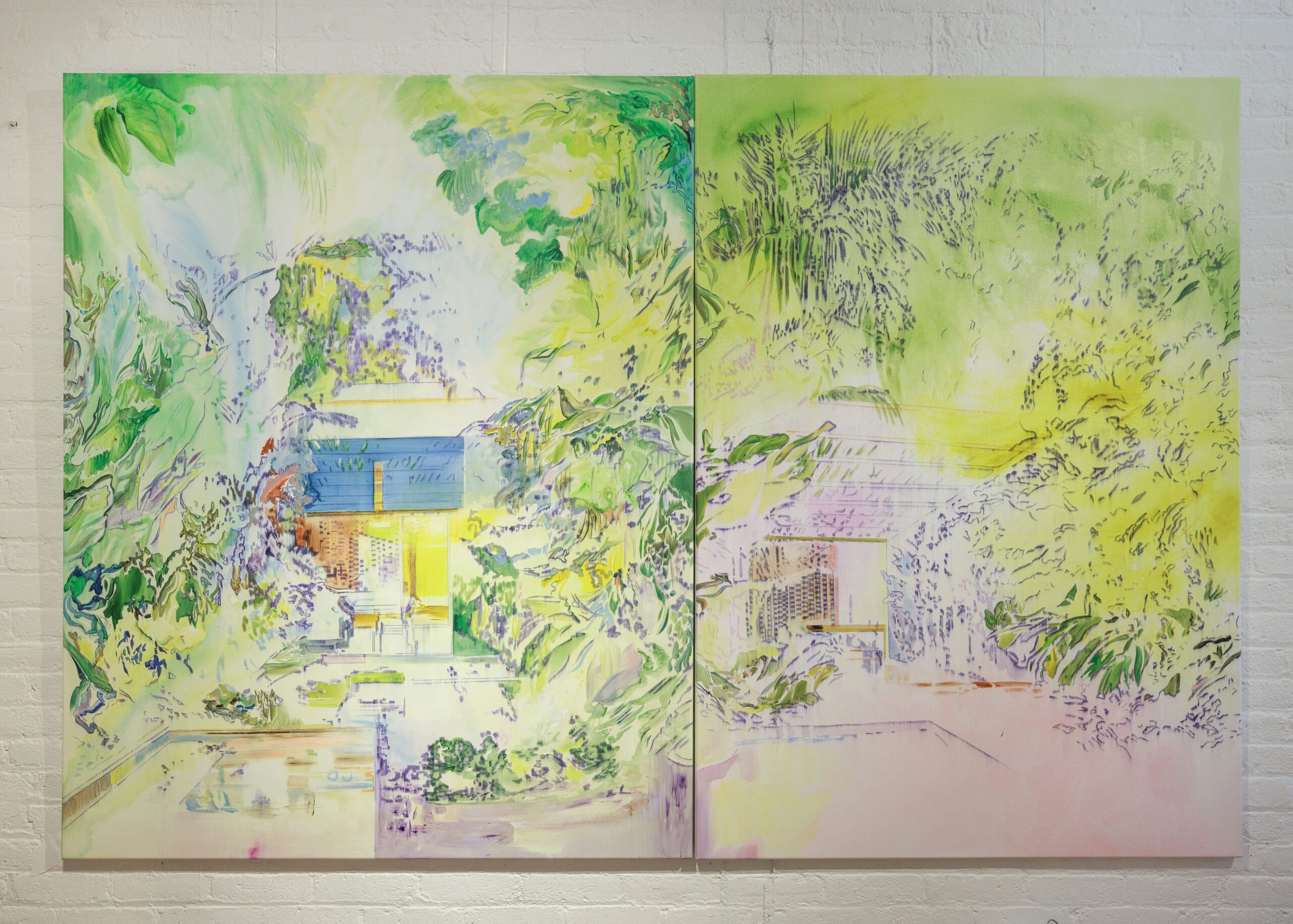
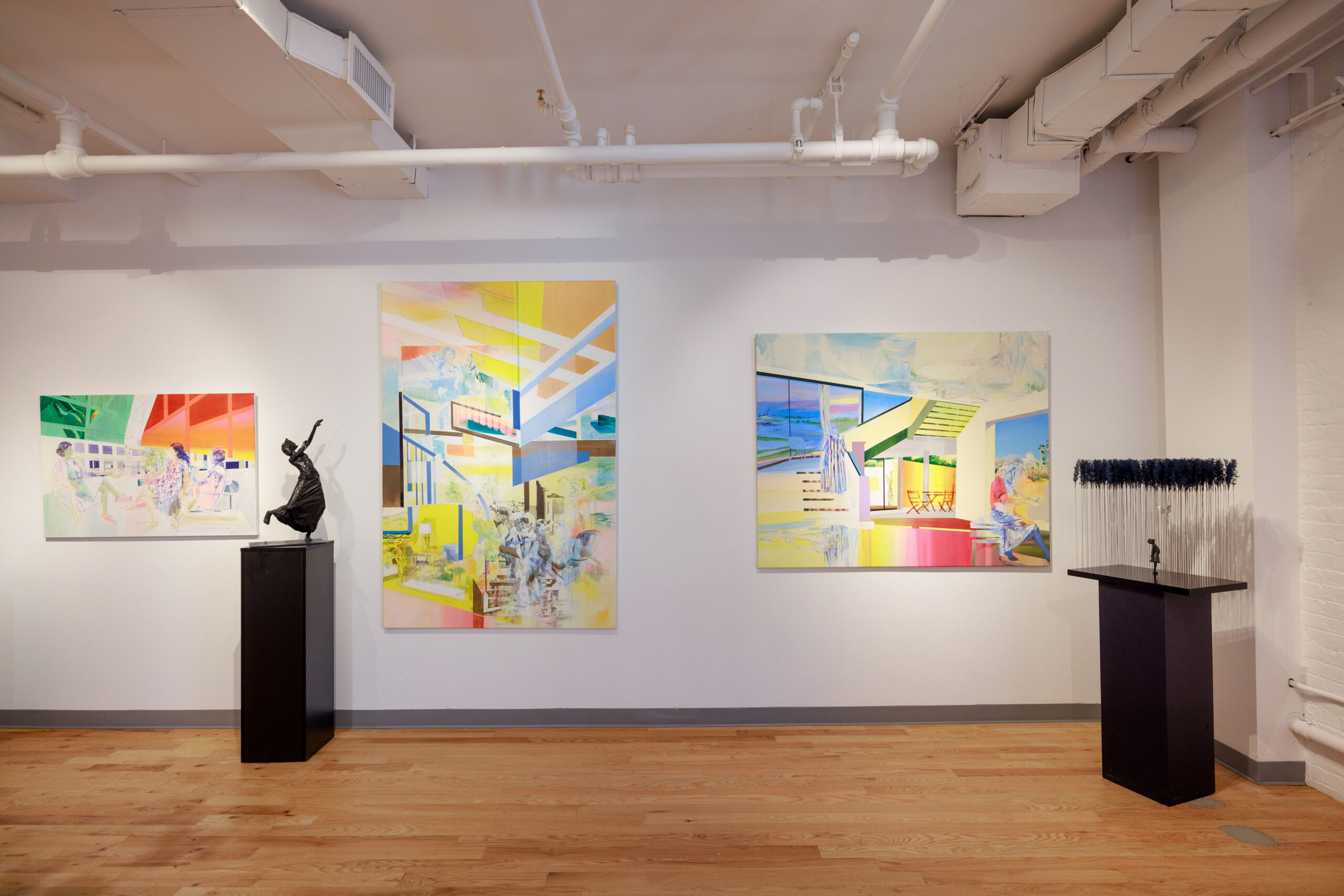
One large canvas showed a luminous interior built from layered planes of pale yellow, white, soft blue and orange, almost like a modern house suspended between architecture and dream. Another painting opened onto a greener, more garden-like scene, where windows, foliage and interior space seemed to blur into one another. The spaces felt calm and desirable, but not simply idyllic. Even when human figures appeared, there was still a sense of distance, as though the people, the rooms and the landscape were not fully occupying the same moment.
That tension is what stayed with me.
Guzman Catena trained in architecture, and you can feel that in the way her paintings hold space. She has described memory, family and shared experience as invisible structures that shape how we live, and her paintings seem to work from that same idea. Rooms remain familiar without being fixed. Nature enters the house. Figures appear, but often as if half-absorbed into the atmosphere around them.
These are not simply pictures of beautiful homes. They feel remembered.
Perratzi’s sculptures affected me differently. My response was more instinctive: I would want to own one.
Then I realized where I would want to put it. If I owned one of the homes Guzman Catena paints, I would want one of Perratzi’s sculptures inside it.
That thought became my way into the exhibition.
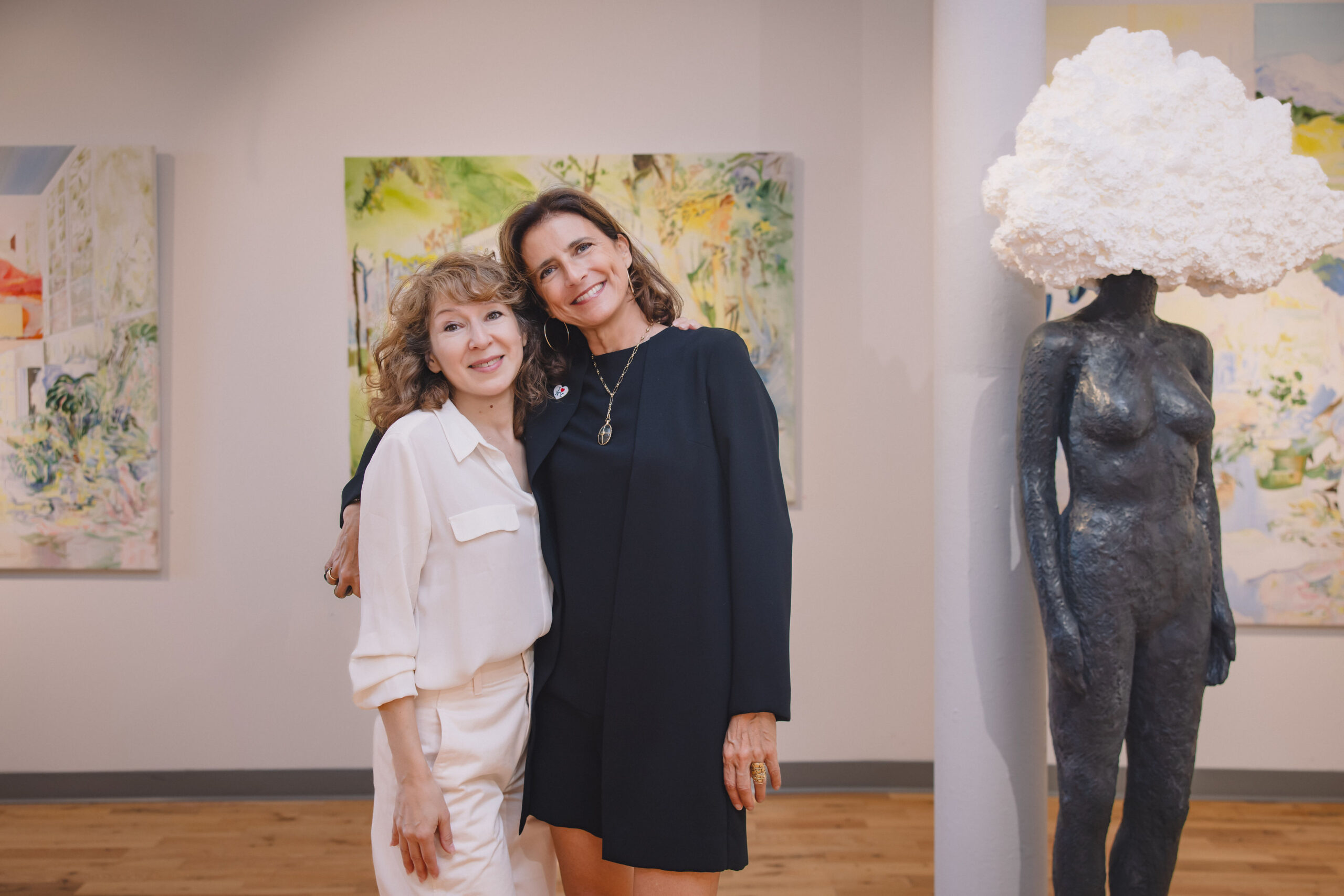
One of Perratzi’s most striking sculptures in the room was a dark female figure rising vertically while a loose halo of looping metal lines circled above her head, dotted with pale butterfly-like forms. The body felt grounded and vulnerable at once, while the lines above it suggested movement, thought, breath or even a kind of psychic weather. In another part of the space, smaller sculptural elements created a quieter tension: a cloud-like white form suspended above a pedestal, a mossy green sphere below it, and nearby dark, delicate shapes that made the room feel physically alert.
Perratzi’s figures often seem to exist near the edge of imbalance. They bend, stretch, rise or endure. Even when still, they carry the feeling of motion or resistance. What matters is not simply what the body looks like, but what it appears to be holding.
That is where the relationship between the two artists becomes clear.
As Perratzi put it, “Beatriz paints the places that welcome us; I sculpt the bodies that inhabit them.”
That line says almost everything.
In Guzman Catena’s work, space carries memory. In Perratzi’s, the body carries effort, vulnerability and presence. Her sculptures insist on physicality. Guzman Catena’s paintings, by contrast, let space remain slightly unstable, as though it were always shifting between lived experience and recollection.
The pairing works because neither artist explains the other, but each sharpens the way the other is seen.
There is also a collector’s response to art that I think is often more revealing than people admit: would I actually want to live with this?
That is not a superficial question. A work in a gallery only has to hold your attention for a few minutes. A work in your home has to survive repeated looking, changing light, different moods and ordinary life.
Perratzi’s sculptures passed that test for me immediately. Guzman Catena’s paintings did too. More importantly, I could imagine one changing the experience of the other. A Perratzi sculpture placed inside one of Guzman Catena’s painted interiors would not feel decorative. It would feel inevitable.
That is where What Holds Us succeeds.
The paintings do not need the sculptures to explain them, and the sculptures do not need the paintings. But together, they create a compelling tension between the places we carry and the bodies that have to move through them.
Memory without a body can become atmosphere.
A body without a place can become gesture.
On view at Galerie Emmanuelle Grelier, 555 West 25th Street, Third Floor, New York.
Continued Reading
Marina Vranopoulou: Why Art Matters Now