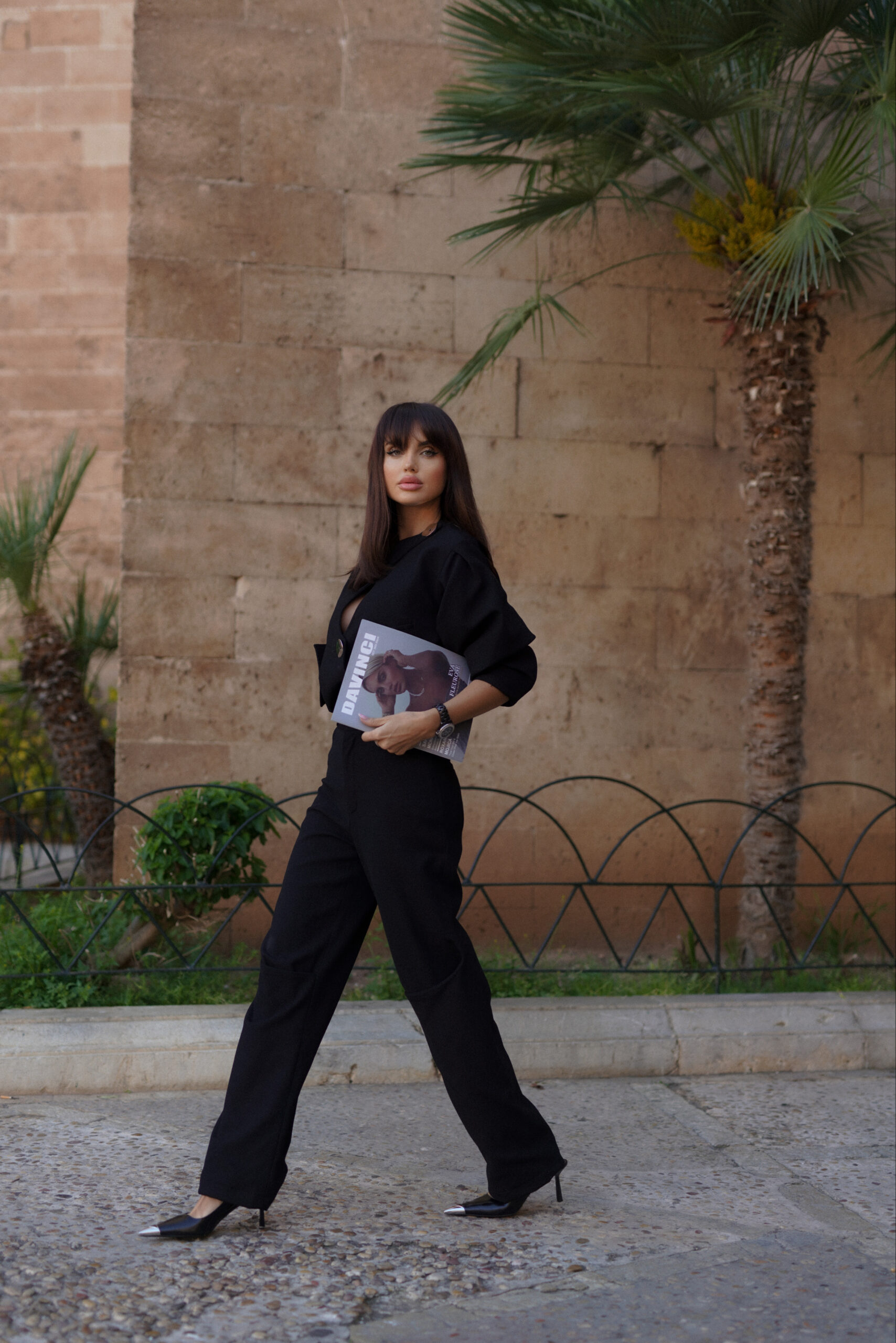


In the current landscape of the fashion industry, where the digital frontier often feels like a sprawling, uncharted territory, the conversation surrounding Artificial Intelligence has reached a fever pitch. There is a palpable tension: an equilibrium between the allure of hyper-efficiency and the preservation of the human pulse. For Steven Passaro, the French-Portuguese designer whose work serves as a bridge between the rigid precision of architecture and the fluid grace of tailoring, this tension is not merely a technical hurdle but a philosophical crossroads.
In an exclusive interview that has resonated across the European creative community today, July 25, 2026, Passaro has drawn a definitive line in the digital sand. "I do not want to replace models with AI," he stated with a clarity that cuts through the noise of the metaverse. It is a sentiment that positions him as a guardian of the industry’s soul, even as he utilizes the very tools that many fear will eventually render the human element obsolete.
The Architecture of the Virtual Avatar
Passaro’s journey into the sartorial world began not with the drape of fabric, but with the blueprint. His background in architecture provides the organizing principle for his eponymous label, founded in 2019 after tenures at storied houses such as Hermès, Loewe, and Christian Dior. This unique lineage allows him to perceive the human body as a structure to be inhabited, rather than just a form to be covered.
Central to his process is the sophisticated integration of Clo3D and Style3D. These digital modeling tools allow Passaro to construct intricate patterns in a virtual space before a single thread is pulled. What traditionally took a master tailor two or three days to achieve in physical prototyping can now be refined in a mere two hours. This is not tech for the sake of novelty; it is tech for the sake of sustainability. By creating virtual samples, Passaro drastically reduces fabric waste, ensuring that when the garment finally reaches the physical plane, it does so with a sense of purpose and precision.

A Narrative in Three Acts: From Obsession to Awakening
To view a Steven Passaro collection is to witness a continuous, evolving story: a visual language that treats the runway as a site of profound psychological exploration. His recent works form a cohesive trilogy that charts the complexities of the human experience.
The Spring-Summer 2026 collection, titled "Moonlit Lover," delved into the shadows of toxic affection. It was an exploration of the spectral quality of nocturnal obsessions, where the garments mirrored the illusions of secret affairs: beautiful, yet often wounding. This was followed by the Autumn-Winter 2026 collection, "Ethereal Shift," which functioned as a study in personal transformation. Here, the silhouettes became more expansive, reflecting the search for meaning in a world that often feels fractured and chaotic.
His latest offering, "Glimpse," captures the exquisite tension of a threshold. It represents that precise moment of hesitation before stepping into the unknown: a blend of intense desire and paralyzing fear. "Glimpse" is not just a collection; it is a mirror held up to our current global state, reflecting the simultaneous occurrence of "many very good things and many very bad things." In Passaro’s world, fashion is the habitat where we process these conflicting truths.

The Conscience of the Machine
The core of Passaro’s recent viral stance lies in the ethical responsibility of the industry's titans. He argues that the decision by major luxury houses to utilize AI-generated models in campaigns: despite having the capital to employ photographers, stylists, and human talent: creates a dangerous ripple effect. When the largest players retreat from the human economy, the burden of maintaining the industry’s foundational talent falls onto smaller, independent brands that cannot sustain agency fees alone.
For Passaro, the human model is the "universal thread" that connects the garment to the viewer’s empathy. A machine might replicate the trompe l'oeil of a texture, but it cannot replicate the breath, the history, or the lived emotion that a person brings to a piece of couture. By advocating for human models, he is advocating for the continued survival of the artistic community that makes fashion a vibrant, breathing ecosystem.
The Ritual of Slowness
In an era of relentless speed, Steven Passaro is a proponent of the "slow fashion" movement, though his methods are ironically high-speed. This paradox is where his genius resides. By using technology to hasten the developmental stages, he buys back time for the craft itself. His fabrics are sourced with meticulous care from European suppliers, often utilizing deadstock from LVMH, further cementing his commitment to a circular, conscious economy.
His advice to the next generation of designers is a testament to this philosophy: "Do not run. It’s a marathon, not a sprint." It is a reminder that excellence requires the luxury of time, the resilience to endure, and the wisdom to know which technologies to embrace and which to hold at arm's length.

The Synthesis of Form and Feeling
Ultimately, Steven Passaro’s work serves as a roadmap for the future of the industry: one where the digital and the physical do not exist in opposition, but in a state of symbiotic grace. He has proven that one can be at the forefront of technological innovation while remaining a staunch defender of human dignity.
As we look toward the upcoming seasons at Davinci Magazine, Passaro stands as a beacon of intellectual rigor. He reminds us that while the machine can provide the structure, only the human spirit can provide the soul. In the quiet tension between the "I want" and the "I’m afraid," Passaro has chosen to lean into the light, ensuring that the future of fashion remains, above all else, a human story.
Explore more of our coverage on the intersection of art and fashion to stay informed on the visionaries redefining our world.