

By Peter Koloff
The gray sky behind the reclining woman in Sadie (2026) stayed with me. Pale daylight catches her hair and shoulder, leaving her face partly in shadow. She reclines on a leopard-patterned daybed, wearing black lingerie. Candles burn nearby. Books, tape, and drawing materials cover the table in front of her, giving the room the feeling of a working studio.
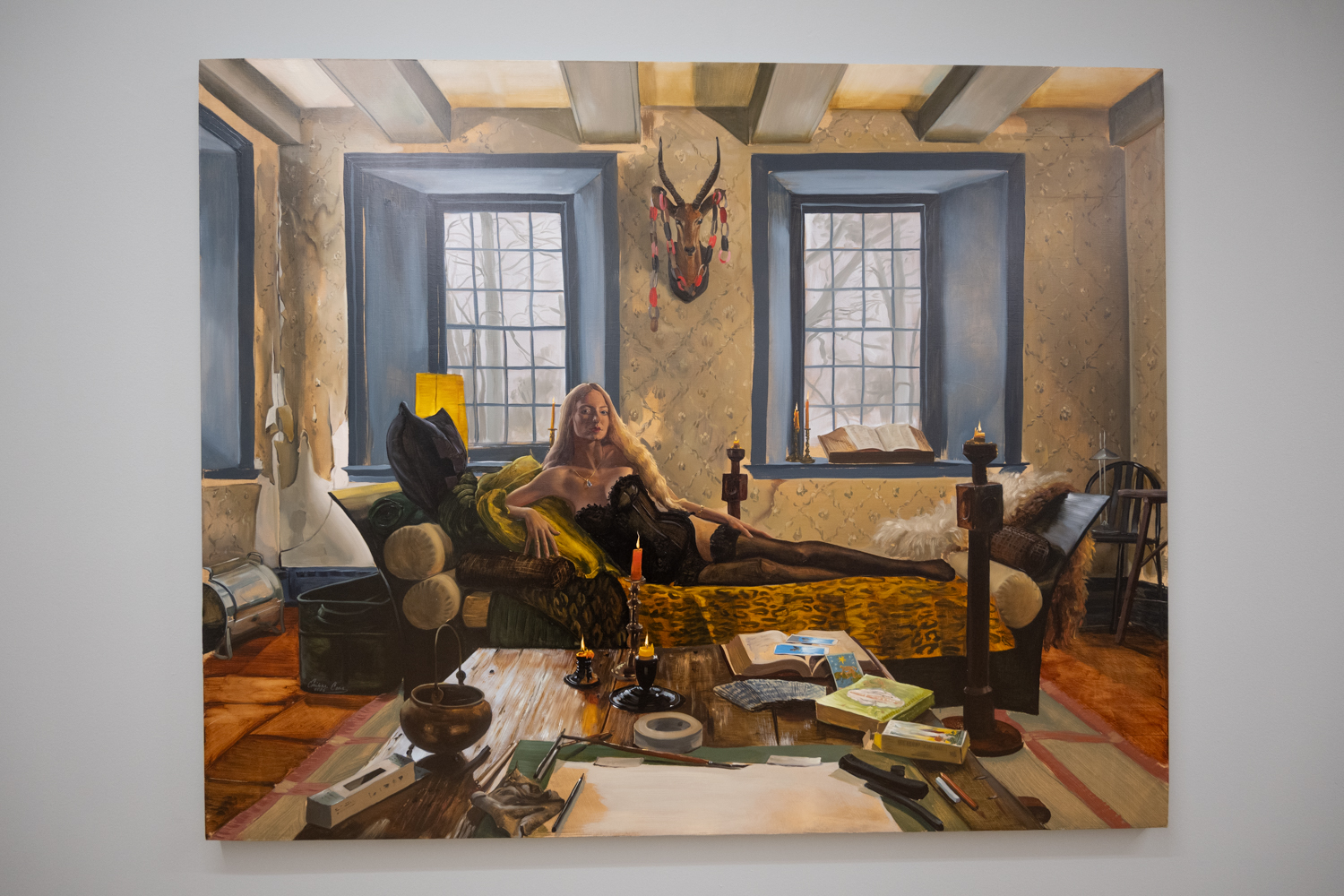
At Emily Coan’s My Alchemical Vessel at DIMIN in New York, I wanted to spend time with that room. As a photographer, I noticed the backlighting first: the way it picks out her hair while allowing her expression to remain difficult to read. There was an erotic charge to the scene. I wondered how much of what I was seeing belonged to the woman and how much I had brought to the painting.
When I emailed Coan afterward, I asked about that distinction.
“I feel a gulf between my experience of making a painting of a beautiful woman, and what gets projected on it by the outside world,” she replied.
Sadie is a friend of Coan’s. She had just turned thirty when she posed and told Coan this would be her final modeling project, a good place to finish that part of her life.
“I felt that we were in alignment,” Coan wrote.
The sensuality I had noticed remained. Her answer gave me something else to consider alongside it: the circumstances of two friends making this image together. Sadie was choosing to stop modeling. Coan was trying to imagine her own next stage.
“I had such a clear idea of who I wanted to be as a young woman,” she wrote. “I had no vision of midlife.”
For six or seven years, she had struggled to let that younger version of herself go. She wanted a change in her painting to reflect the person she was becoming, even while that person remained unfamiliar to her.
The setting for these paintings is her in-laws’ farmhouse in Ghent, New York. Built in the late eighteenth century, it is where her husband grew up and a house the couple expect to inherit. Generations have been born and have died there. Coan described their own future place in its history as “a blip in a chain of ownership.”
“There’s possibility there. There is also pressure.”
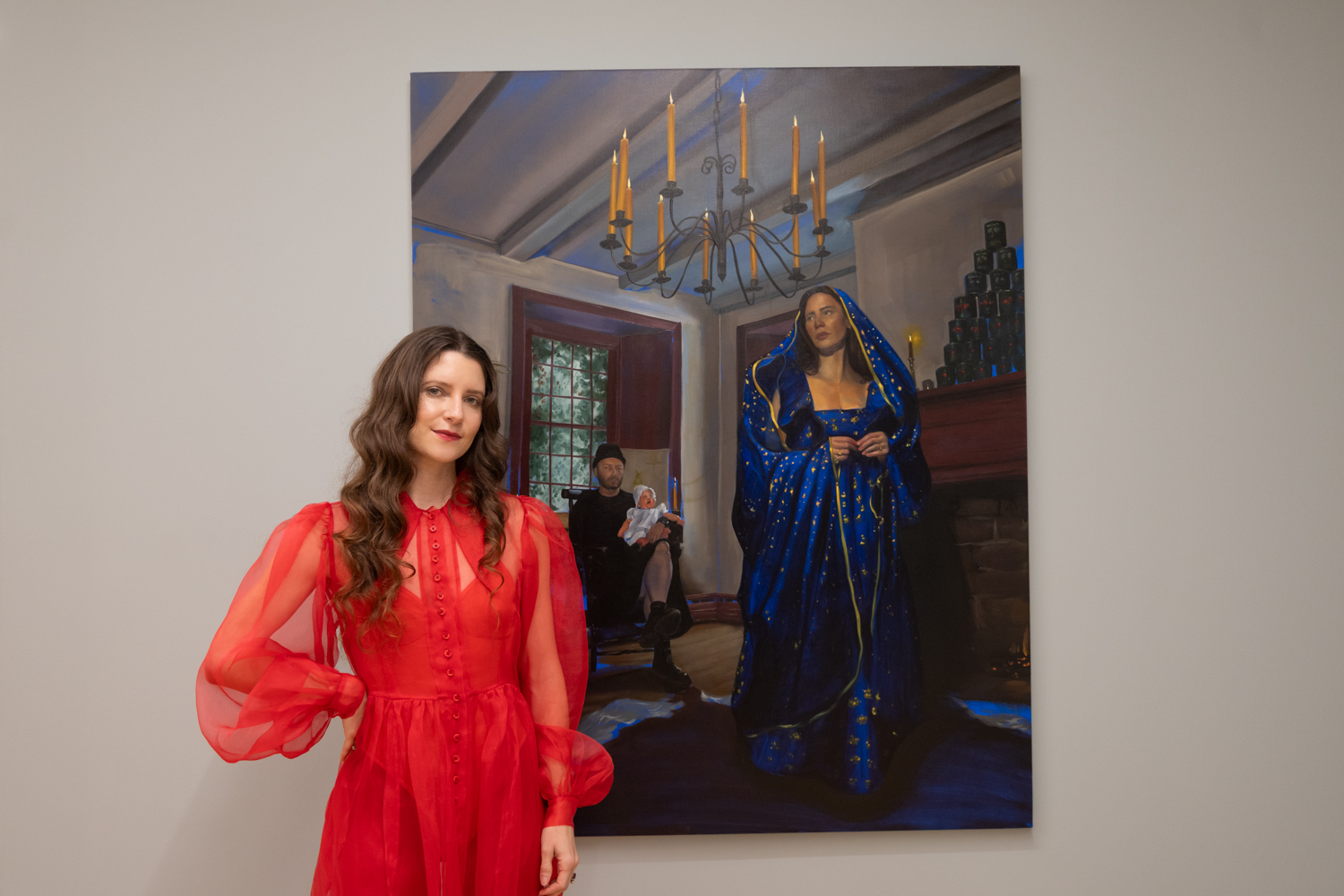
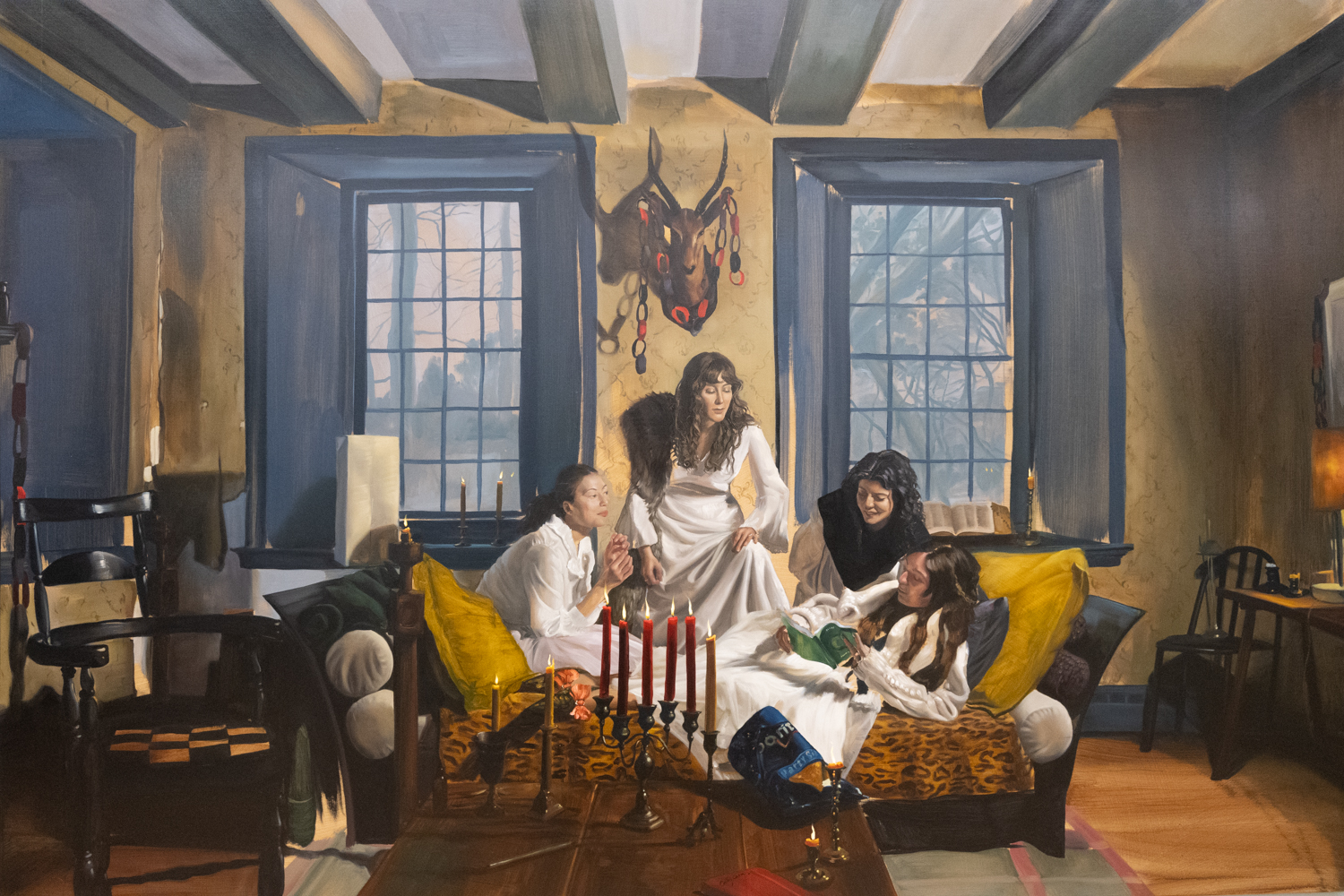
Across the paintings, blue window frames set off yellow walls. In Bwbach (2026), a woman in a voluminous blue garment patterned with gold occupies the foreground. Behind her, a seated man holds an infant. In The Parlour (2026), four women gather around an open book. Their white clothing catches the light against the darker furniture. A mounted animal head hangs above them, decorated with a paper chain.
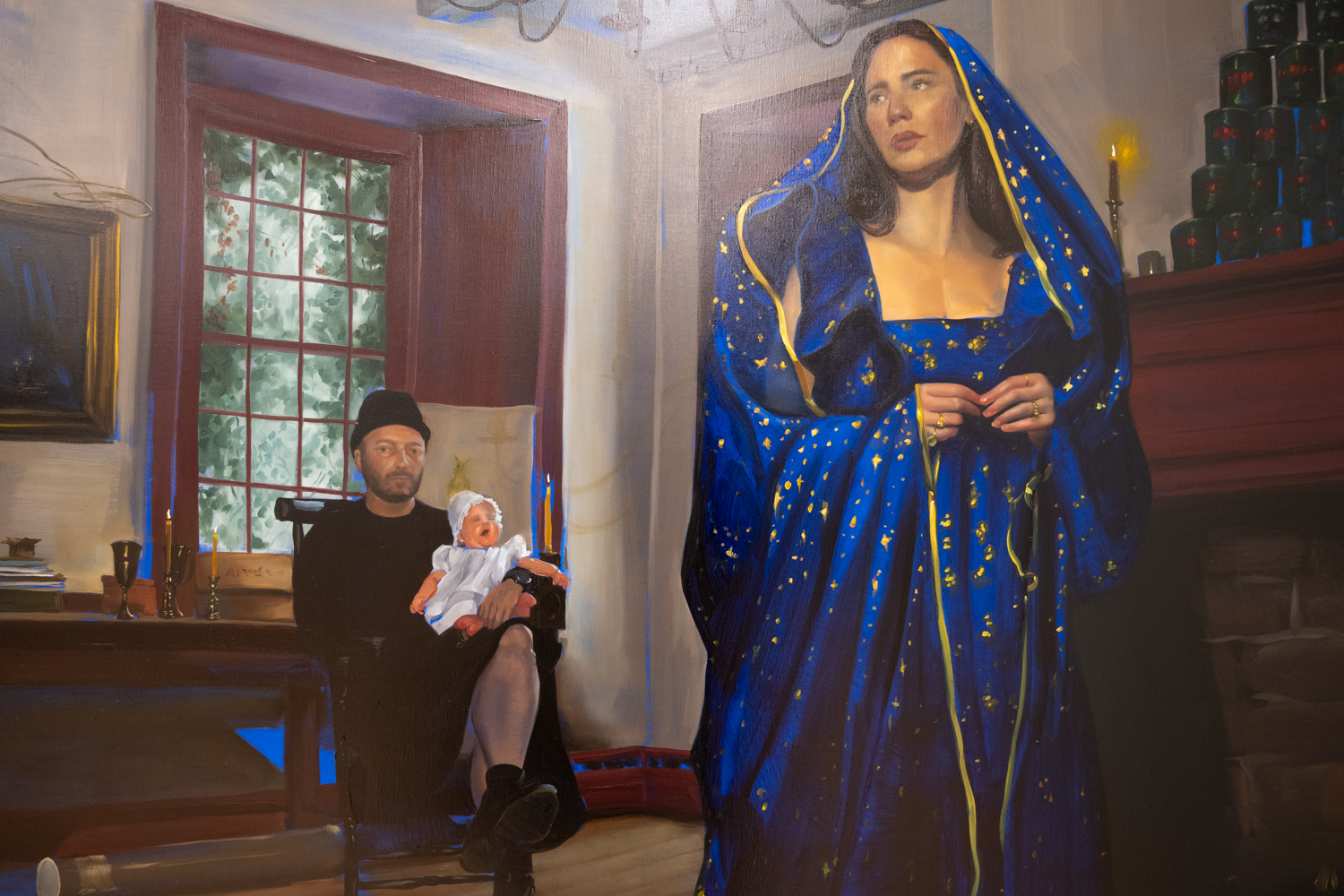
Coan calls the farmhouse a “perfect alchemical container.” Her interest in alchemy centers on transformation, particularly the shift into midlife. When I asked whether she understood it as metaphor or spiritual reality, she began with her experience of consciousness: how attending to daily life might change her reality through “initiations into different levels of consciousness.”
“This is very abstract,” she acknowledged.
She described the paintings as the “fruit” of that introspective experience.
For the most part, Coan faithfully depicted the house as her in-laws live in it. They have been there for roughly thirty-six years, gathering the belongings that now fill its rooms.
“The house feels like a living entity,” she wrote.
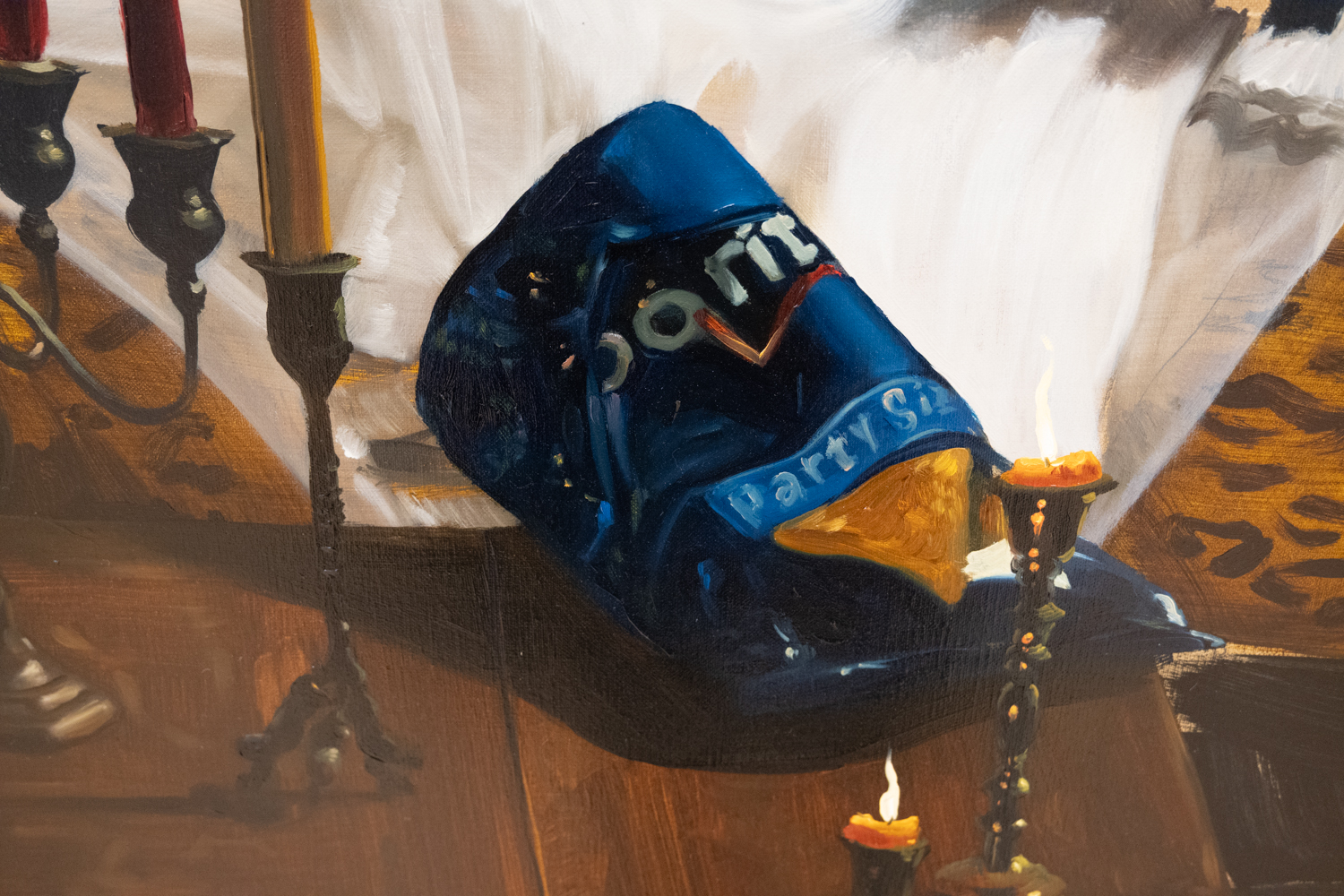
Painting those possessions was part of her attempt to convey that feeling. She also deliberately included Doritos, Apple Watches, iPhones, tarot cards, and paperbacks.
“I wanted the viewer to know that the paintings are happening now.”
In Nigredo (2026), a woman wearing vivid red sits before a dark fireplace between two older figures. Mugs line the mantel beside a clock. Her red shoes and dress draw my eye toward the center, where the hearth opens behind her.
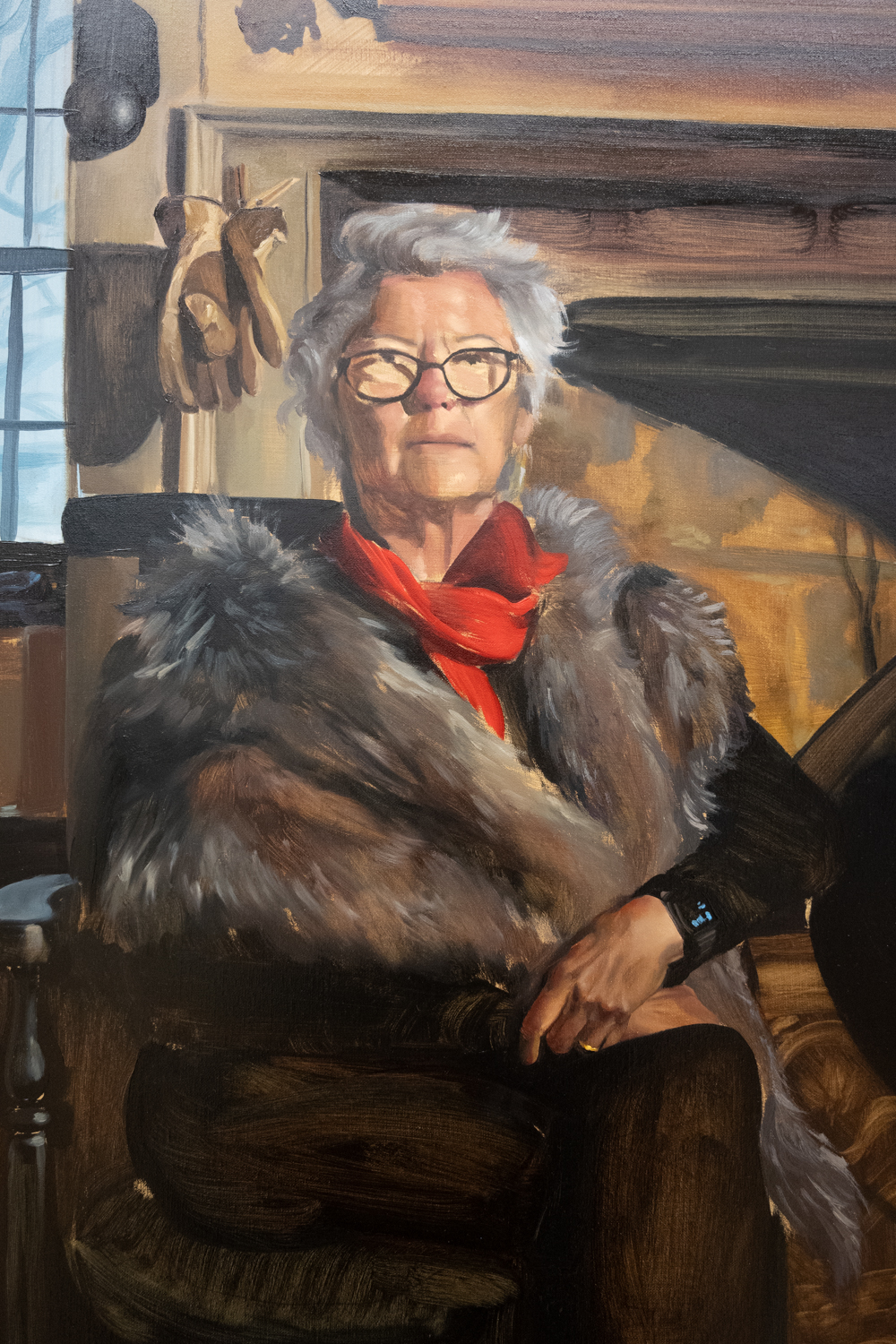
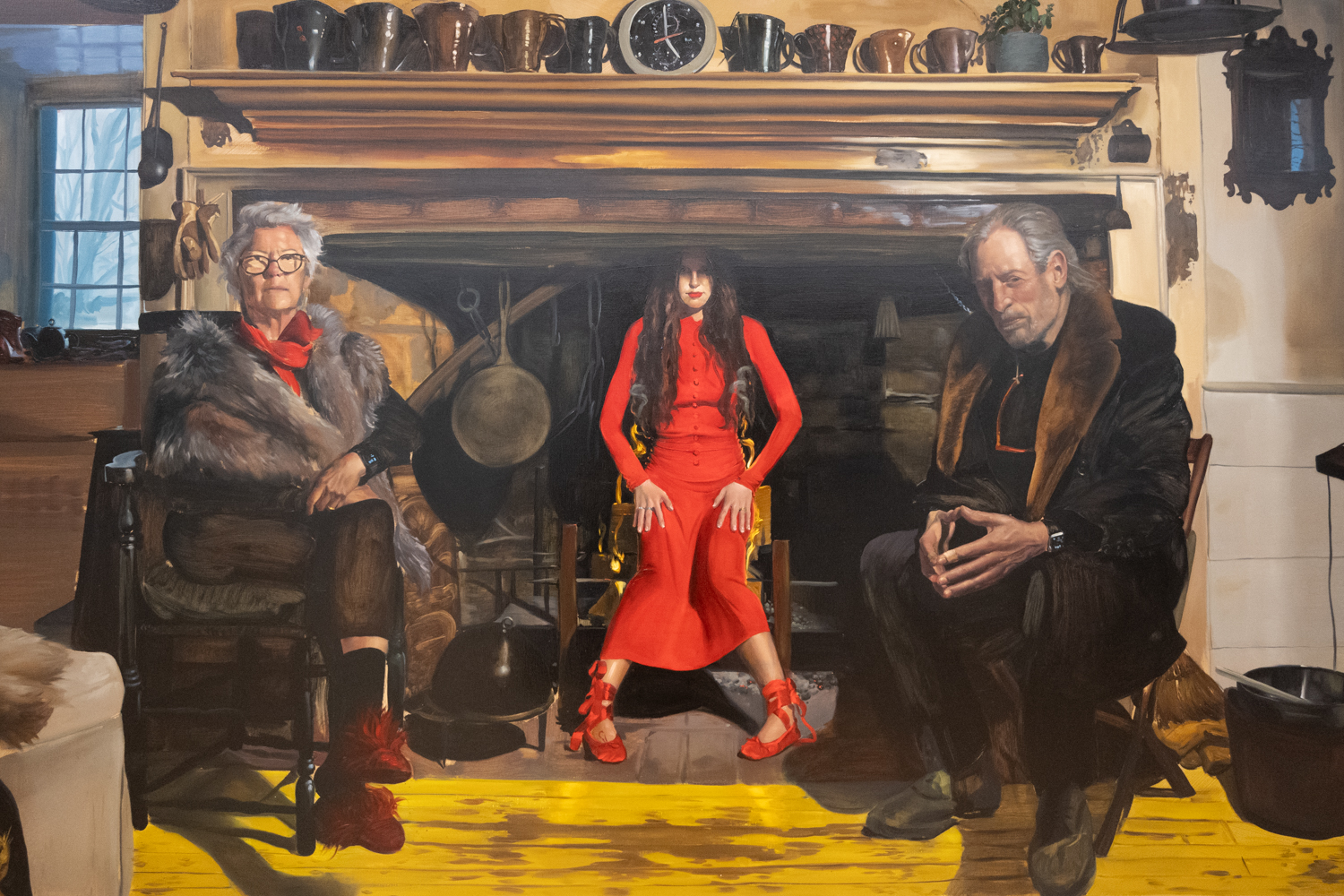
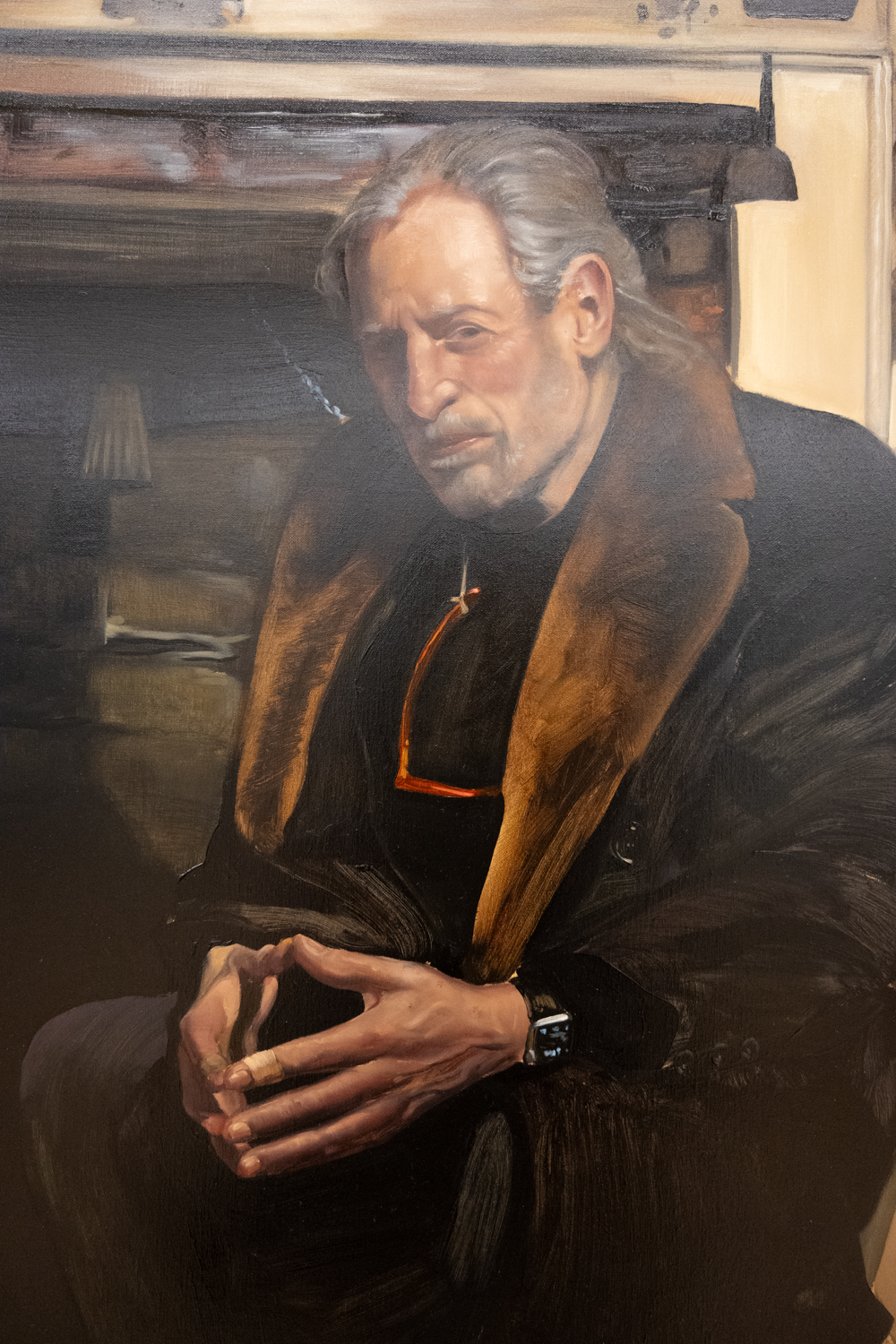
Coan wanted this painting especially to hold the tension between allowing an old self to expire and fearing that there might be nothing left afterward. She described “the fear of burning the self up and having nothing left, disappearing.”
Asked about Sadie, Coan turned to something she recognizes in herself.
“Oftentimes, I’ve chosen to paint women who have this embodied feeling of sensuality, which I also possess,” she wrote.
In Sadie, a roll of tape and drawing materials lie on the table between us and the reclining figure. Her expression gives little away.
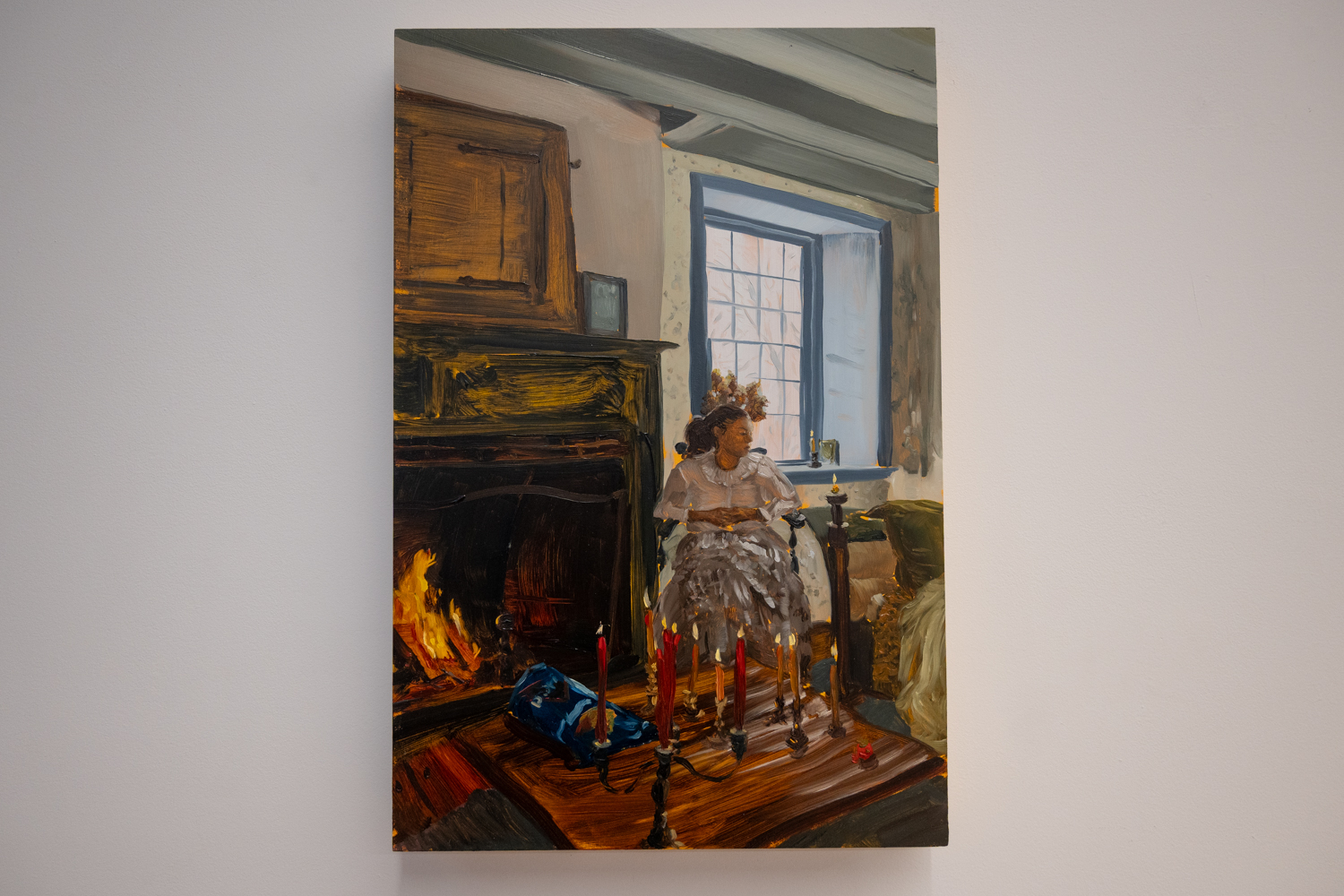
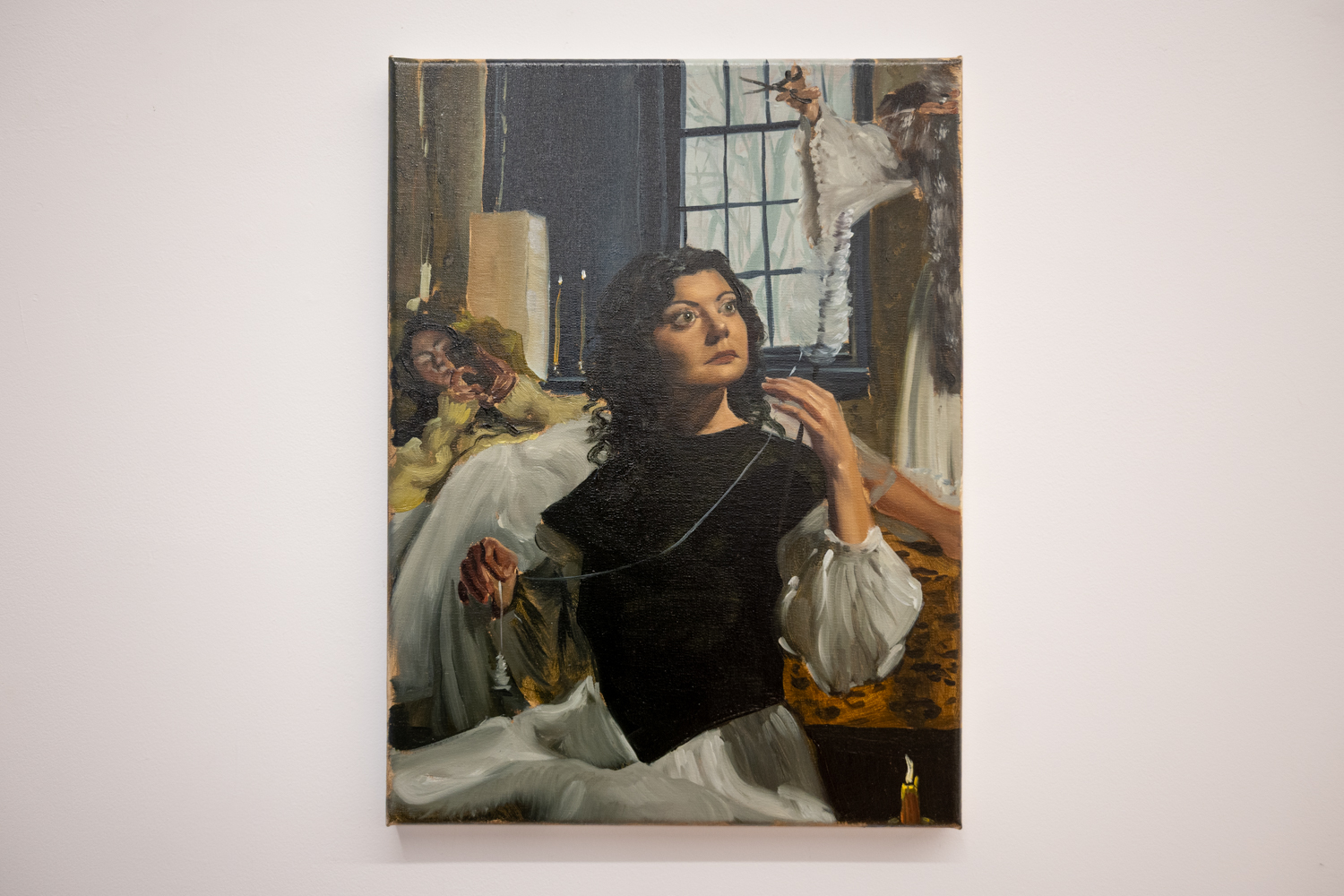
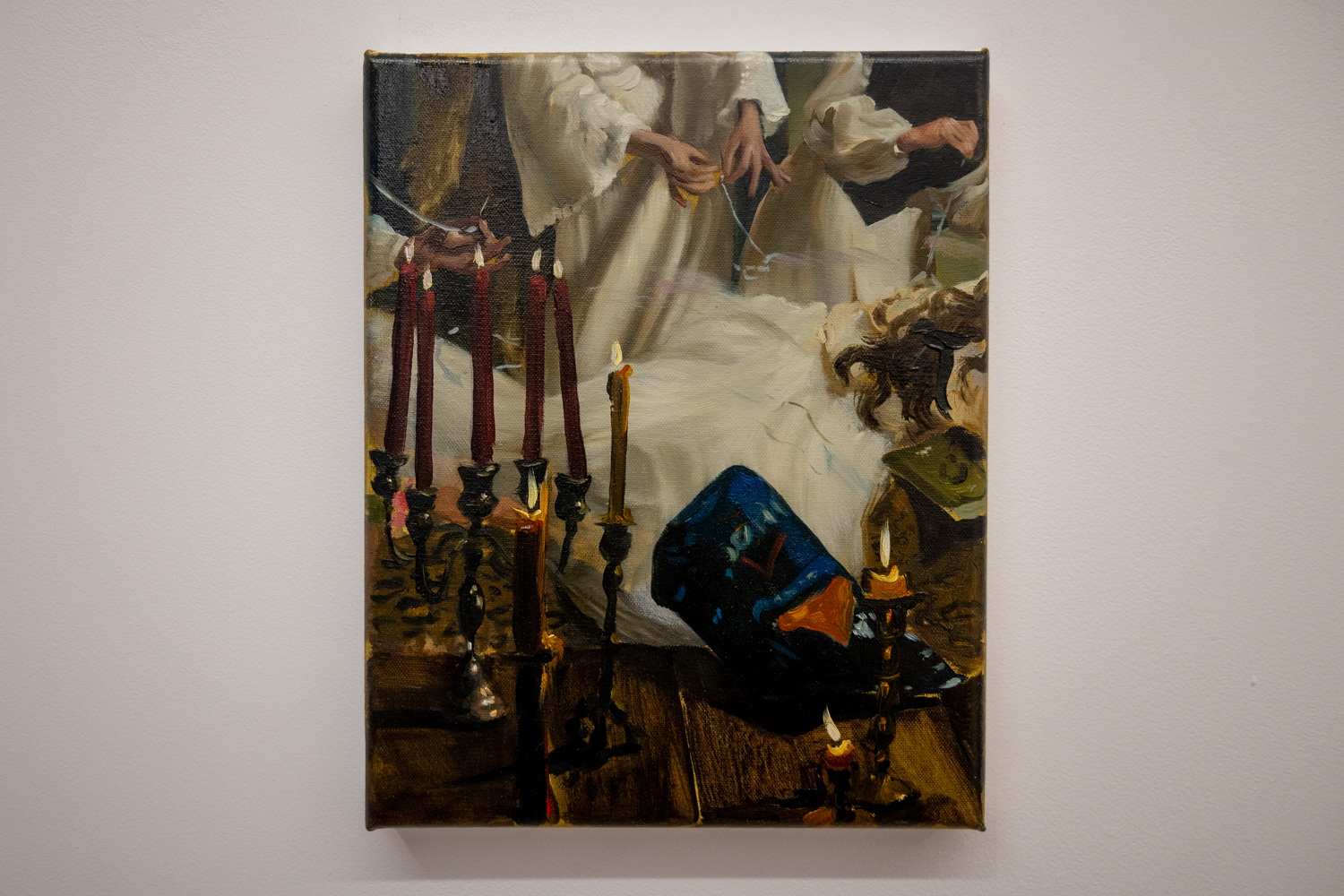
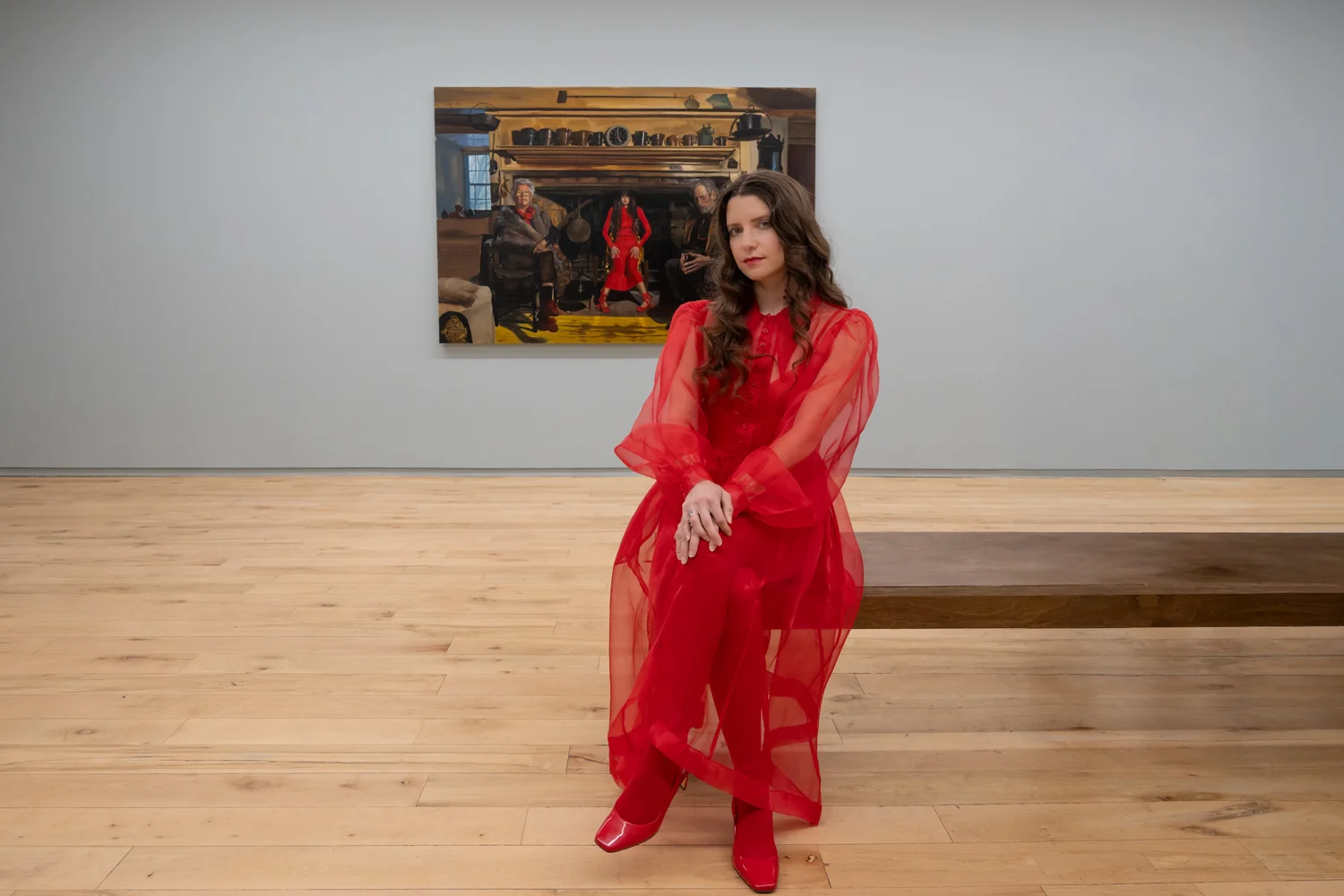
Emily Coan: My Alchemical Vessel is on view at DIMIN, 406 Broadway, second floor, New York, through December 5, 2026.
Photography by Peter Koloff
Further reading: Sophia Bounou: Between Being Seen and Being Understood