When WME sold the New York Fashion Week trademarks and related intellectual property to Signet Fashion, most of the conversation centered on who now owned the brand. I found myself thinking about something else.
The official NYFW calendar is still stewarded by the CFDA, and the runways will look much the same next season. What interested me wasn’t the transaction itself, but what it quietly acknowledged: the value of these gatherings has expanded far beyond the official program.
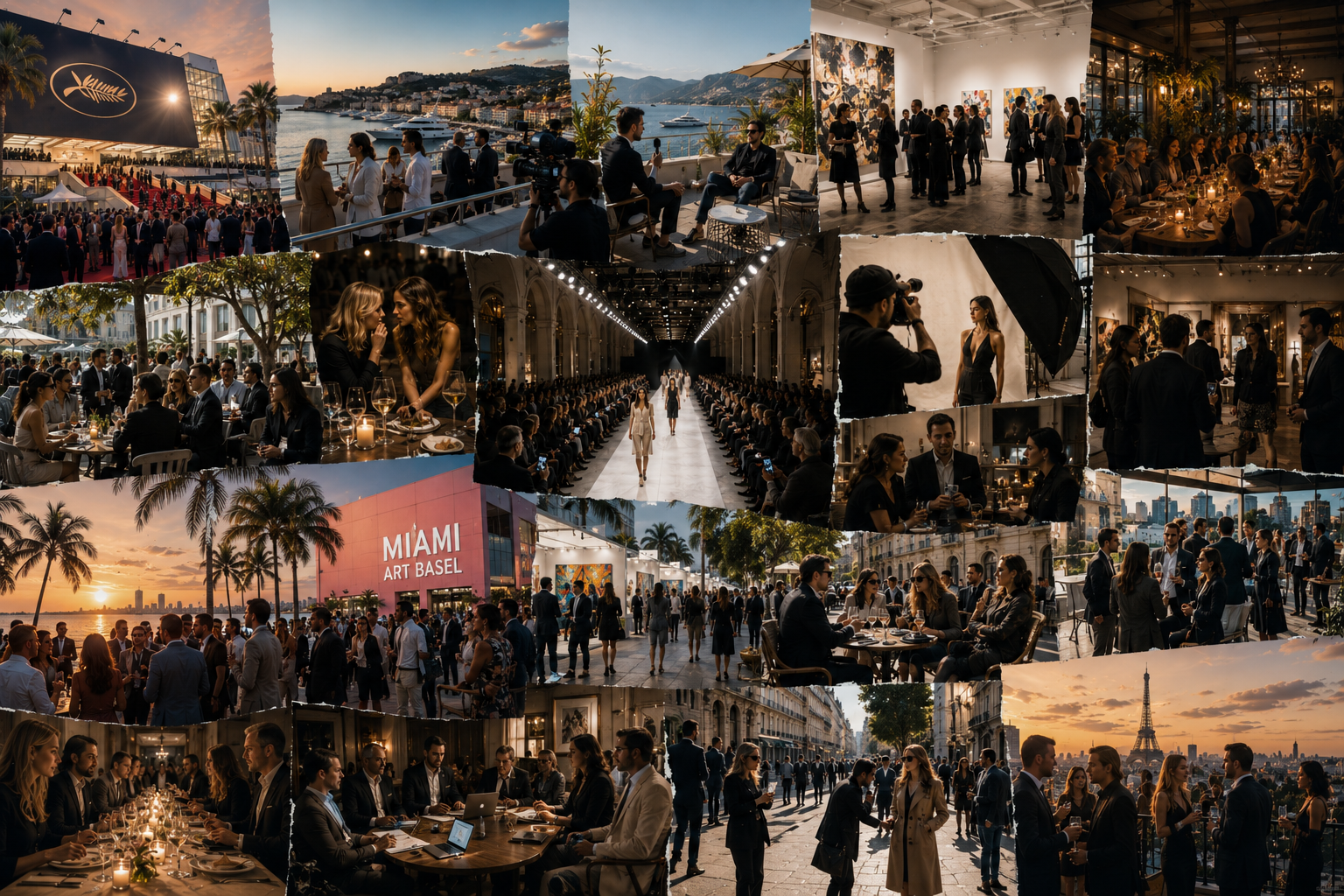
I’ve been watching that shift for years. Whether I’m working around New York Fashion Week, the Cannes Film Festival, Art Basel Miami Beach, or Paris Fashion Week, I keep seeing the same pattern. The official event is still the anchor, but it has become the center of an ecosystem that stretches well beyond the published schedule.
There was a time when attending one of these gatherings largely meant participating in the official event. At Cannes, people came for the films. During Fashion Week, the runway schedule defined the week. Art Basel revolved around the fair itself.
Those events are still why people book flights and reserve hotel rooms. What’s changed is everything that happens once they arrive.
Walk through Manhattan during Fashion Week and you’ll find runway shows sharing the city with private presentations, showroom appointments, beauty launches, investor breakfasts, brand dinners, podcasts being recorded in hotel suites, and content creators filming outside venues they may never even enter. The official schedule still matters, but for many of the people who travel to these weeks, it’s only one piece of a much larger agenda.
Paris works much the same way. The heritage houses remain the main attraction, yet much of the business happens far from the catwalk. Buyers move between appointments, founders meet potential partners over coffee, photographers are hired to create campaign content rather than cover a show, and luxury hotels quietly become temporary headquarters for brands entertaining clients.
Cannes has its own version of this rhythm. The Official Selection remains the festival’s centerpiece, but anyone who has worked there knows how much business happens outside the Palais. I’ve spent mornings photographing executives meeting on hotel terraces, afternoons documenting private interviews, and evenings covering events where the conversations had less to do with the films than with financing, partnerships, or future productions. Plenty of people leave Cannes having closed important deals without ever sitting through a competition screening.
Art Basel has evolved in much the same way. The fair still draws collectors from around the world, but the city fills with satellite exhibitions, gallery dinners, private collections opening their doors, hospitality events, and luxury brand activations. The official fair gives everyone a reason to gather. The surrounding week creates opportunities that simply wouldn’t exist without that concentration of people in one place at the same time.
Part of what has driven this evolution is the way industries now communicate. Social media, creator culture, digital publishing, and the constant demand for content have expanded the value of these weeks far beyond the official venues. At the same time, face-to-face meetings have become even more valuable. When thousands of decision-makers already happen to be in one city, opportunities appear that would never exist on an ordinary Tuesday.
That concentration is the real product.
The official program gives everyone a reason to get on a plane. Once designers, editors, founders, investors, photographers, creators, brands, collectors, and executives know they’ll all be in the same city at the same time, an entirely different economy begins to form. Deals are made over breakfast. Partnerships start in the gaps between meetings. A founder meets an investor. A brand hires a photographer. A filmmaker is introduced to a future producer. The runway, the screening, and the fair remain the reason these weeks exist, but they’ve also become catalysts for everything that grows around them.
My own work reflects that shift. Ironically, I’m rarely hired to photograph runway shows. I’ve spent Fashion Week photographing a founder launching a company before crossing town to make portraits of an executive because key clients happened to be in New York that week. In Cannes, I’ve documented private interviews and client events that had little to do with the films themselves but everything to do with the opportunities created by having so many influential people gathered in one place. None of those assignments were part of the official program, yet none of them would have existed without it.
That’s the part of these gatherings I think receives the least attention. We still talk about Fashion Week, Cannes, and Art Basel as though each were a single event. In practice, they’re closer to temporary cities. For a few days, entire industries compress into the same streets, hotels, restaurants, galleries, and back rooms. The official program gives those days structure and legitimacy, but it’s everything surrounding it that increasingly drives the relationships, the business, and much of the media attention.
None of this is unique to fashion. Film festivals have become marketplaces for financing, technology, distribution, and brand partnerships. Art fairs bring together luxury companies, hospitality groups, collectors, museums, and cultural institutions. Fashion weeks still showcase collections, but they’ve also become platforms for storytelling, networking, and commerce that reach well beyond the runway.
That’s why I don’t see the sale of the NYFW trademarks as the beginning of something new. I see it as recognition of something that has already happened.
The world’s most influential cultural gatherings are no longer defined only by what’s on the official schedule. They’re defined by the ecosystems that grow around it.