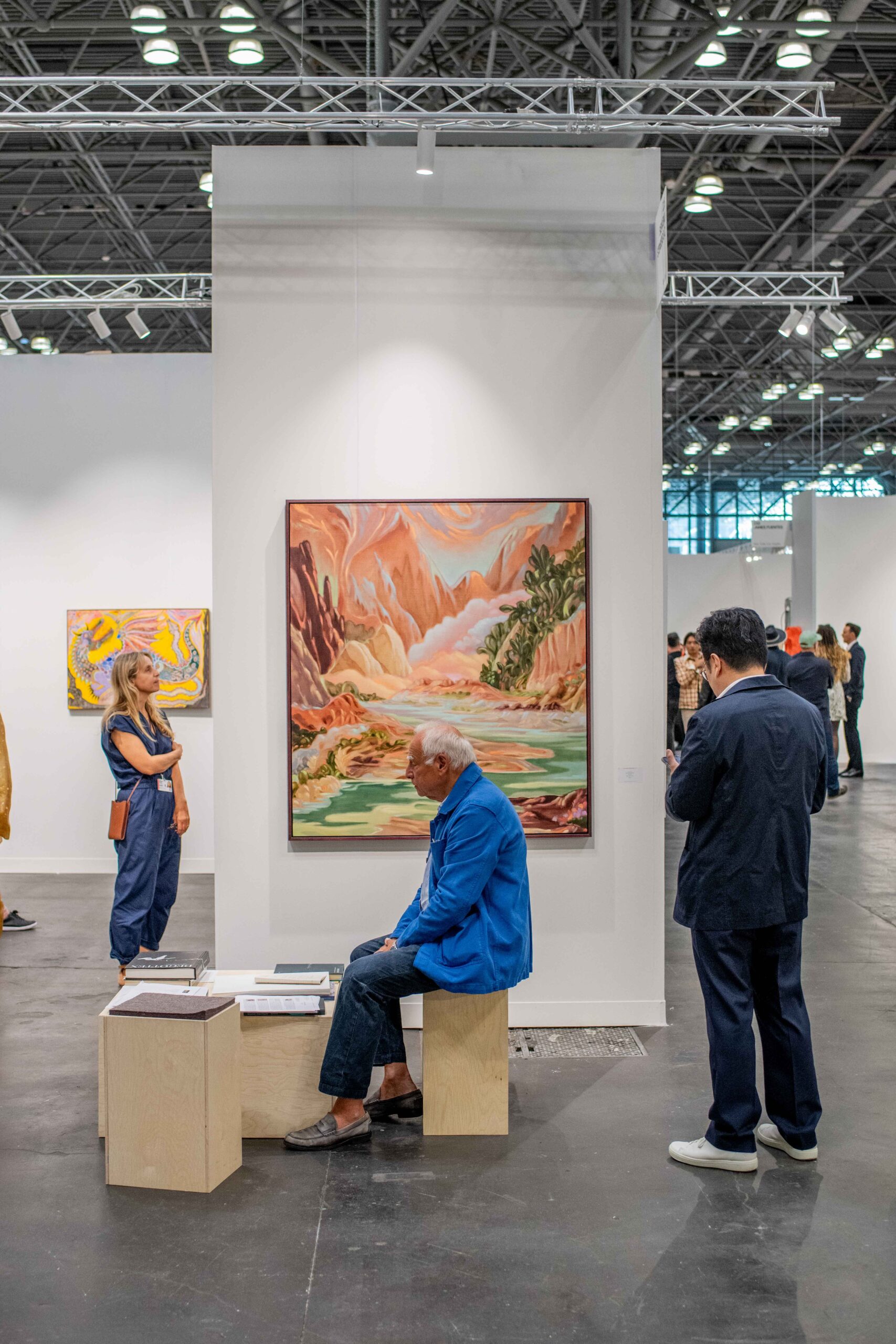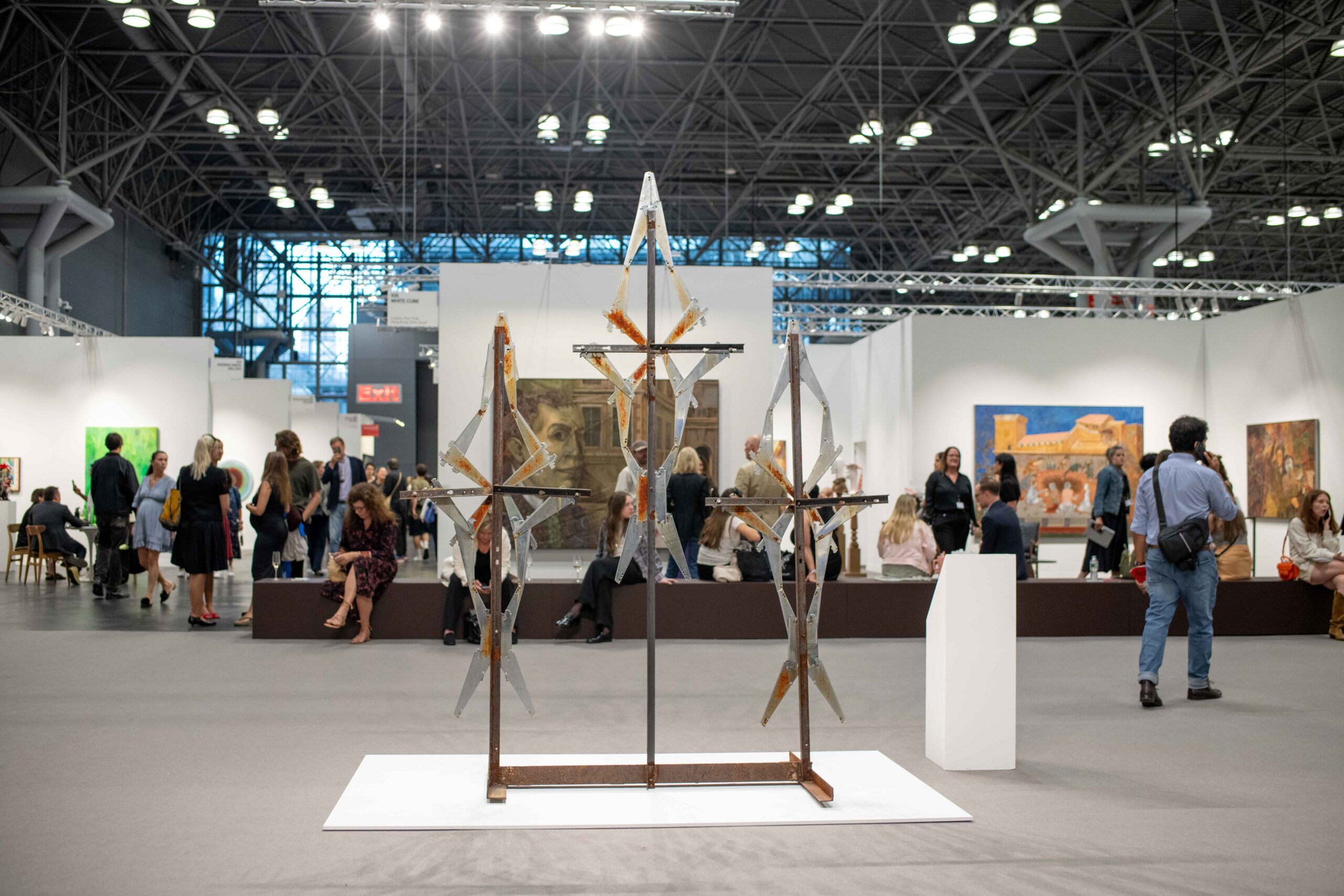


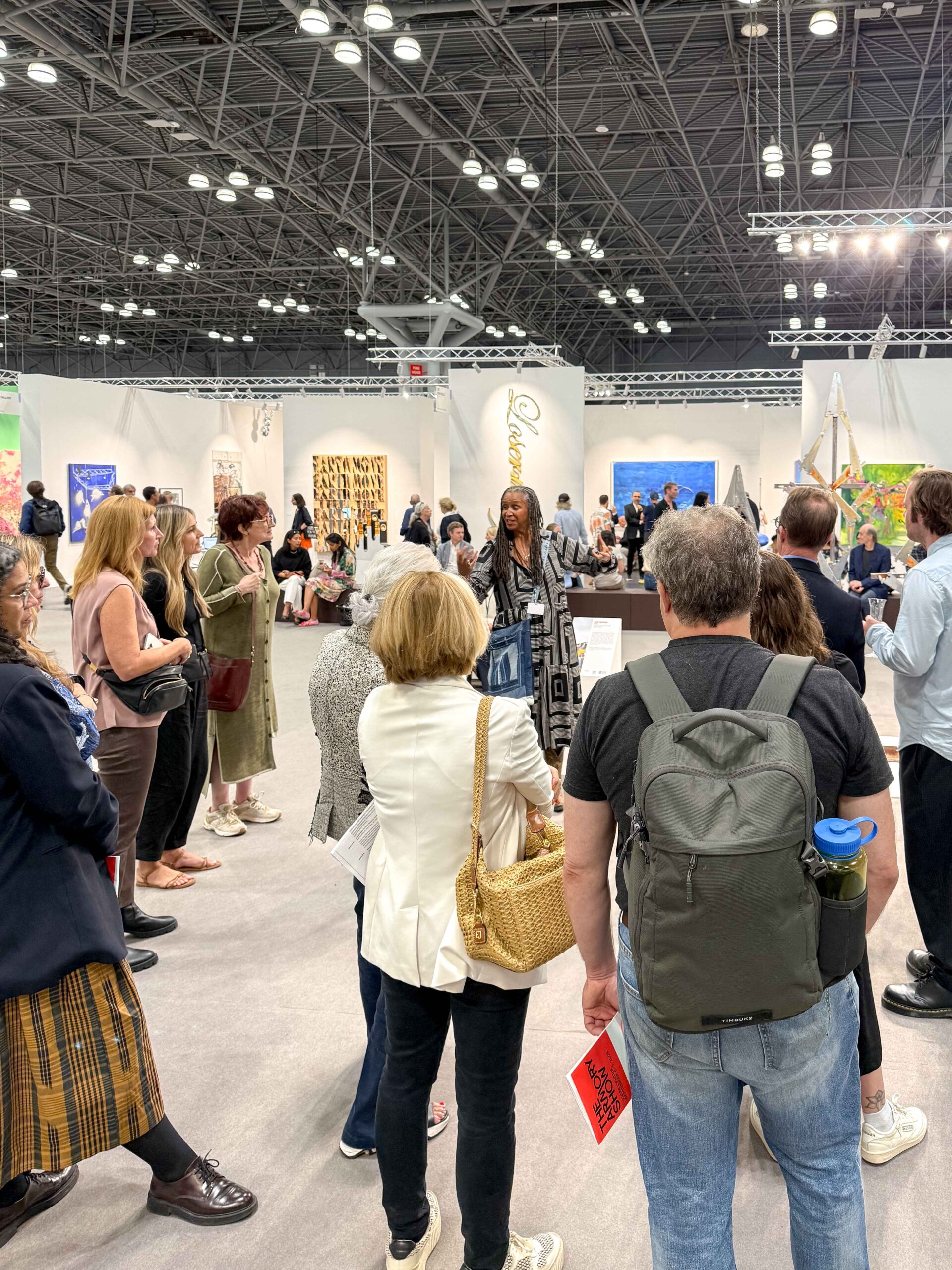
Walking into The Armory Show this year, I felt less like I was entering a convention hall and more like I was stepping into a theater before the curtain rose. Banners read like scenery, glass walls glowed, and the crowd felt set and ready. Advisors moved shoulder to shoulder with clients, pointing, pausing, explaining. The air was quiet but charged, businesslike and serious, as if the aisles were a trading floor for art.
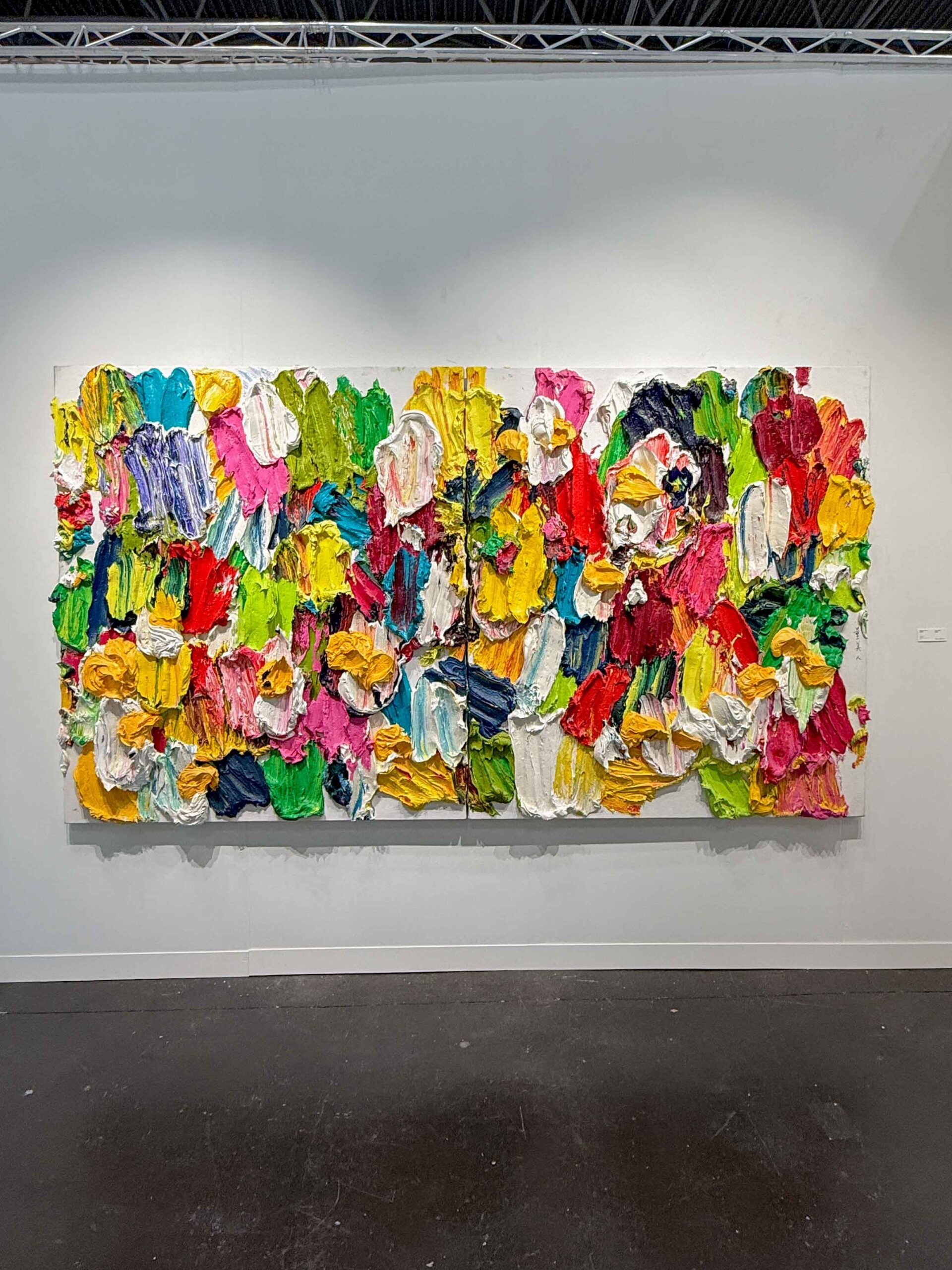
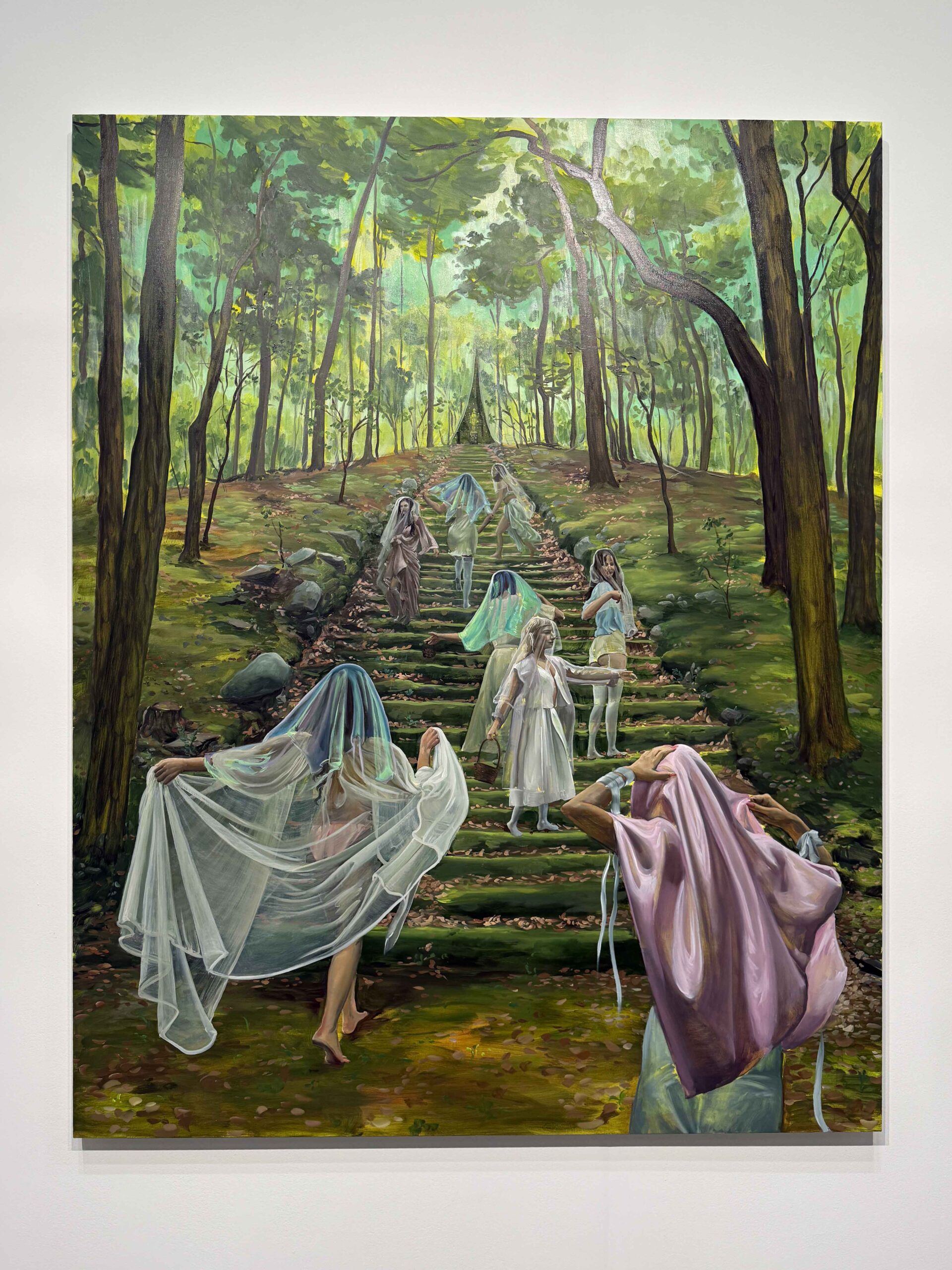
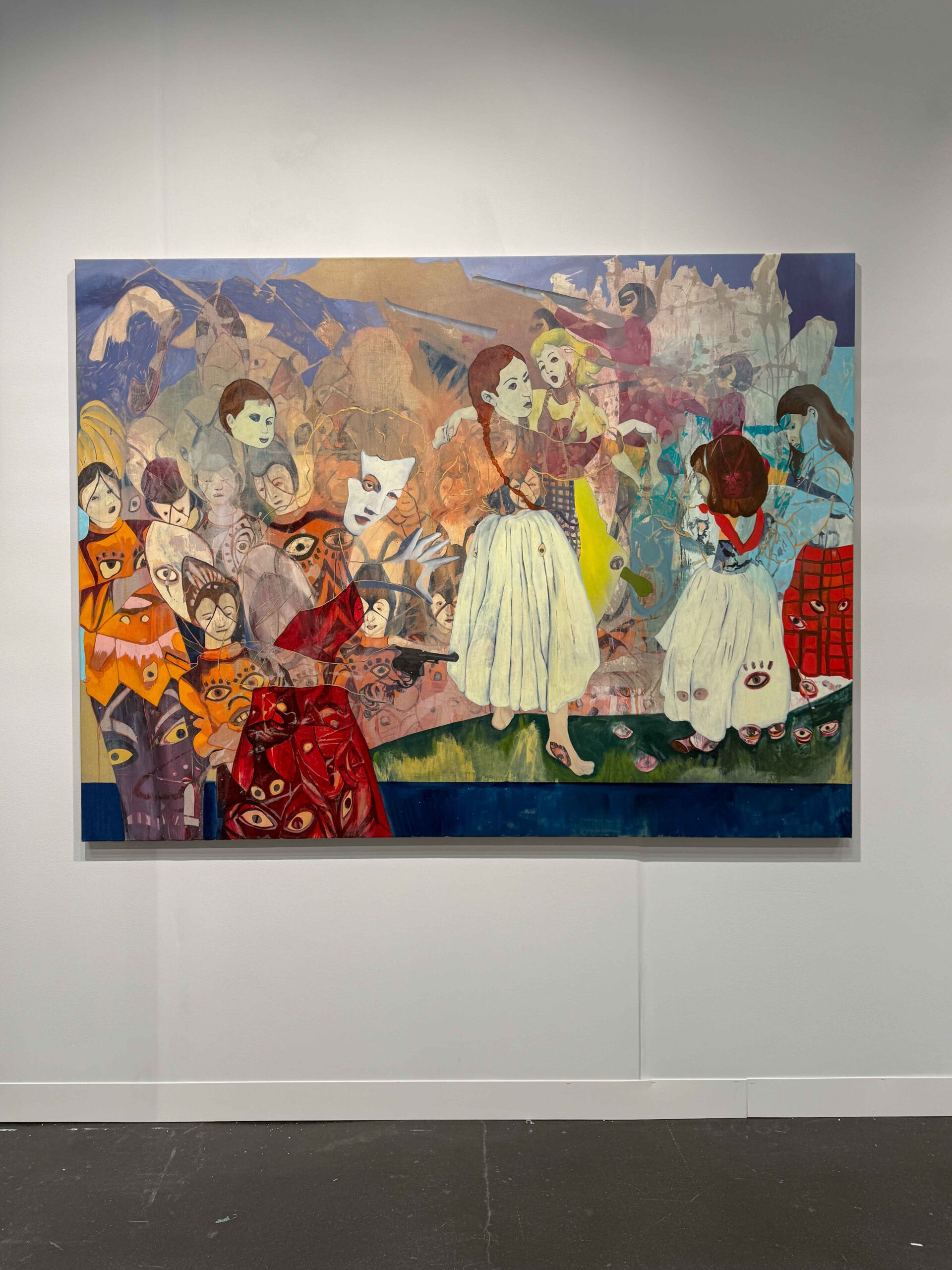
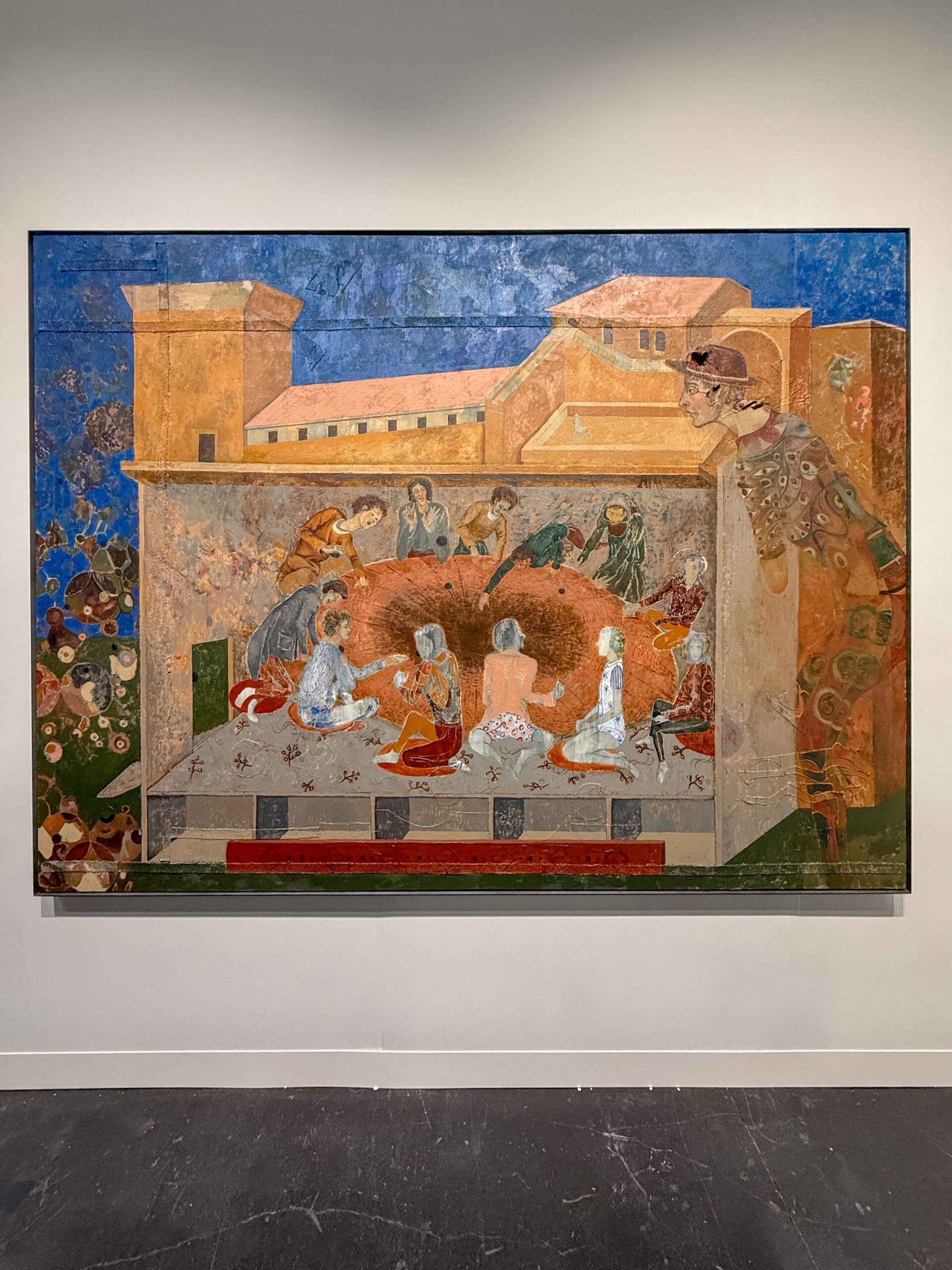
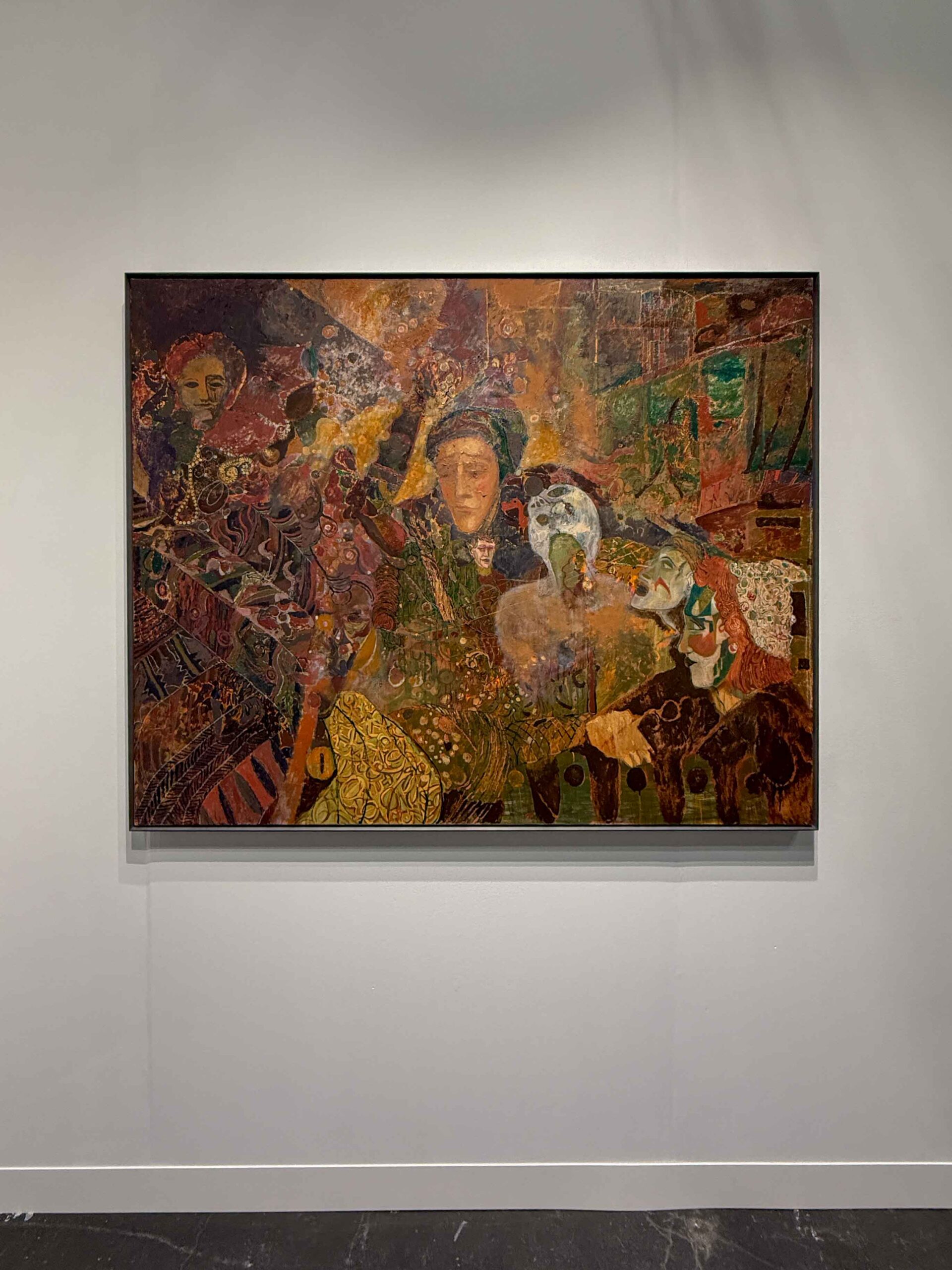
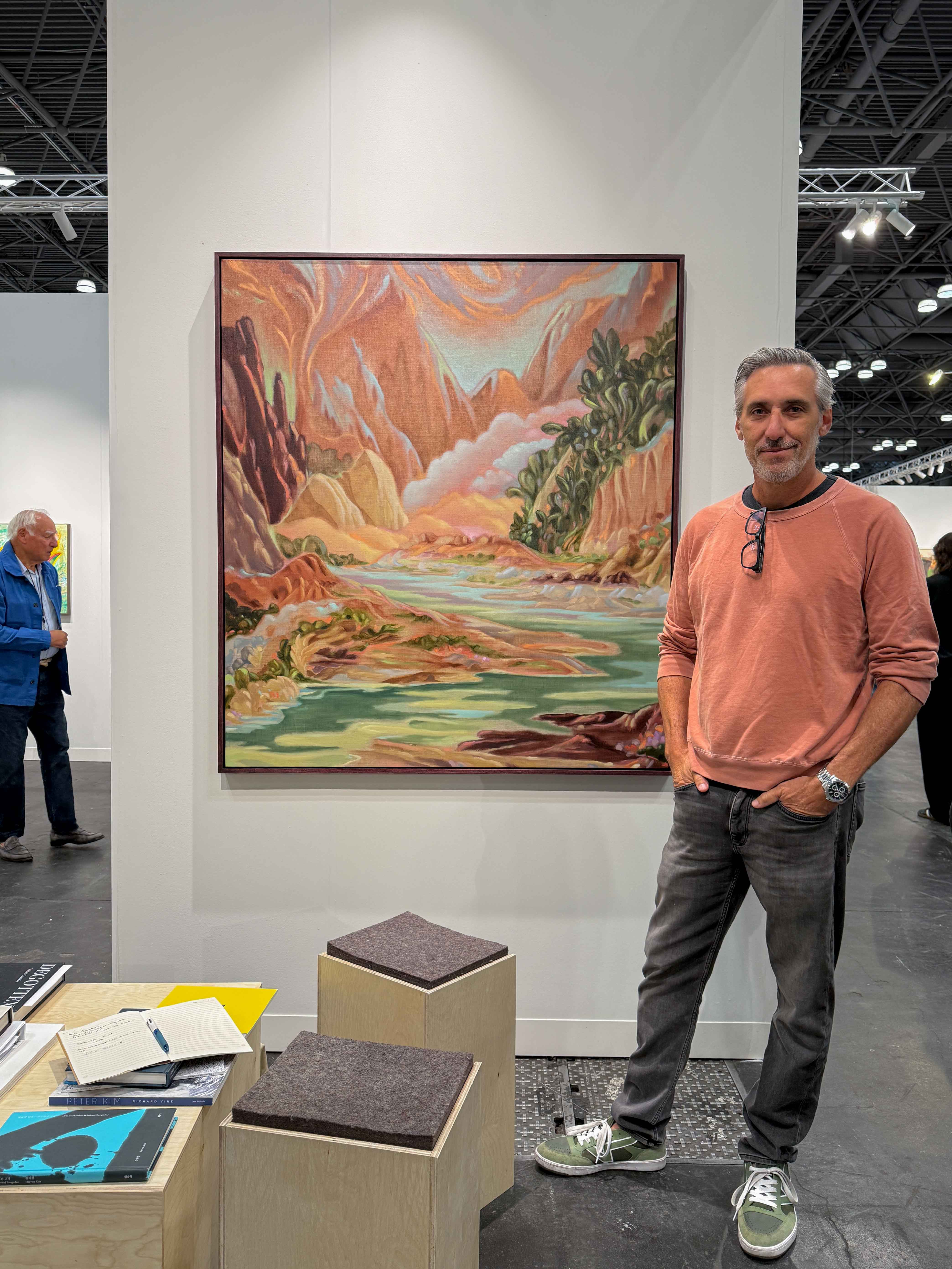
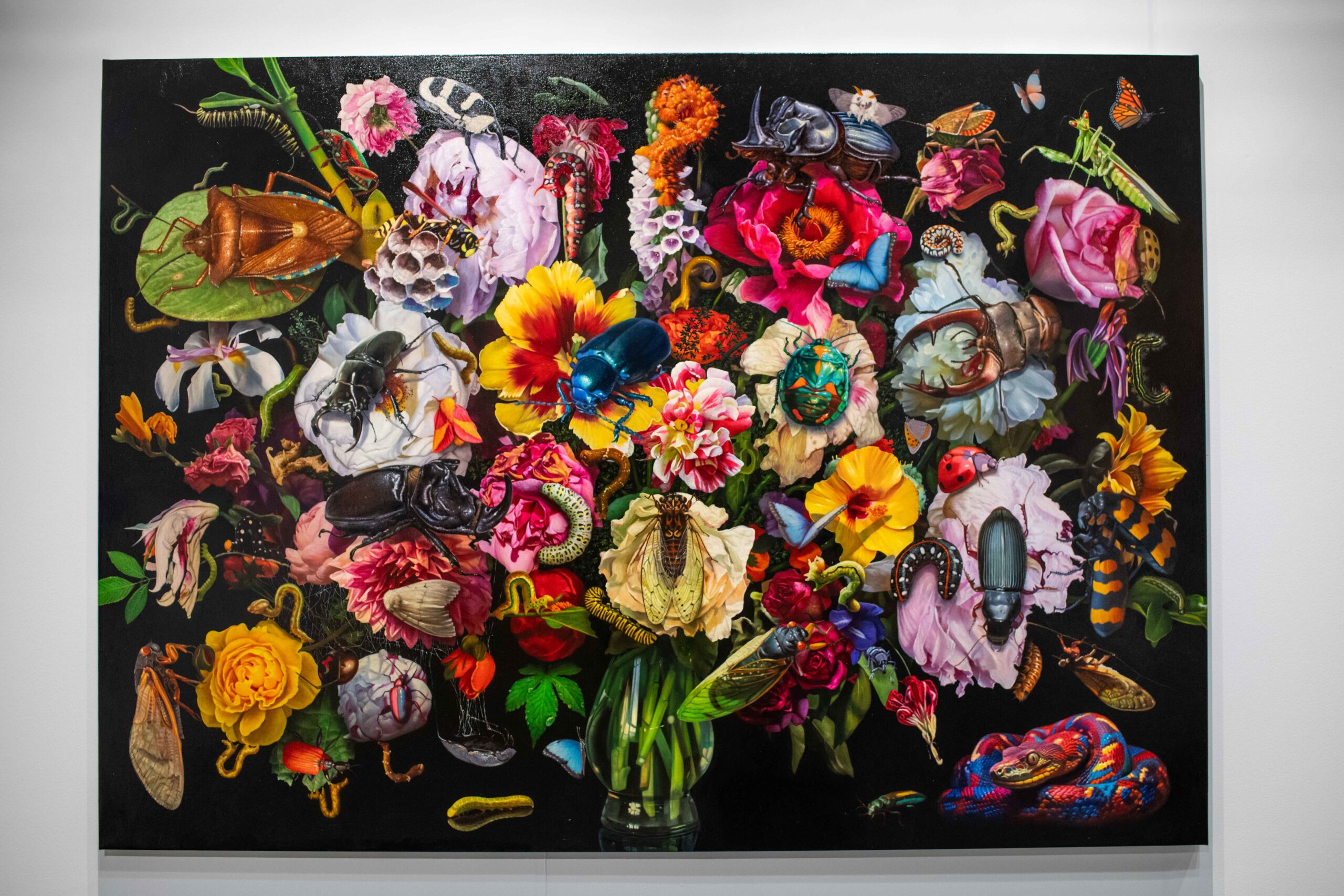
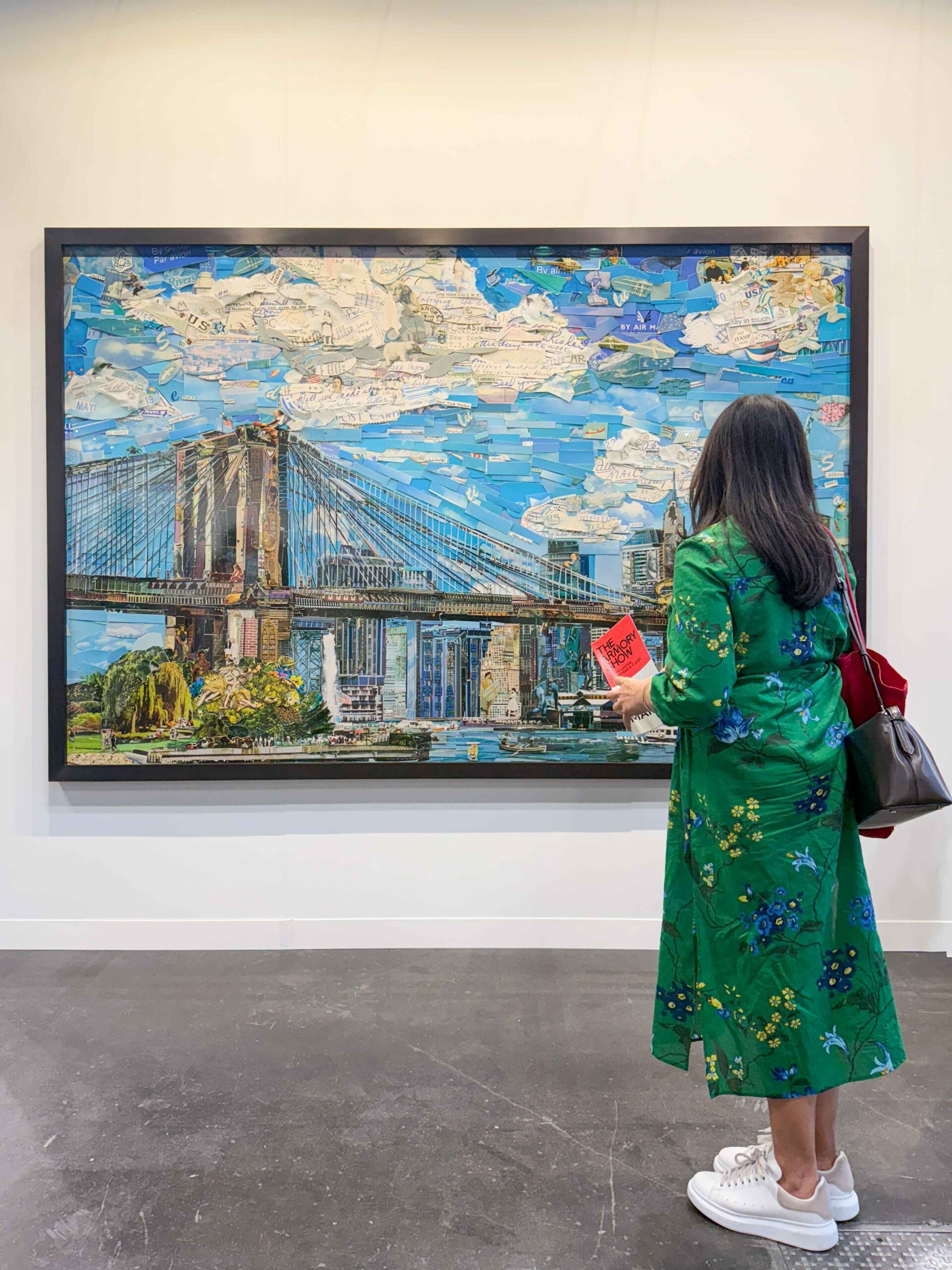
Certain works grabbed me right away. Vik Muniz’s Brooklyn Bridge had the magnetic clarity he is known for, blending history and illusion in a way that pulled people closer. Emily Coan’s painting of women walking up stairs held a calm that lingered even after I moved on. Alexis Soul-Gray’s Battlefield, rehearsing the end (2025) carried memory and fragility with real weight. Emilio Perez, long known for cut abstractions, turned to oils here, letting brushwork take the lead. Zhu Jinshi’s Quantum Beauty breathed on the wall, part painting, part sculpture, dense yet alive. Marc Dennis delivered razor sharp hyperreal canvases that rewarded anyone who leaned in for a closer look.
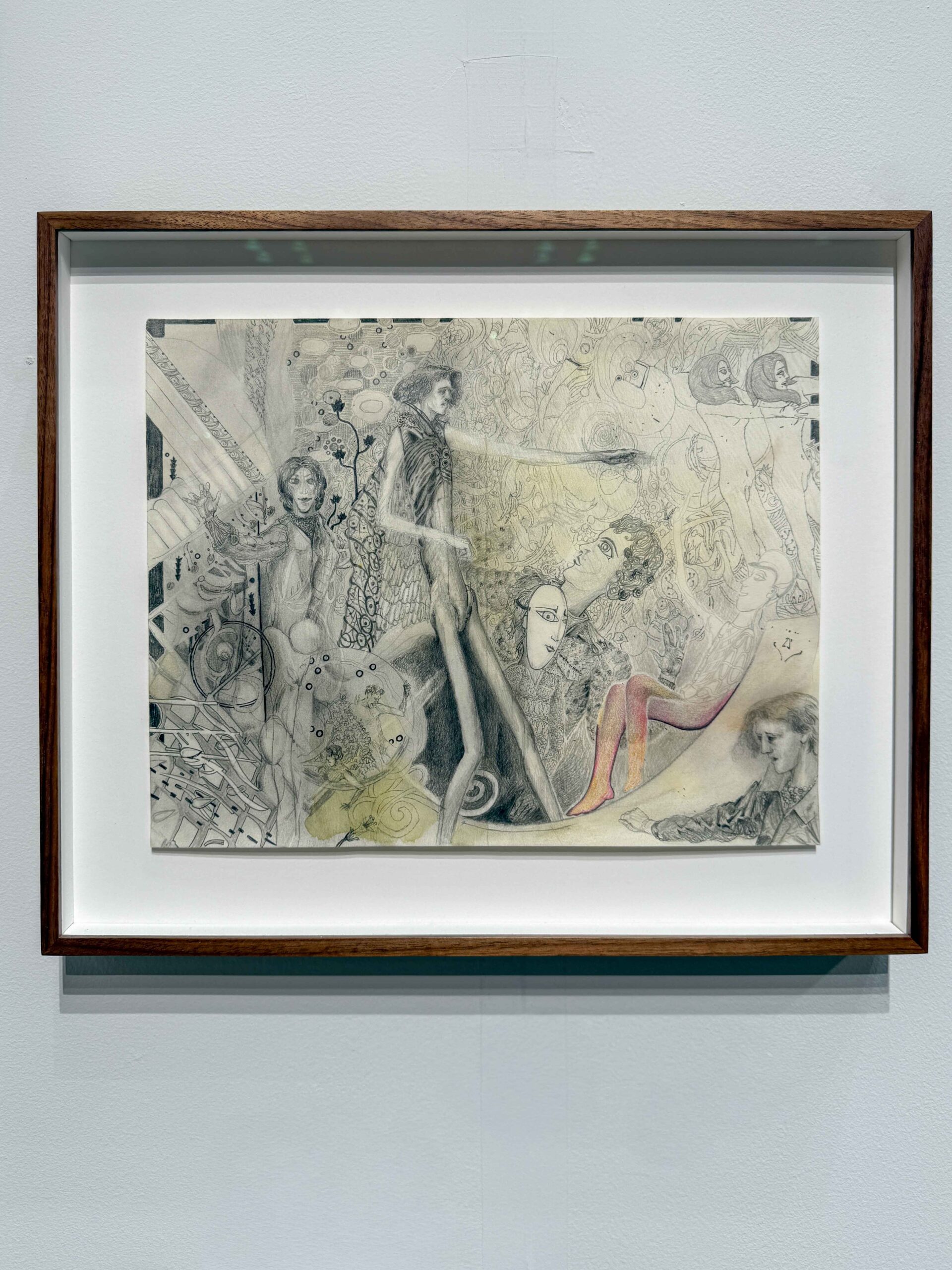
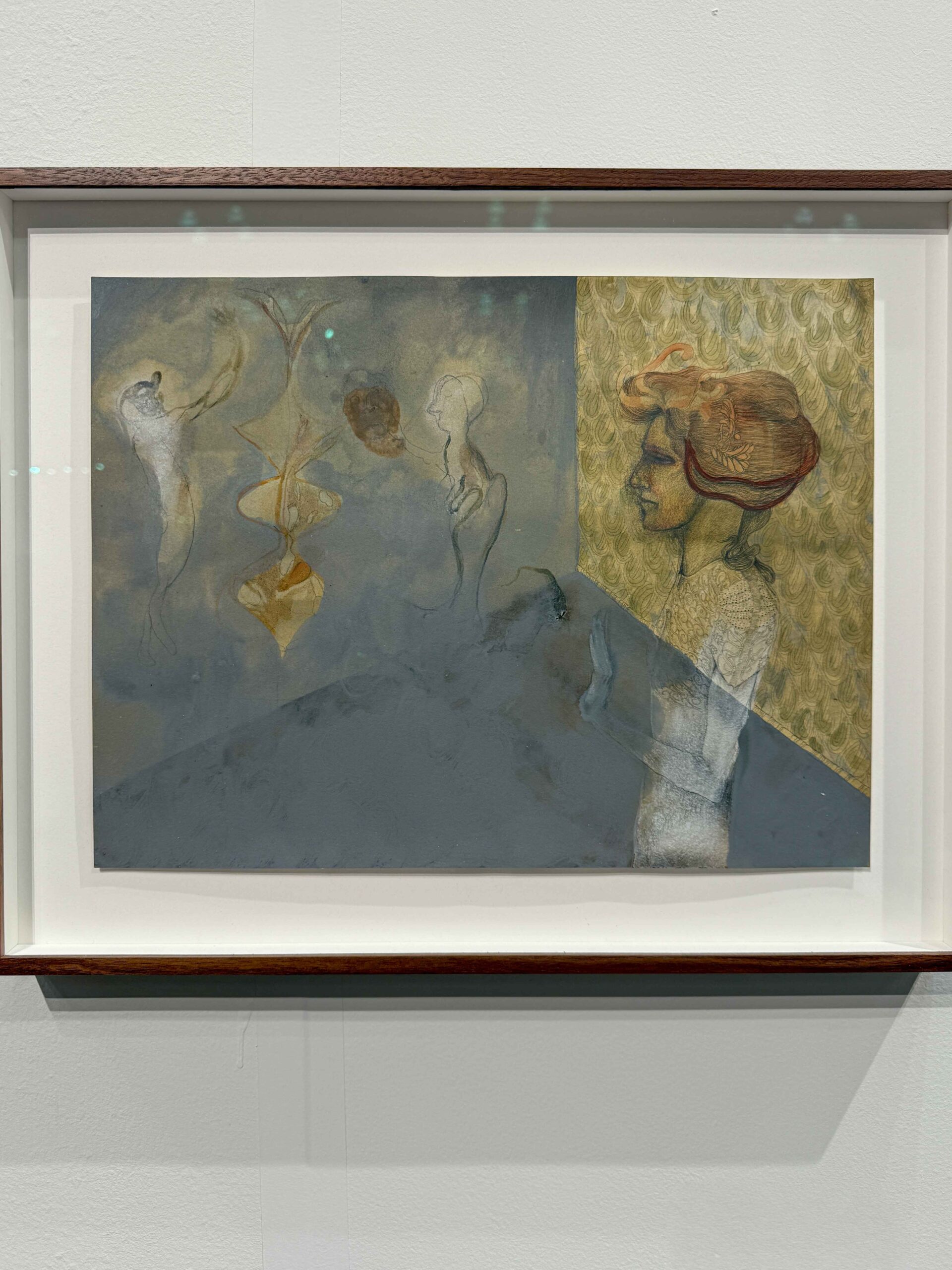
White Cube became a pause point for me. TARWUK’s drawings were detailed and atmospheric, works on paper that seemed to slow time. I noticed critic Jerry Saltz taking a long look, which matched my own instinct to stay.
Then I found Jacqueline Surdell’s installation. I liked it immediately. Rope knotted, steel weighted, forms layered into something raw and intentional. Dealers were pointing it out to clients, and I heard it come up in side conversations, but the work did not need the buzz. It had its own gravity. Surdell moved quickly through the crowd, yet the piece held its ground and kept pulling people back.
Throughout the day I listened. Two advisors described the energy as split. Major works by established names were in a holding pattern while mid tier artists were finding steady traction. Collectors were patient and deliberate, circling with care. Artists without booths still showed up, because presence matters. A curator put it simply, showing up is part of the job. Veterans of the fair said the same idea in different words, this is a long game, slow and steady.
By late afternoon the mood changed. Phones came out, the crowd loosened, and the fair shifted into a second act. Content creators and influencers arrived, and the same pieces that drew quiet morning conversations became backdrops for selfies and short videos. The day felt like two overlapping fairs, a market in the morning, a spectacle in the afternoon.
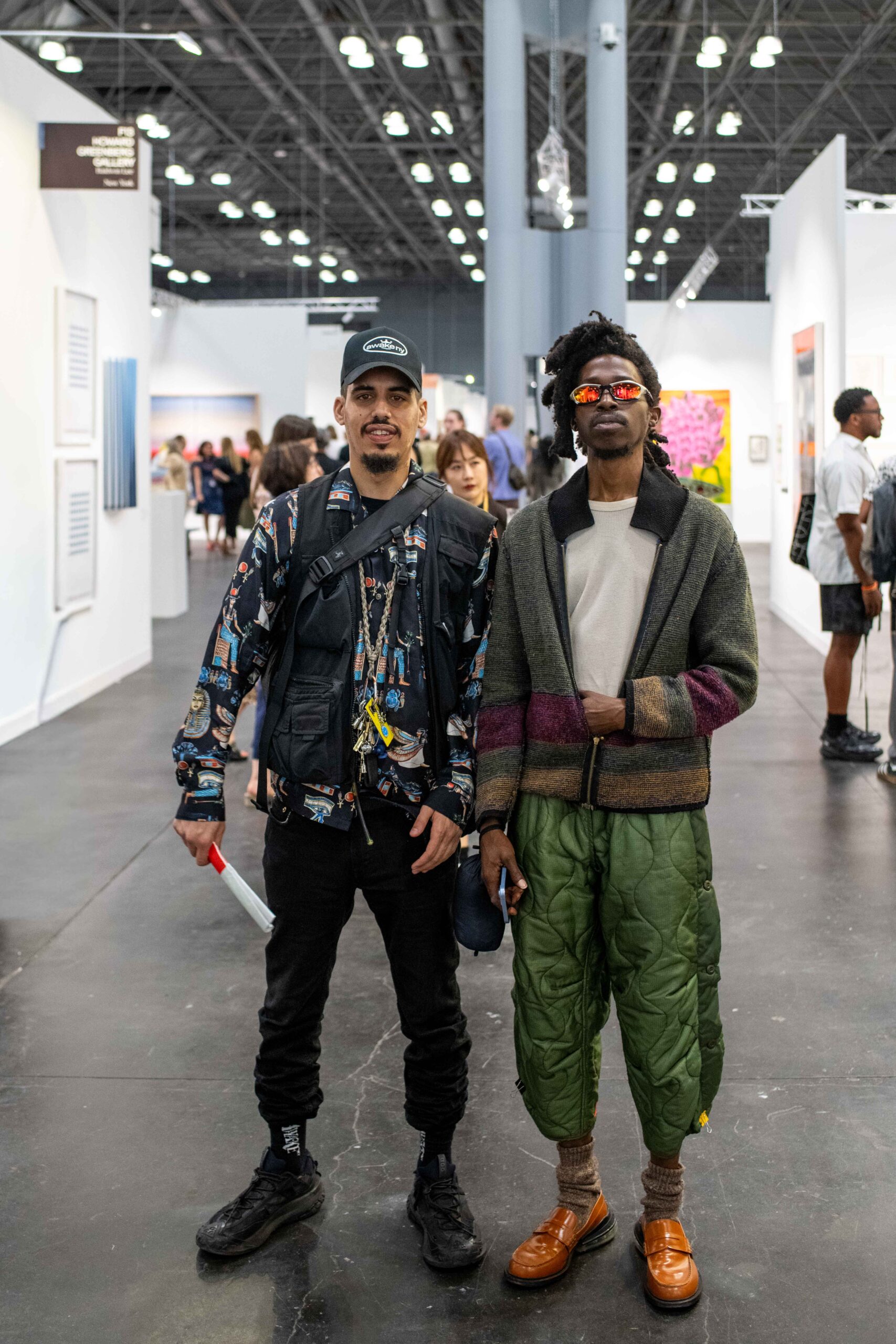
That balance is the Armory equation. Some works soar, some stall, and most live somewhere in the middle, all on the same stage. At times the performance takes the lead. At other moments substance cuts through the noise. And sometimes, like Surdell’s installation or TARWUK at White Cube, the art does not just join the show, it takes command of the room.
The Armory Show is theater. That is exactly why I go. The roles, the rhythm, the reveals, and the rare moments when everything clicks, that is the draw.