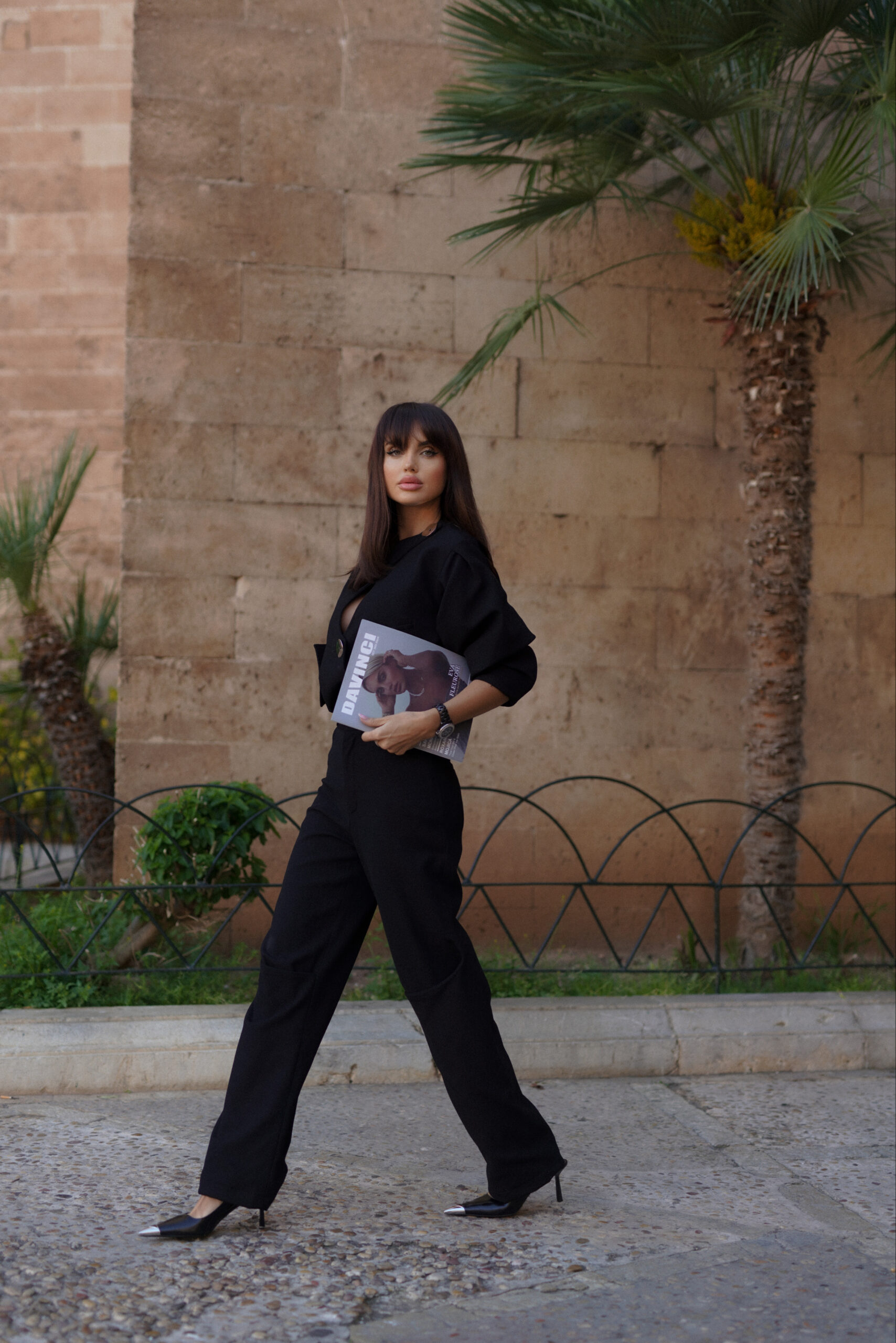

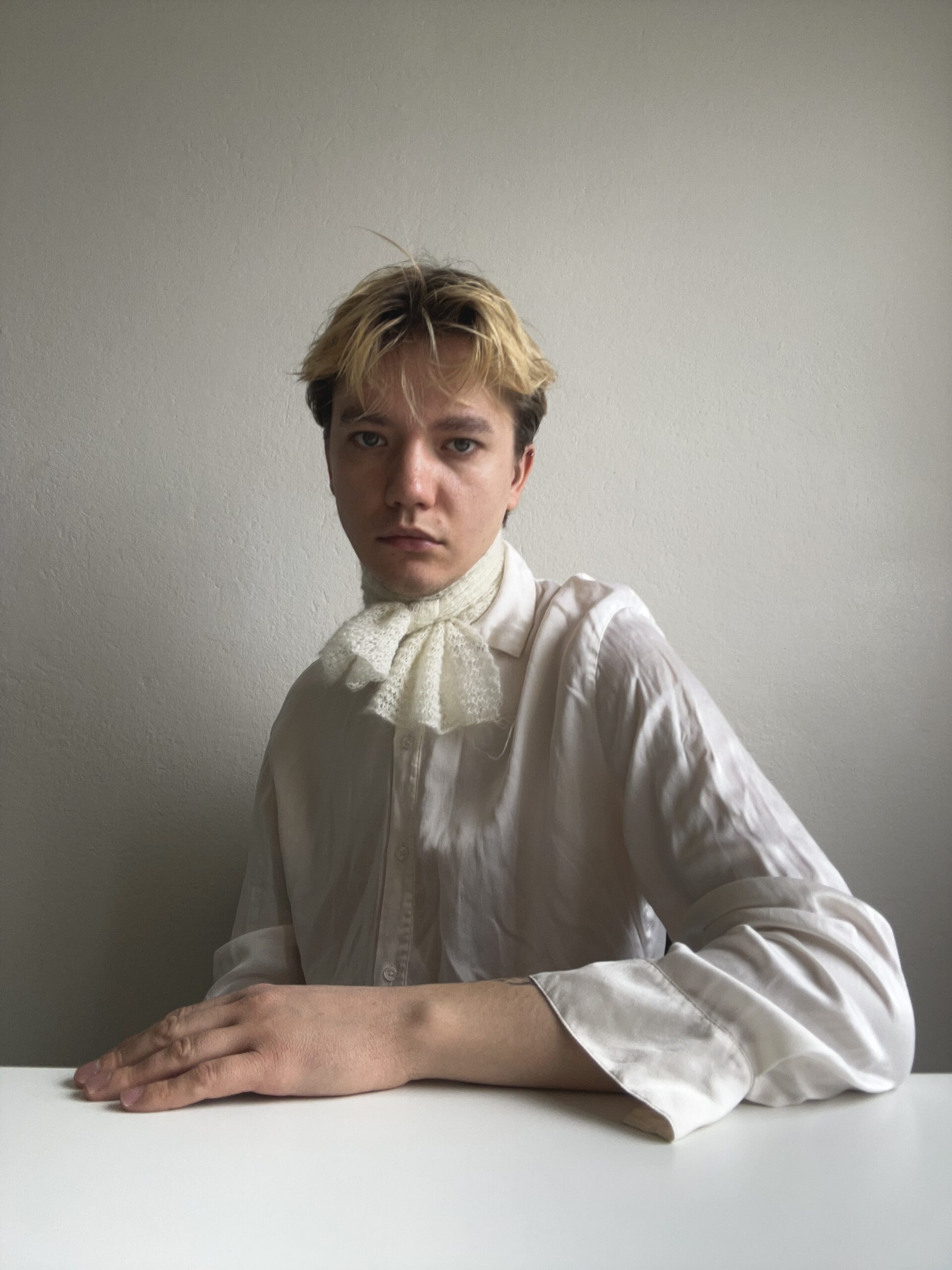
Fashion has always loved the polished image: the perfect dress, the flawless campaign, and the applause after the final runway walk even when the collection itself fails to resonate.
There is a collective illusion that success arrives complete and fully formed. Yet what often remains hidden, is the seed growing in darkness outside the camera frame: the unstable years before recognition, the endless movement between cities where everything returns back to zero, and the emotional exhaustion of simply trying to survive.
For the Polish artist and designer Paweł Stanisław Robuta, this grey reality follows every visible achievement. While his work has appeared at Copenhagen and Paris Fashion Events. Netflix productions, And United Nations-related projects. another story folds itself behind those headlines.
One shaped by doubt, displacement, ambition, and a refusal to compromise identity for the sake of “trend.”
Born in 1997 in Sandomierz, Poland, Robuta’s relationship with art began long before fashion entered the picture. Robuta’s spent part of his childhood in Rome, where his grandmother lived, and the city became his first school. Surrounded by sculpture, architecture, and history, he developed the belief that creativity is not a luxury, but a tool through which we shape our understanding of the world.
Into The Deep core
Inside his home, art existed as an everyday reality. His mother, who worked in hairstyling while practicing sewing and drawing, passed down a sensitivity toward craftsmanship and materials. Fashion wove itself naturally into daily life, and that relationship between emotion and making later became the backbone of his artistic language.
Over time, fascination with fashion evolved into obsession. Designers such as John Galliano and Alexander McQueen opened an emotional rupture for him, where clothing no longer represented beauty alone, but memory, tension, identity, and narrative. Robuta recalls McQueen’s “Plato’s Atlantis” as a divided moment in his life.
After graduating from art school, he continued his studies at the Academy of Fine Arts in Warsaw while working across costume departments within film production. He contributed to Netflix productions including “Barbarians” and “1670,” alongside the film “The Peasants.”
curator Alex Murray-Leslie of Chicks on Speed invited Robuta to ASVOFF, where he presented documentation from his Master’s project Liquid Relics within the Fashion Activism category.
Returning to the Cinema, It has revealed another face of creative labor, one built on collaboration, pressure, invisibility, and long hours. During the filming of “1670,” Robuta made a decision that redirected his path
applying for a Master’s degree at the Swedish School of Textiles. The move led him into a life divided between Poland, Sweden, and Paris, movement fueled by ambition and enforced by the unstable reality of emerging creative careers.
From the outside, the story appears as a sequence of successes: a graduate collection in Copenhagen, the “Burning Desire” leather accessories presented during Paris Fashion Week, and a shirt design later becoming part of a private United Nations-related collection. Yet the emotional reality behind all of it remained far more complex.
The Coin’s Second Side
Today, Through the lens of Davinci magazine, Robuta describes his life as “nomadic,” the result of an impossible balance between survival and artistic ambition. Like many young creatives, he learned to grasp every opportunity appearing on the horizon, often without stable ground beneath him.
As he simply states: “The feeling of being lost follows me all the time.”
Perhaps this is one of fashion’s least discussed truths. The industry celebrates visibility while simultaneously exhausting those trying to achieve it. Young designers are expected to become creatives, marketers, strategists, and content producers all at once. Social media intensified this pressure further, transforming creative work into material evaluated through virality rather than depth. Behind the polished visibility often existed another reality entirely: “I’m lost, with zero budget in Paris.”
Instead of chasing “hot,” Robuta chose another path. He refused to build his practice around short-lived relevance, dedicating himself instead to research, learning, and emotional authenticity.
Robuta’s Philosophy Signs
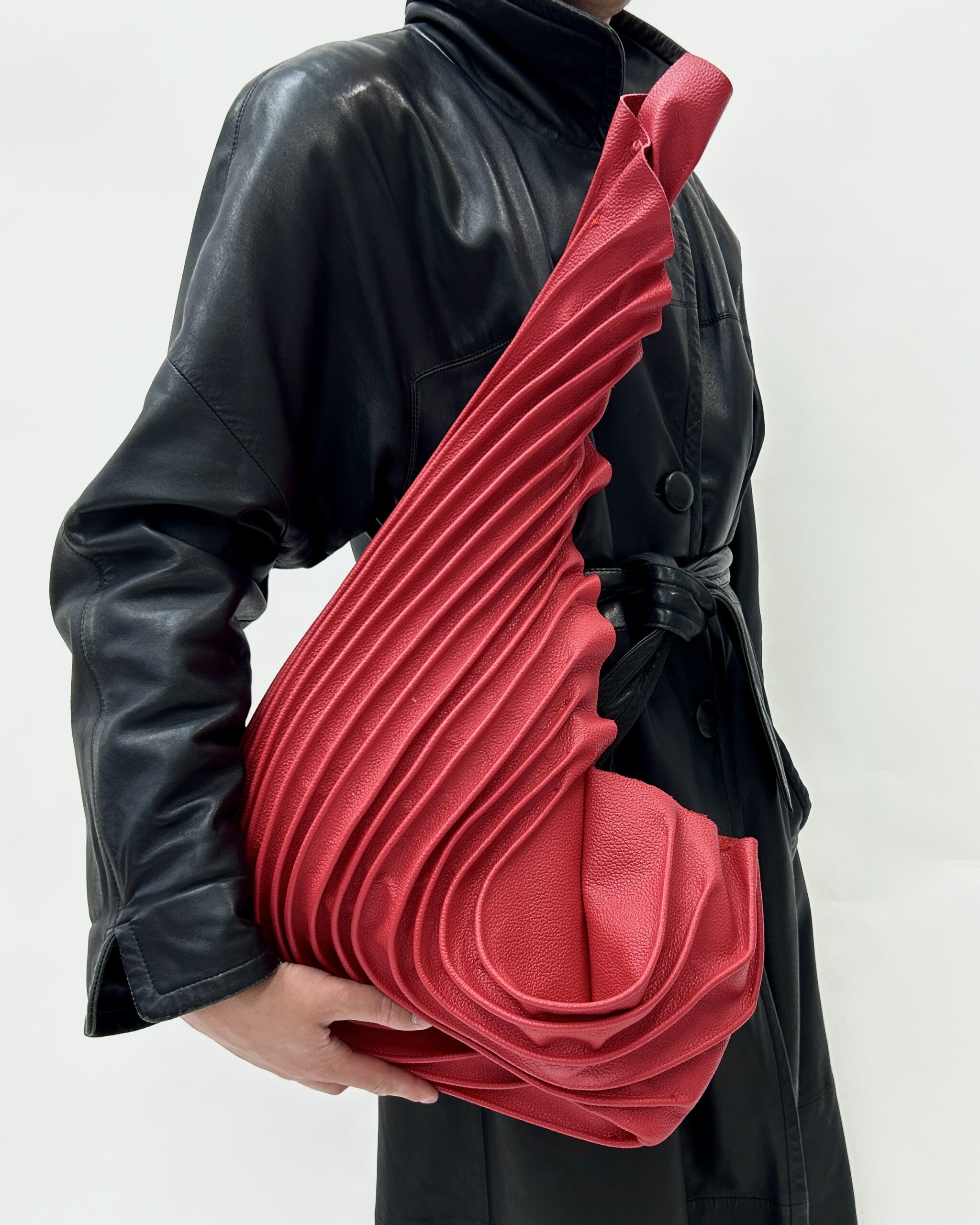
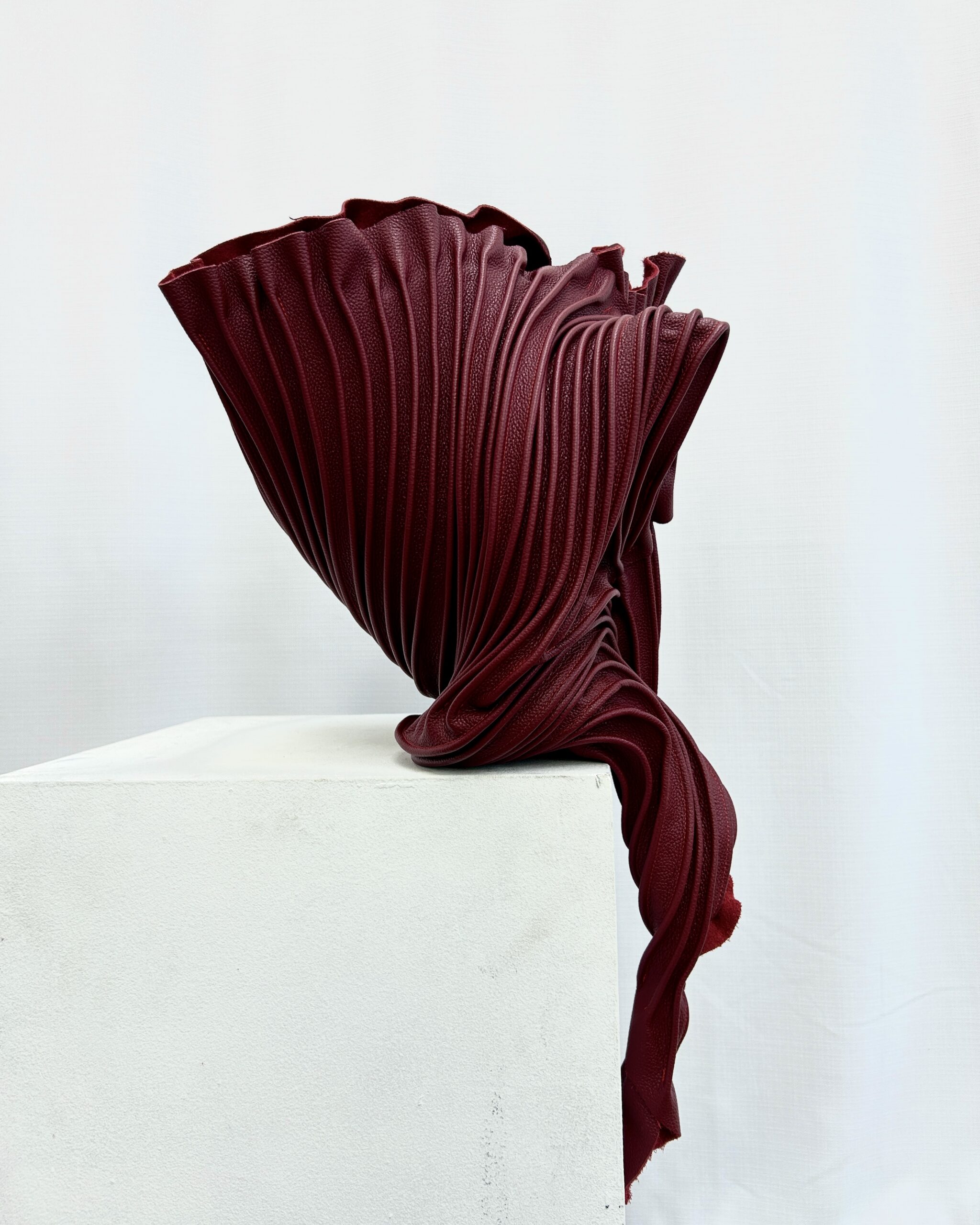
This philosophy appears clearly within “Burning Desire,” the leather accessories collection created in collaboration with Readymade Archive in Milan, and the Source was through Gruppo Mastrotto the Italian tannery.using food-industry byproduct hides and 100% of renewable energy. Instead of searching for flawless leather, he intentionally sought rejected skins discarded by Italian factories, materials abandoned and forgotten.
“My goal is to create something desirable out of something that was considered as trash, unwanted,” Robuta explains.
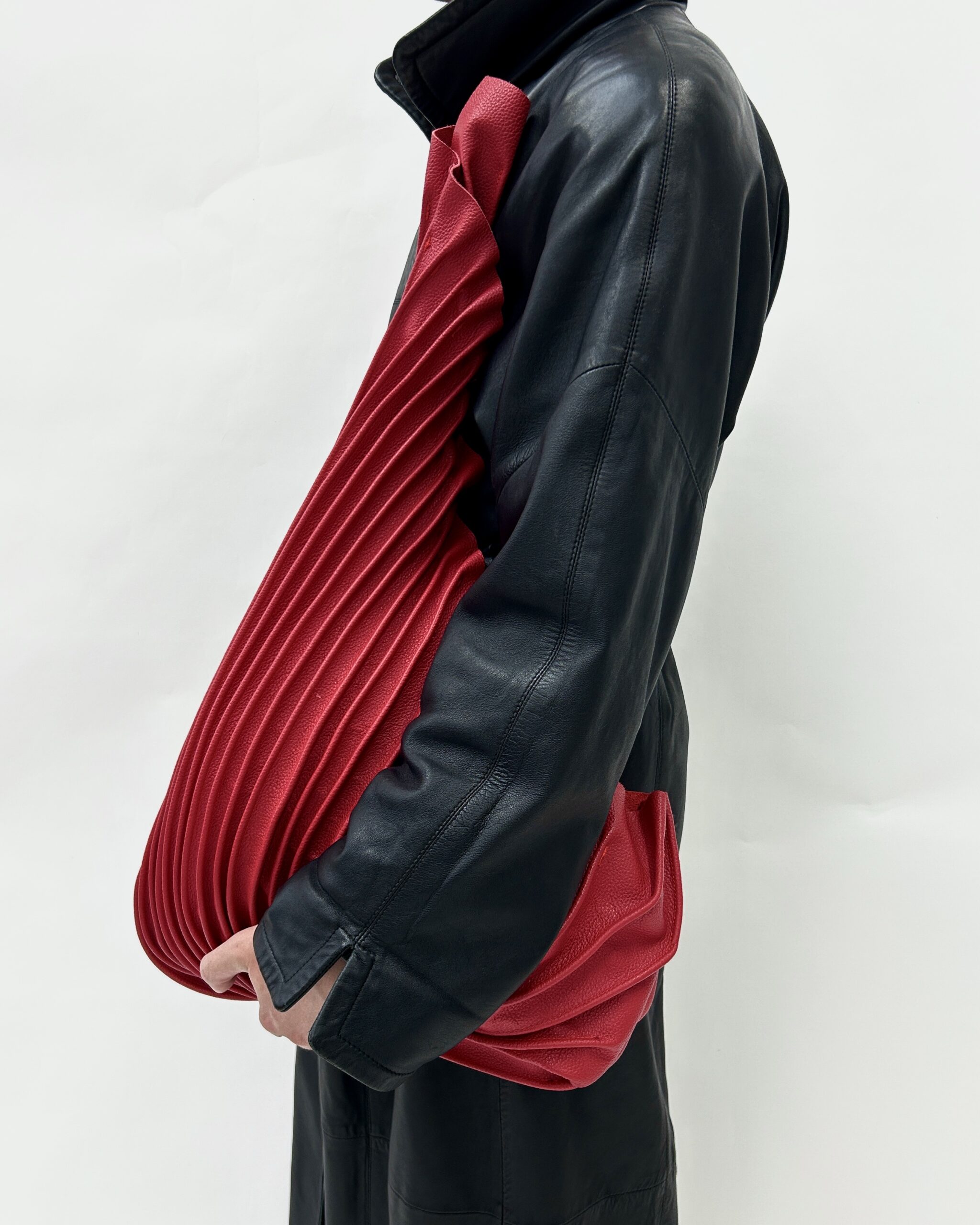
Inspired by Lucio Fontana’s ‘I Tagli’ series, “Burning Desire” functions almost like a fragmented cinematic story. Sculptural folds collide with unfinished textures, creating objects that feel emotional rather than decorative.
In addition, Inspired by Annie Ernaux’s “The Years,”. he speaks about finding beauty in imperfection as a way of preserving “humanity” and “saving something from a time where we will never exist again.”
Perhaps this is why Robuta’s story moves beyond fashion itself. He represents an entire generation of creatives living.between visibility and disappearance, publicly celebrated while privately struggling with exhaustion and doubt.
“I push, and push, and push all the time.”
The Message Through Point Of View
For Robuta, success is not recognition alone. It is the ability to continue believing in his own path despite doubt, rejection, speed, and isolation.
“Fashion world looks beautiful on the outside, but it is a highway where you need to move fast and work hard to get to the point. In all of that race, we need to remember not to lose ourselves, the things that inspire us, and what truly makes us happy.”
In the end, Paweł Robuta’s work is not only about fashion or sculpture. It is about endurance, preserving humanity within an industry consumed by spectacle. As he transformed discarded materials and invisible struggles into something still carrying real meaning.
Because behind every beautiful image, there is always another side of the coin.