


At the 2026 edition of Watches & Wonders Geneva, Cartier didn’t just present new timepieces, it reasserted its identity as the undisputed watchmaker of shapes.
And leading that charge is a name that carries both nostalgia and design authority, the return of the Roadster.
Originally introduced in 2002, the Roadster has always lived at the intersection of automotive influence and refined watchmaking. Now, in 2026, Cartier brings it back with sharper lines, recalibrated proportions, and a renewed focus on ergonomics that reflects the Maison’s evolving design language.

The Return of an Icon, Reengineered for a New Era
The new Roadster is not a simple revival, it’s a full reinterpretation.
Cartier approached the redesign with a clear objective, refine without losing identity. The result is a watch that maintains its signature tonneau-inspired silhouette while introducing more precise geometry and improved wearability.
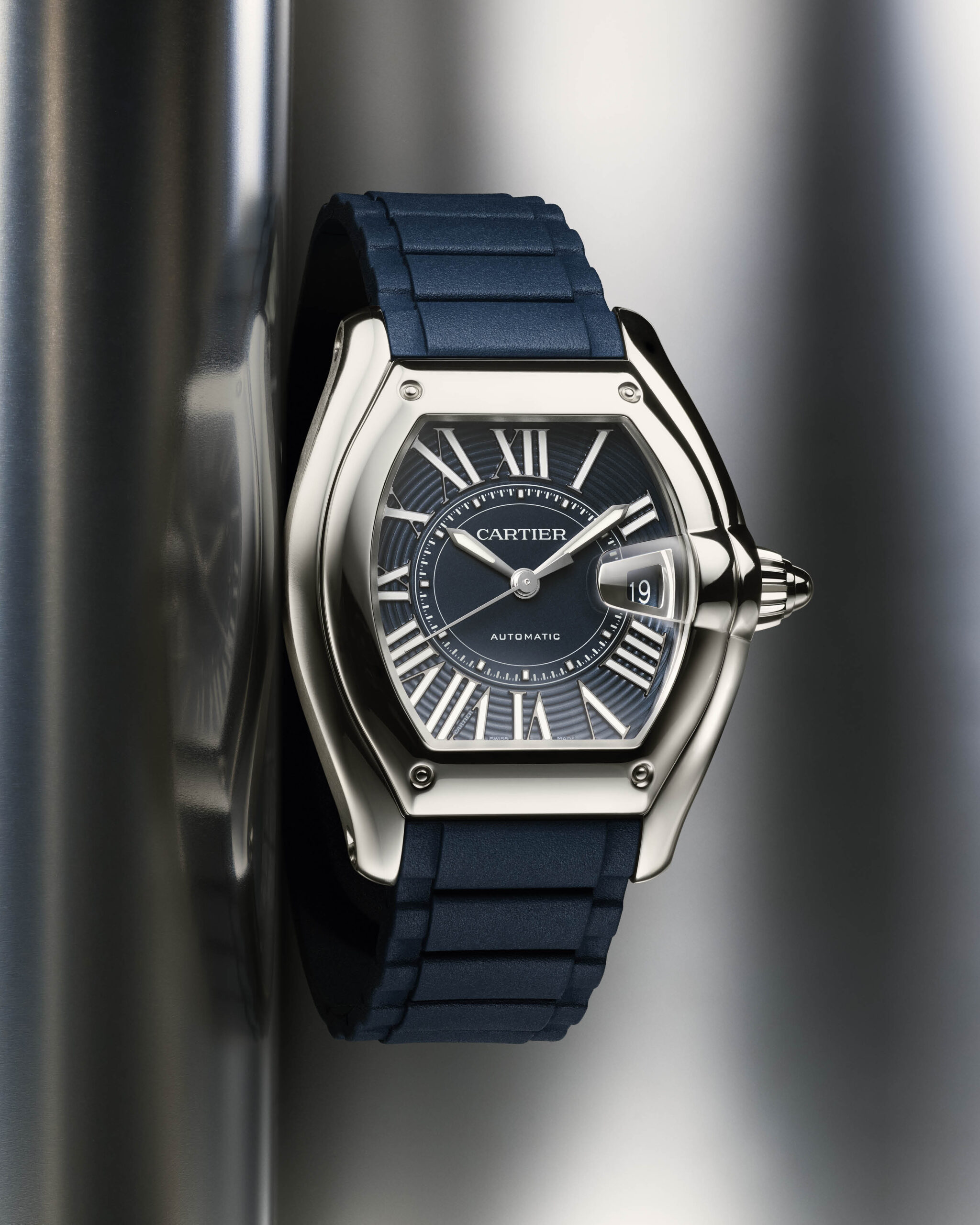
The case flows seamlessly into the crown, magnifier, and dial, creating a unified structure that feels both technical and sculptural. The influence of automotive design remains central, drawing from mechanical fuselages and streamlined bodywork, but executed with Cartier’s unmistakable elegance.
Powering the Roadster are two in-house self-winding movements, the 1847 MC for large models and the 1899 MC for medium models, reinforcing Cartier’s commitment to mechanical excellence beneath the design.

Cartier’s Obsession With Form, A Legacy of Shapes
Cartier’s identity has never been about round watches alone. Since the early 20th century, the Maison has built its legacy on unconventional forms, square, rectangular, oval, and asymmetrical designs that challenge traditional watchmaking.
That philosophy extends across its 2026 novelties:
- The Cartier Santos-Dumont returns with vintage accents and a striking gilded obsidian dial, a material so delicate at 0.3 mm that it rivals glass in fragility
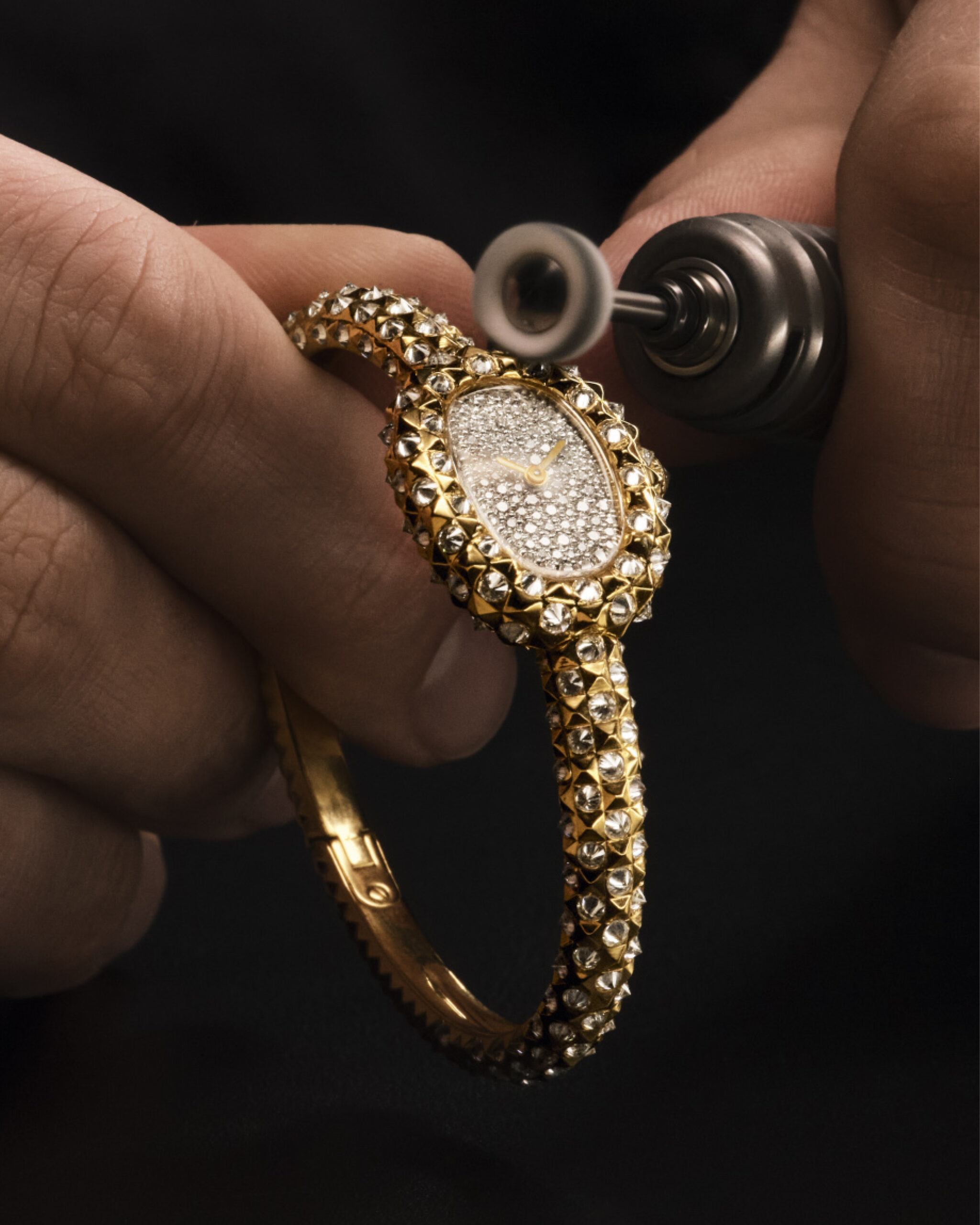
- The Cartier Baignoire evolves with the Clou de Paris motif, adding architectural depth through gold craftsmanship and hand-polished precision
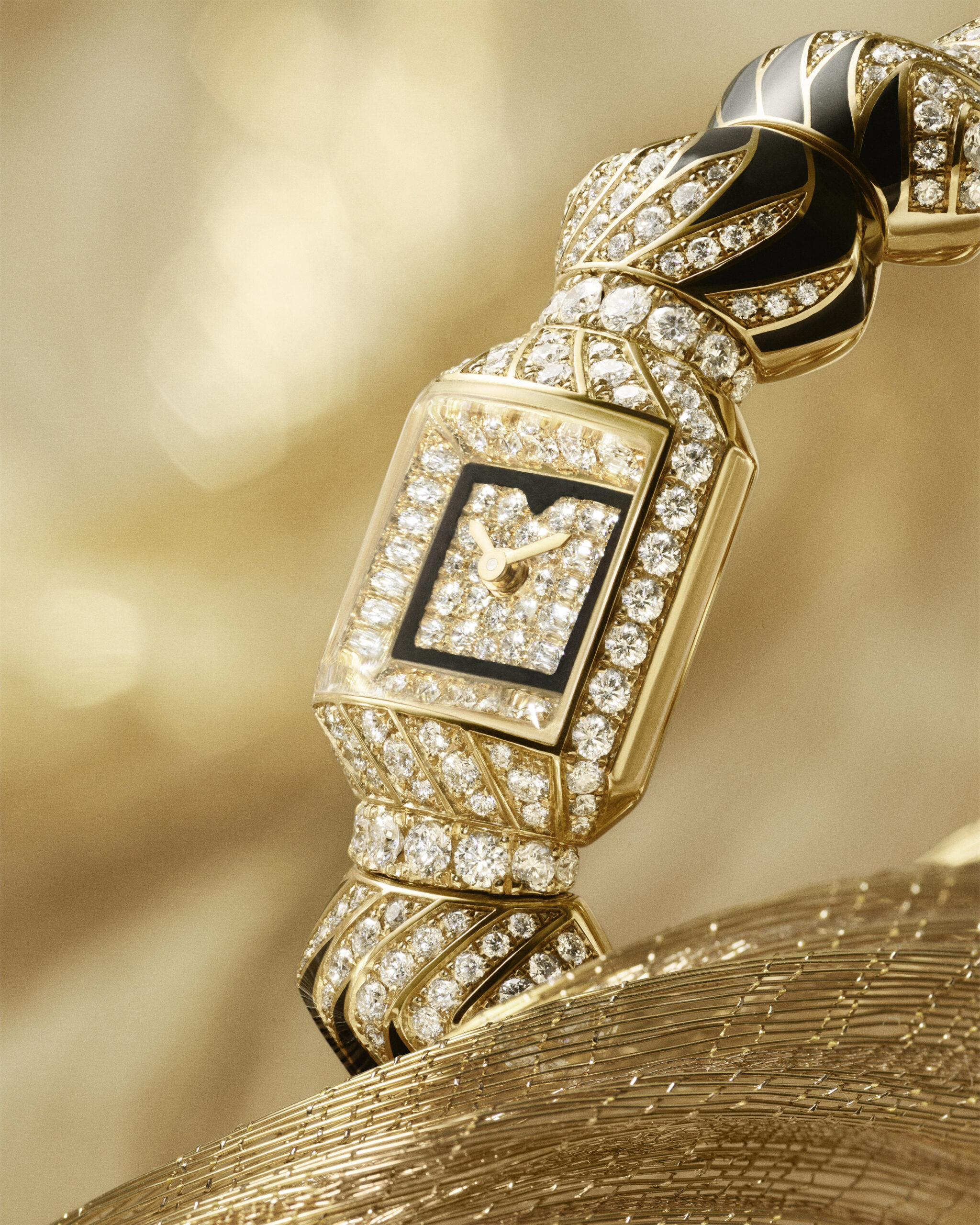
- The Myst de Cartier blurs the line between jewelry and horology with pavé diamonds, onyx framing, and over 112 hours of gem-setting work
- The Cartier Crash Squelette pushes boundaries further with a skeletonized movement shaped to mirror its iconic asymmetrical case
Each piece reflects a singular idea, that form is not a limitation, it is the foundation of innovation.



Craftsmanship at the Edge of Art and Engineering
Behind every Cartier watch is a convergence of over a hundred specialized disciplines, all operating within the Cartier Watchmaking Manufacture in Switzerland.
This is where tradition meets experimentation.
From machining ultra-thin bracelet links measuring just 1.15 mm, to hand-setting diamonds and shaping movements to fit unconventional cases, every detail is engineered to serve both aesthetics and function.
The new Santos-Dumont bracelet alone features 394 individual elements, assembled with a level of precision that allows it to feel almost fluid against the wrist.
Meanwhile, the Crash Squelette’s movement integrates directly into its bridges, forming Roman numerals through hand-hammered techniques, a process that takes nearly two hours per piece.
This is not just watchmaking, it’s architectural craftsmanship on a miniature scale.
Jewelry Meets Horology, Cartier’s Signature Advantage
What sets Cartier apart is its ability to merge two worlds seamlessly, jewelry and watchmaking.
The Myst de Cartier embodies this philosophy perfectly. With its sculptural curves, geometric pavé dial, and onyx detailing, it functions as both a timepiece and a statement object.
Even the Baignoire’s Clou de Paris motif demonstrates this duality, transforming a traditional decorative pattern into a structural design element that enhances both light reflection and form.
This crossover is not accidental, it’s embedded in Cartier’s DNA.
A Statement Beyond Timekeeping
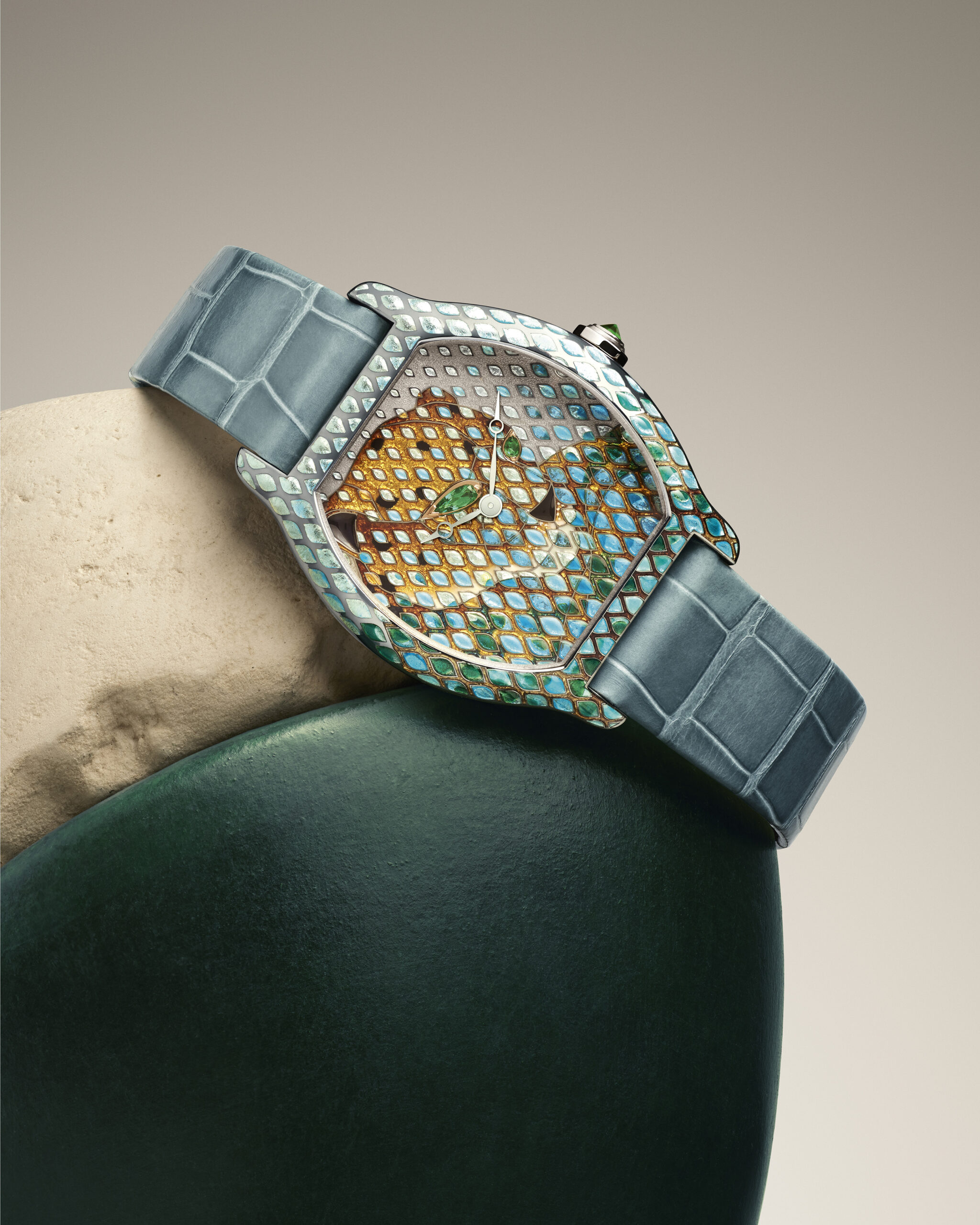
The relaunch of the Roadster is more than a product drop, it’s a signal.
Cartier is doubling down on what made it iconic in the first place, bold shapes, technical mastery, and a refusal to follow conventional watchmaking rules.
In a market often dominated by incremental updates, Cartier’s 2026 collection feels intentional, expressive, and deeply rooted in its heritage while still pushing forward.
The Roadster’s return captures that balance perfectly.
It doesn’t chase trends. It defines them.