

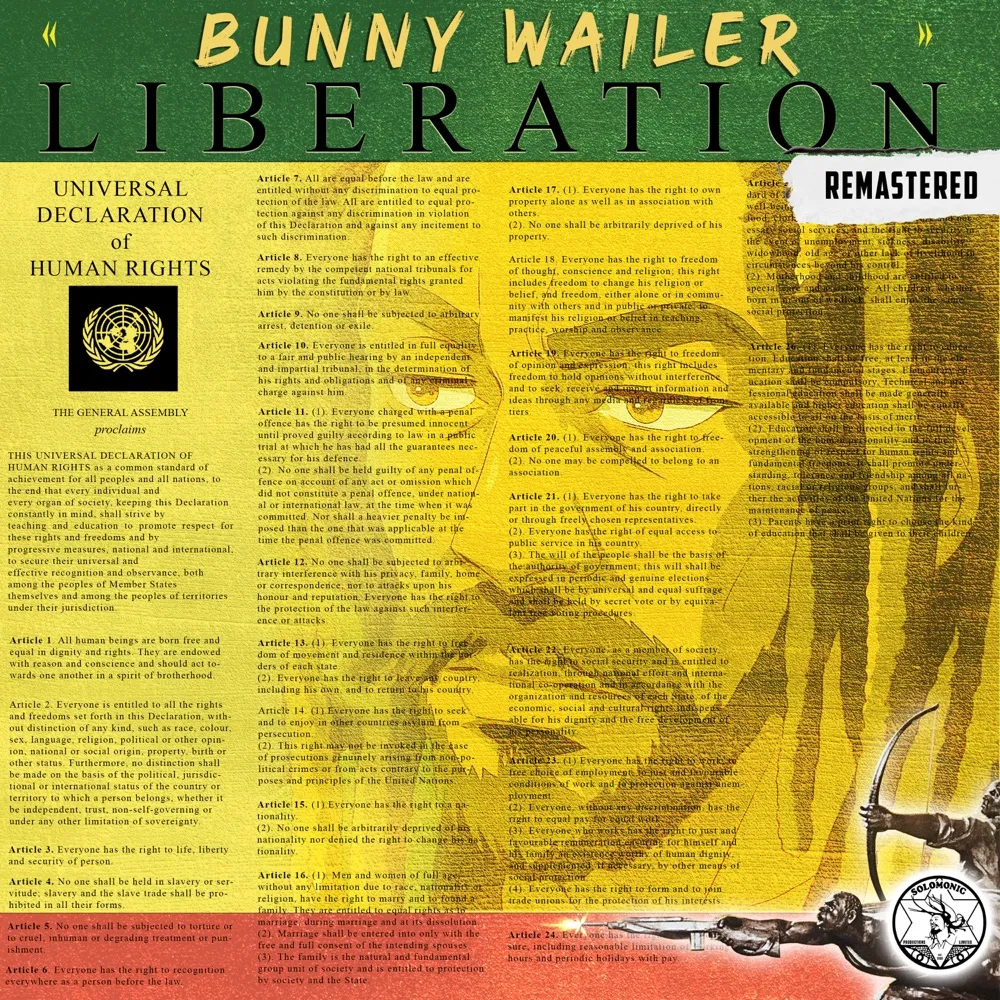
In an era defined by division, the idea of unity feels almost vintage. The world is divided along political, racial, and ideological lines, while the pursuit of individuality often overshadows the collective rhythm that once united humanity. Yet art, as it always does, has a way of calling us back to balance. This year, that call comes from the past. Bunny Wailer’s Liberation has been remastered, reintroduced, and reborn as an anthem for a generation craving connection.
Originally released in 1989, Liberation was a spiritual statement woven into melody, rhythm, and resistance. For Bunny Wailer, style was never just about sound; it was about message, presence, and truth. In a time when the world’s culture was dressed in rebellion and rebirth, his music became a kind of garment for the soul. Three decades later, it fits perfectly again.
A Sound That Transcended Borders
Bunny Wailer was one of the original architects of The Wailers, but his solo work carved out a lane that was uniquely his own. Liberation was a canvas painted with the heartbeat of reggae, the wisdom of Rastafari, and the defiance of a man who saw freedom as more than a political statement. The record carried the tone of ritual and reflection.
It was not created for passive listening. It was made for immersion. The album asked listeners to move, to meditate, to rise. Songs like “Rise and Shine” and “Want to Come Home” spoke directly to the global spirit of displacement and longing. Even as the sound of Kingston rooted it in Jamaica, its message was universal. True freedom begins within.
Today, in a culture that often mistakes noise for voice, Liberation feels like an education in presence. Its slower tempo and grounded energy are a reminder that meaning does not need to shout to be heard.
Music as Cultural Fashion
In the same way a designer uses fabric to communicate emotion, Bunny Wailer used rhythm and lyric to shape the mood of a movement. Reggae has always been more than music; it is a language of identity and resistance. In fashion, we often talk about garments as armor or expression. Liberation operates the same way, protective, intentional, and undeniably stylish in its conviction.
As fashion cycles turn back toward authenticity and craft, Liberation mirrors that same cultural current. It feels raw yet refined, bold yet humble. It reminds us that rebellion can be elegant and that power can live quietly in rhythm and repetition.
Listening to Liberation in 2025 feels like watching a well-tailored suit glide down a runway amid chaos, timeless and self-assured.
A Reflection of the World Today
The social climate now echoes the tensions of the late 1980s. Injustice, misinformation, and fear dominate global conversation. People crave direction but distrust authority. In such a landscape, Liberation sounds like a whisper from the ancestors, reminding us not to lose faith in humanity.
Bunny Wailer’s lyrics spoke of breaking chains, both visible and invisible. He did not only sing about political systems; he addressed the mental prisons built by ego, envy, and apathy. In a world addicted to polarization, that message feels urgent.
While modern fashion embraces slogans like “unity” and “sustainability,” Liberation embodies those values in sound. It carries a kind of ethical design, the same way a garment crafted by hand tells a story of care. The album insists that liberation is not rebellion for rebellion’s sake. It is alignment with truth, simplicity, and love.
The Spirit of Legacy
Bunny Wailer’s passing in 2021 marked the end of an era, but his influence has never felt more alive. The Remastered Trinity project, which includes Liberation, Rootsman Skankin’, and Rock ’n’ Groove, reintroduces his legacy to a generation that values authenticity above all. His sound continues to inspire fashion designers, visual artists, and musicians who build identity around purpose rather than performance.
In today’s creative landscape, where brands and artists are learning to balance activism with artistry, Liberation is a masterclass in intention. It reminds us that art can be graceful and grounded, that statements can be spiritual, and that style, whether visual or musical, is most powerful when it carries meaning.
Liberation as Modern Inspiration
From the runway to the recording booth, there is a growing desire to return to the roots of creation. Designers are exploring heritage, musicians are reintroducing live instrumentation, and consumers are searching for authenticity. Bunny Wailer’s Liberation stands as a blueprint for that movement.
It offers no gimmicks, only truth. It does not chase virality, only vibration. It sits in quiet confidence, knowing that real art does not age; it evolves.
In a fragmented world, Liberation reminds us that unity is not found in uniformity but in shared rhythm. The same pulse that moves through reggae is the one that moves through fashion, photography, and design. It is the rhythm of humanity trying to remember itself.
Bunny Wailer once said that his music was a message of “peace, love, and righteousness.” Today, those words feel less like a quote and more like a design principle for living. Liberation is not just an album. It is a mood, a movement, and a timeless pattern that continues to fit every generation searching for its truth.
WATCH THE “Roots Man Skankin” VIDEO BELOW