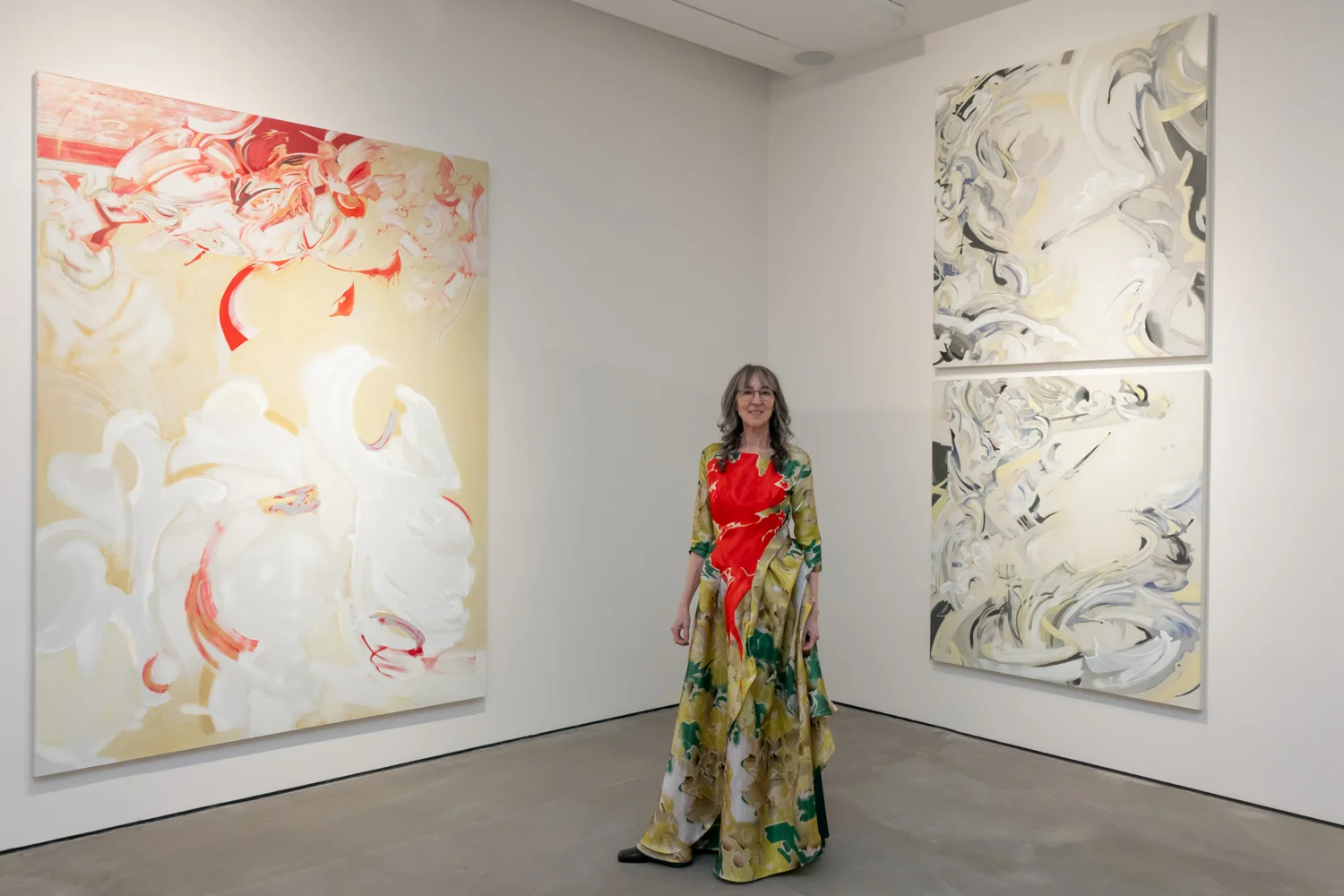

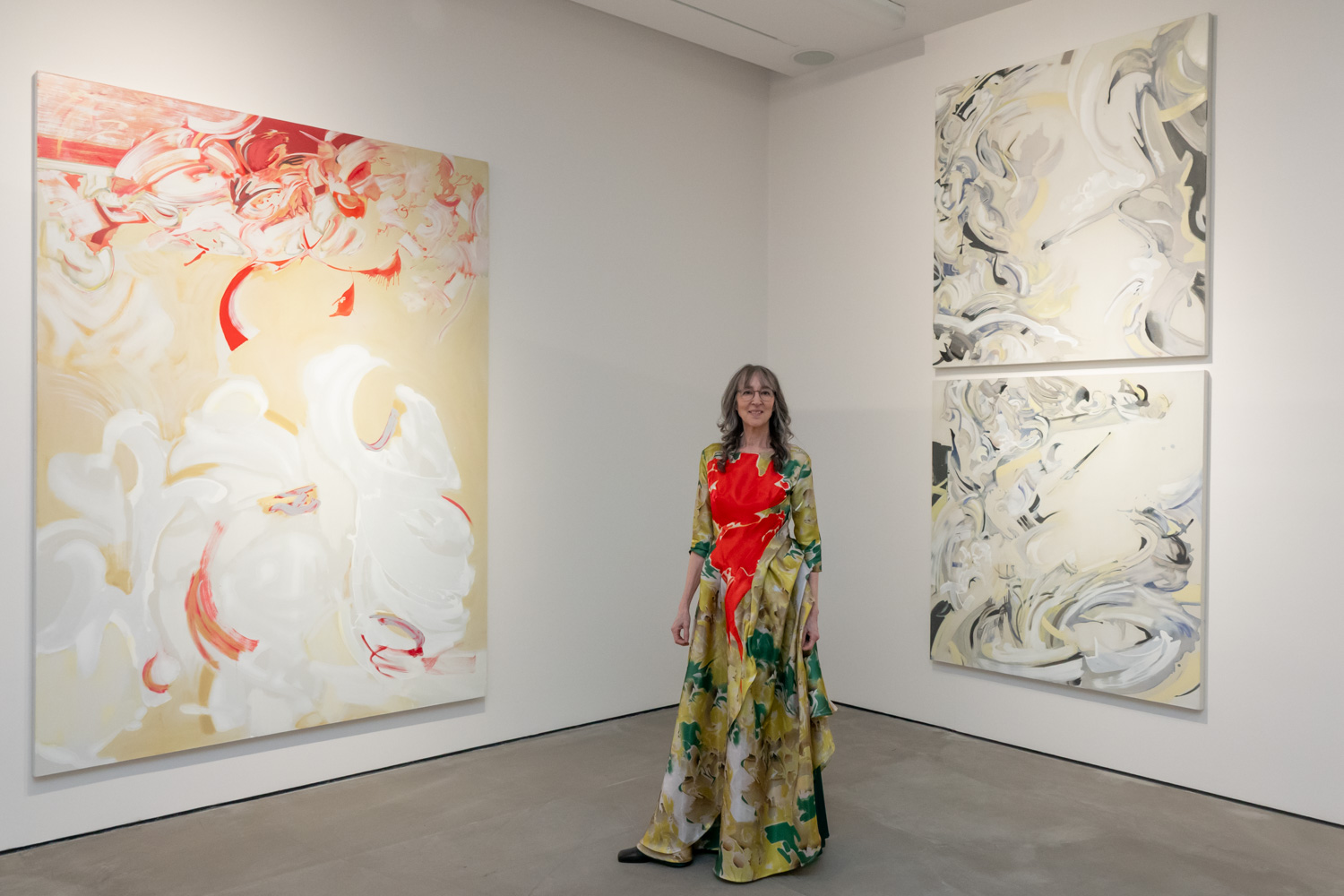
I walked into Artech Gallery on Park Avenue expecting the usual tech-first spectacle. The kind where painting becomes a polite accessory to screens and algorithms. That’s often how these hybrid shows unfold in 2026. The digital layer arrives loud. The analog work gets reframed as nostalgic.
That didn’t happen here.
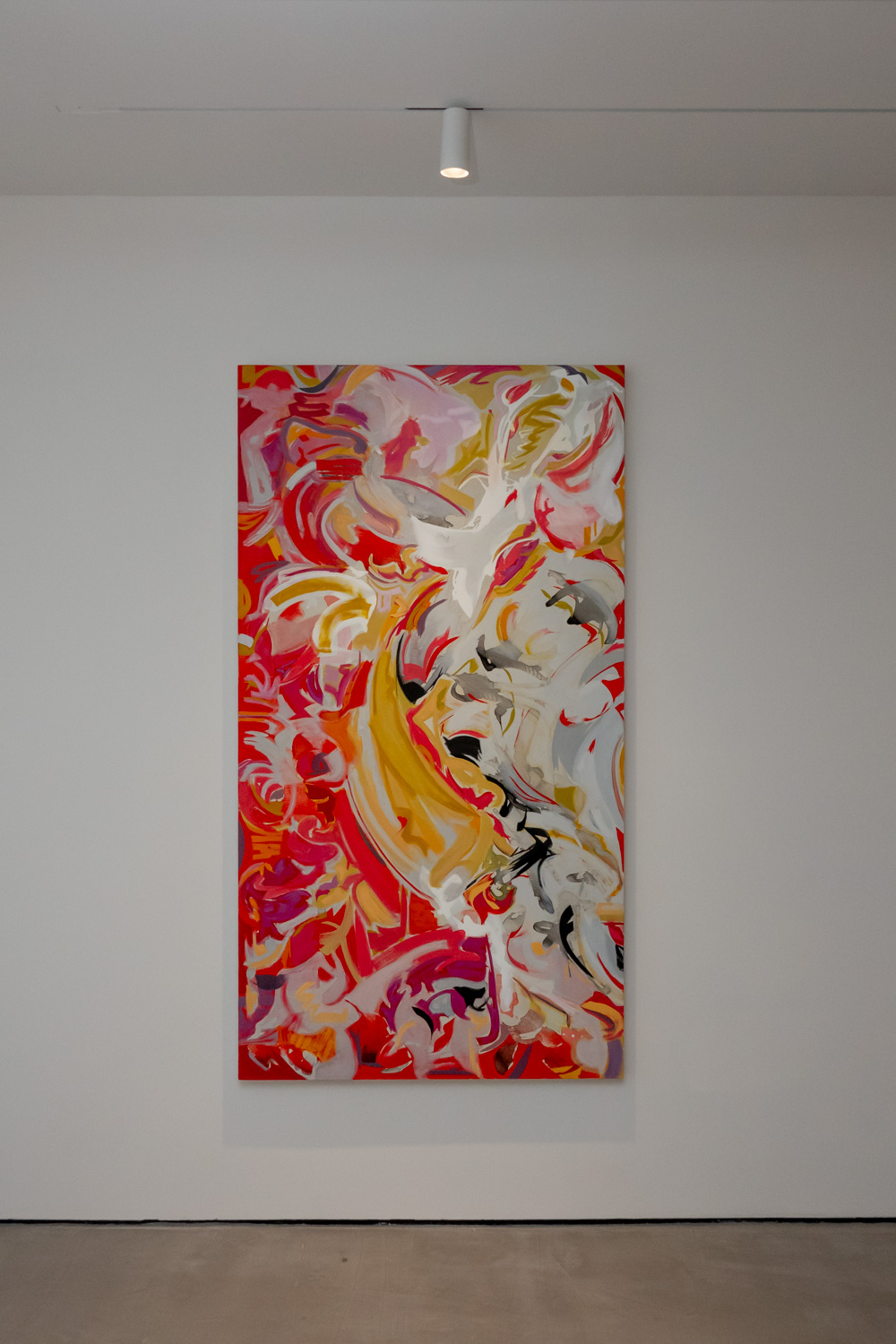
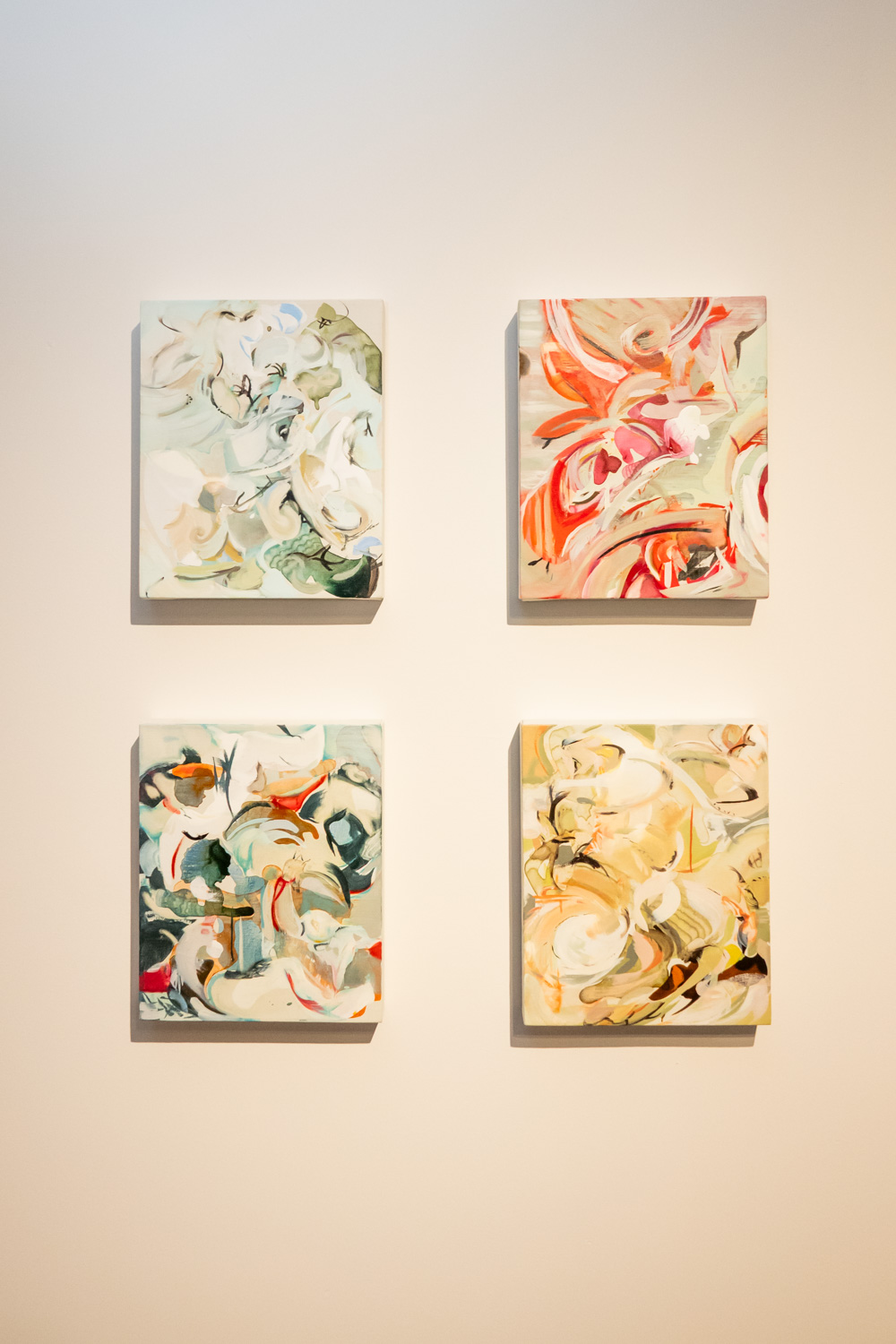
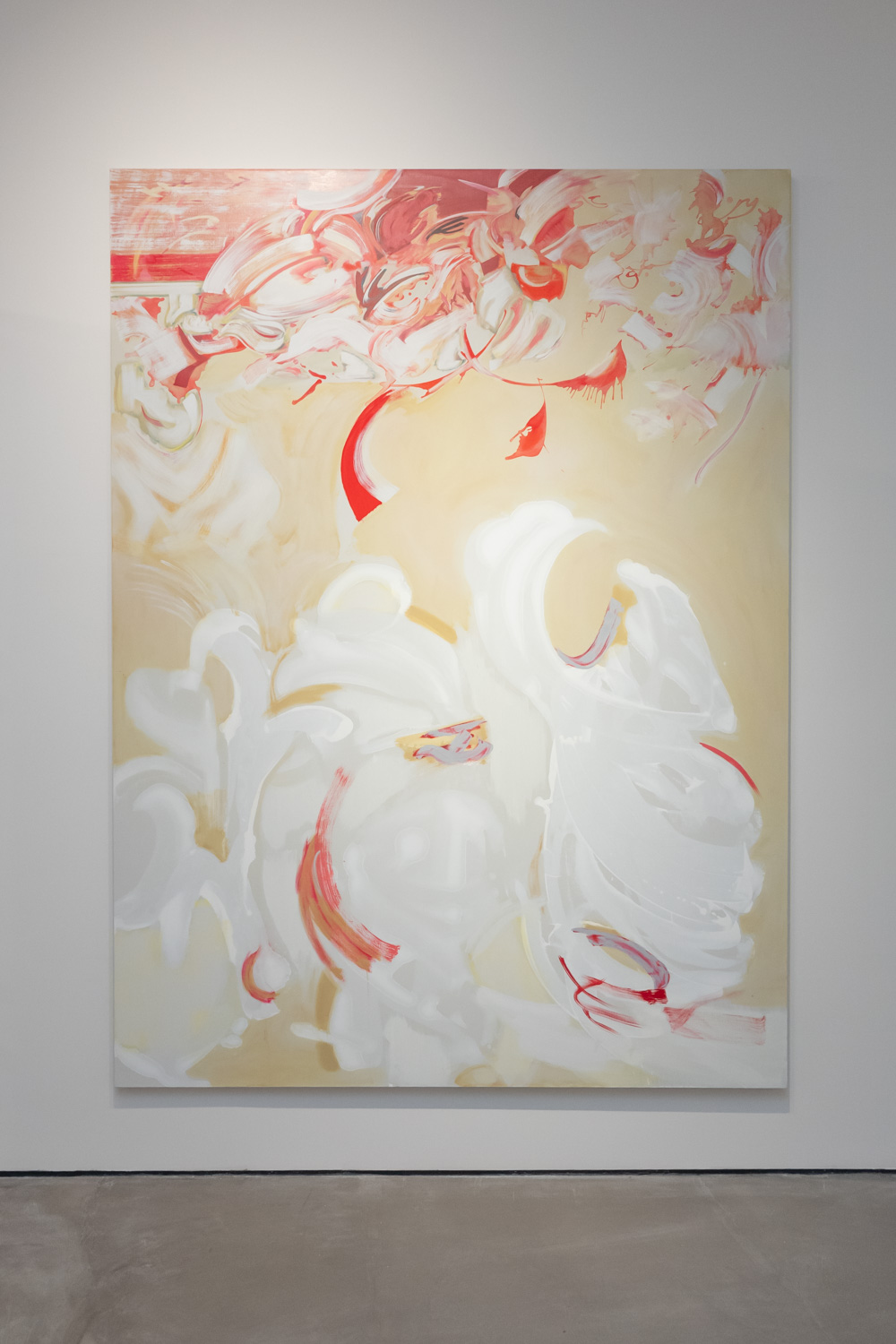
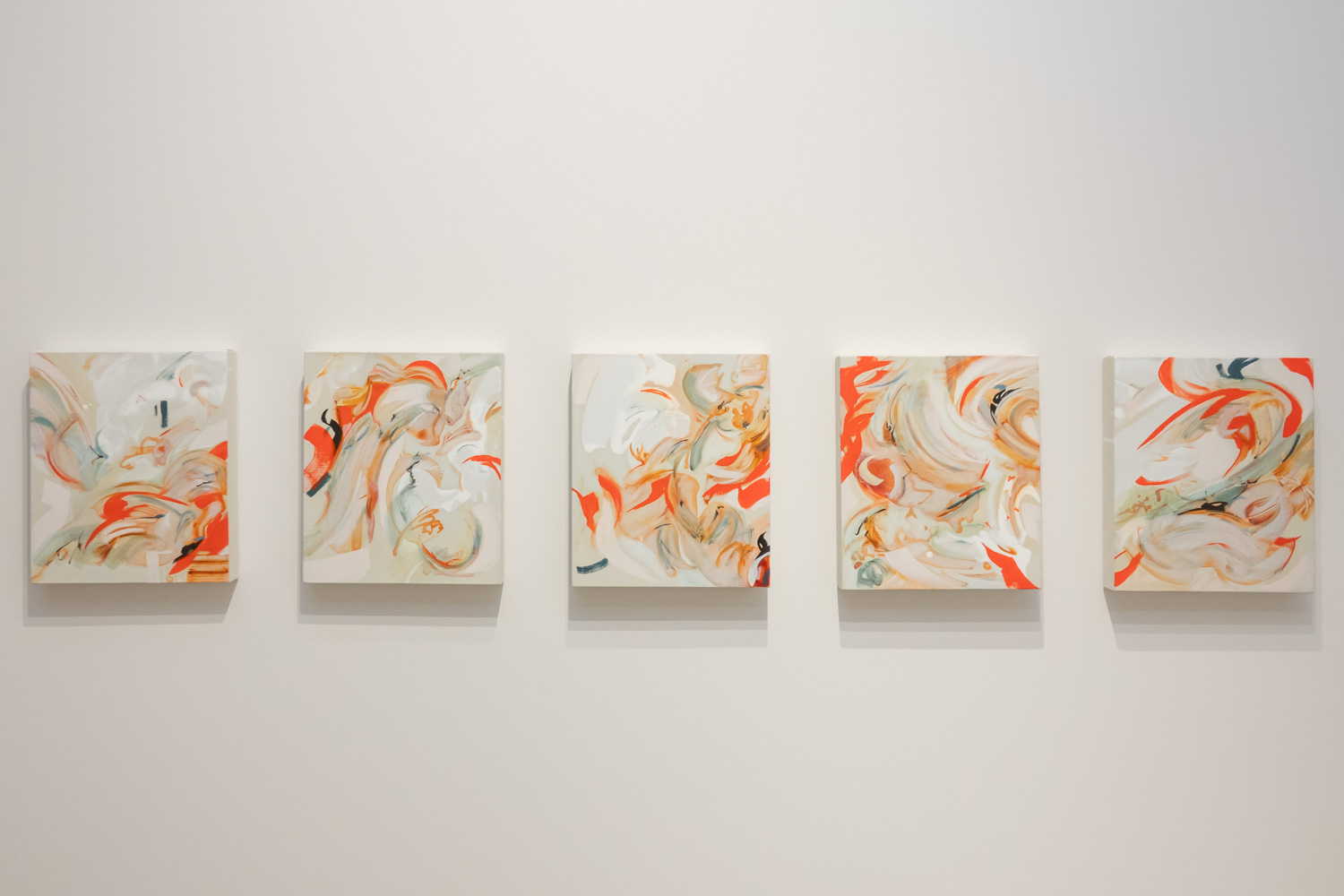
After ten minutes, the immersive backdrop faded into a low hum. What held attention were the paintings. Large, deliberate fields of color and structure that didn’t compete for attention and didn’t ask for explanation.
Diane Green, Yale MFA, spent decades in the studio while simultaneously running her own New York art school for thirty years, closed that chapter, and moved upstate. The work feels like it comes after that decision. Not as a reinvention. More like consolidation.
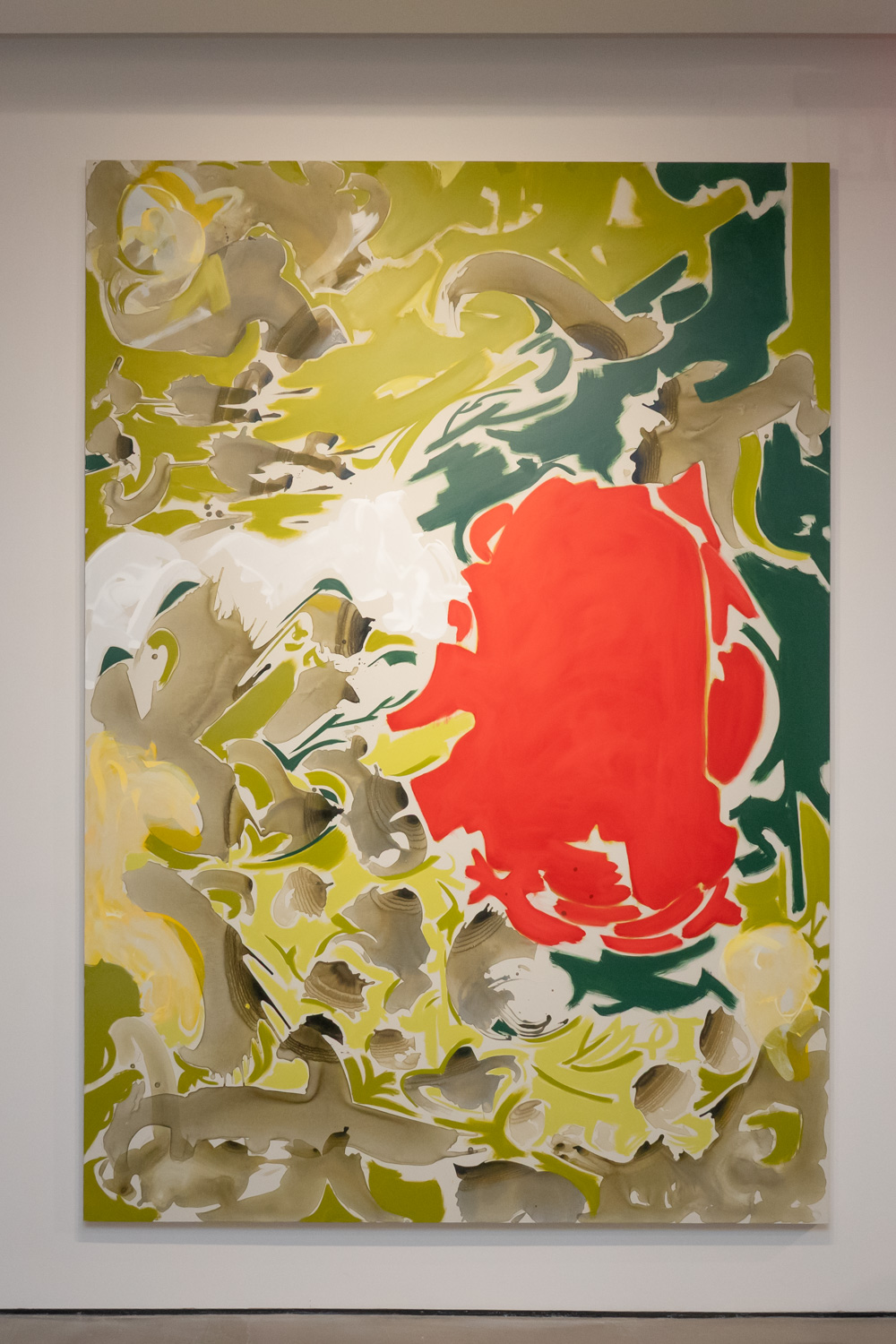
The compositions are disciplined. Architectural blocks sit against calligraphic gestures. Color is restrained, closer to printmaking logic than expressionist release. You sense absorbed history in the work. Western abstraction, traces of Eastern minimalism. Nothing quoted directly. Nothing overextended. She stops when the painting is done.
Artech’s digital layer reveals parts of her process, peeling back sequences most galleries leave unseen. It’s a smart move for a space that positions itself at the intersection of art and technology. But the paintings do not rely on the reveal. Turn off the screens and they would still function. That independence matters in a city where immersion sometimes compensates for thin substance.
One piece anchored me: Reaching Nirvana. Not flashy. No theatrical breakthrough. Just tension that has resolved itself. It feels like the end of an internal negotiation. Decisions are no longer arguing with each other. In a culture obsessed with speed and disruption, that kind of quiet resolution reads almost defiant.
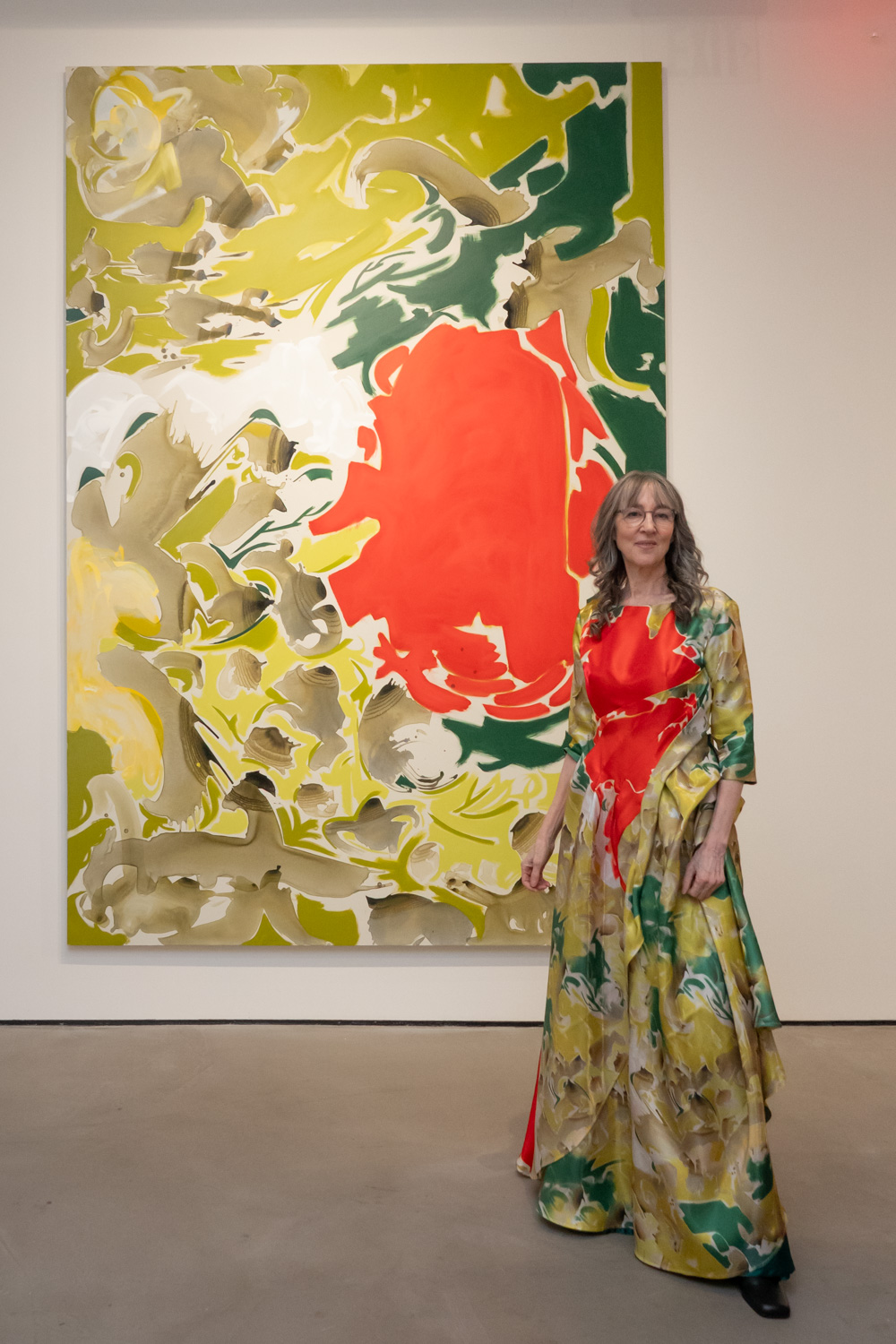
At the opening, Green stood in front of her work wearing a dress patterned from one of her paintings. I photographed it. The idea began, I’m told, as a playful exploration of how AI might translate one of her canvases into another form. The painting chosen was Ravenous, bold and saturated, a natural candidate for movement. What started as an experiment became physical.
On fabric, the geometry shifts. Hard edges soften as the body moves. Color bends differently than it does on stretched linen. It didn’t feel like a gimmick. It felt continuous, as if the painting had stepped off the wall and into lived space.
That moment clarified the exhibition more than any screen did.
What lingers isn’t the immersive structure or the gallery’s forward-facing pitch. It’s the steadiness of her hand. These paintings aren’t trying to prove relevance in a market that rewards spectacle. They hold space. They don’t chase attention.
Right now, that restraint feels rare.