

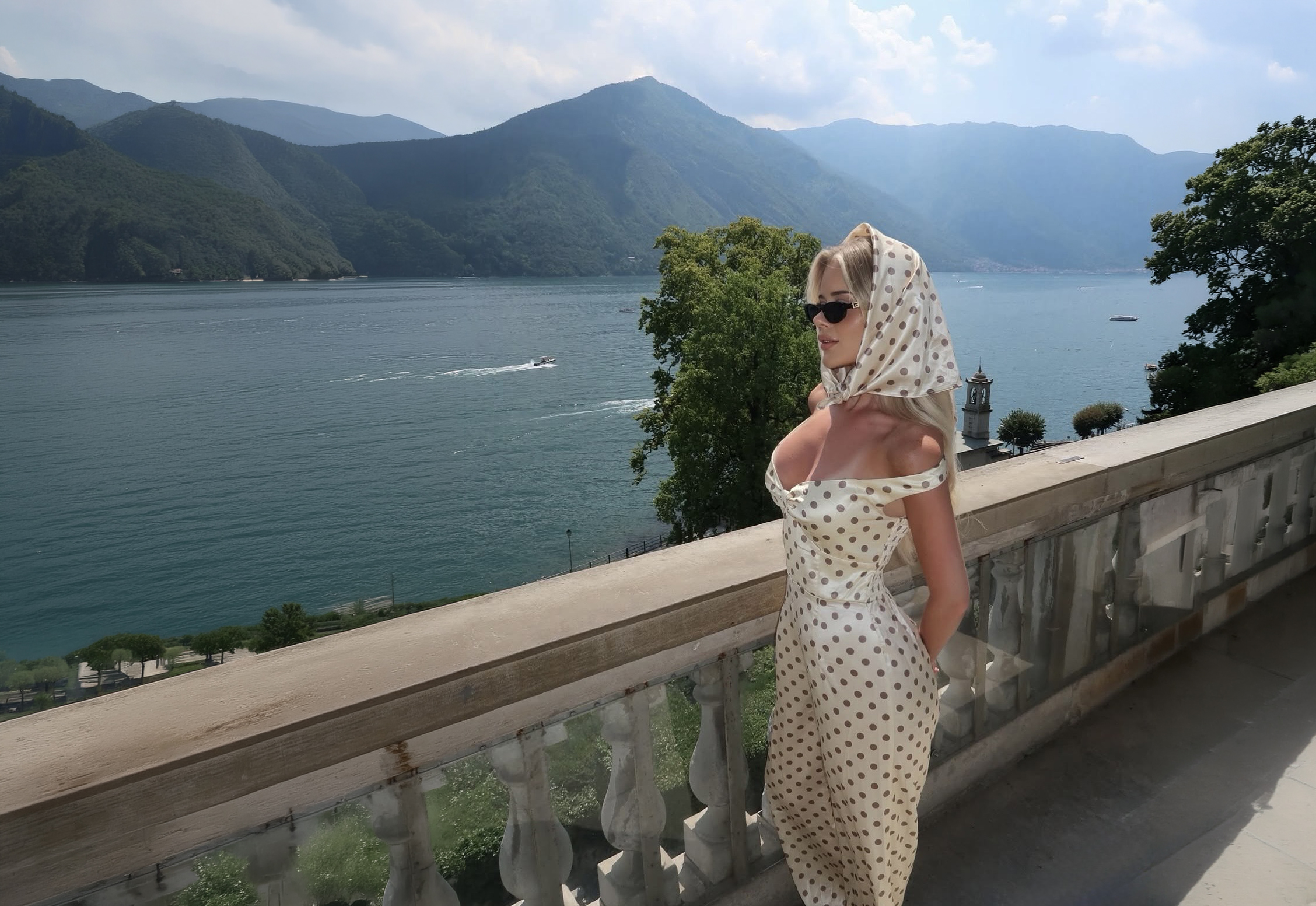
At first glance, it would be easy to understand Victoria Caroline Fuglsang through the images.
The clothes. The destinations. The carefully composed moments. The visual language of a 26-year-old Danish content creator whose relationship with fashion has become part of how she presents herself to the world.
But an image, no matter how polished, captures only a fraction of the person standing inside the frame.

Behind Fuglsang’s social presence is someone considerably more layered. She describes herself as creative, ambitious and curious, someone who enjoys transforming an idea into something tangible. She is deeply connected to the people she loves, protective of the more private parts of herself and, perhaps most importantly, as interested in what happens behind the camera as what happens in front of it.
“My life may look effortless online, but I’m constantly planning, creating and thinking ahead,” she says.
That distinction matters.
In an era when social media can make creativity appear spontaneous, Fuglsang is candid about the work behind the finished product. For her, content creation isn’t simply about appearing in beautiful clothing or finding the right location. There is strategy behind it, planning behind it and an entrepreneurial curiosity that extends into branding, storytelling and the process of building ideas from the ground up.
Fashion is one part of that larger creative identity.
Style as Instinct, Not Identity
There was no singular moment when Fuglsang fell in love with fashion.
Instead, it gradually became a language.
Over time, she began noticing how clothing could change not only the feeling of an image, but also the way she carried herself within it. Fashion became another tool for expression, one that allowed her to communicate different parts of her personality without needing to explain them.

Her influences have been equally fluid.
Rather than building her wardrobe around a single designer, celebrity or style icon, Fuglsang has absorbed inspiration from travel, social media and the people she encounters. Instagram and Pinterest sit alongside runway shows, vintage clothing and everyday street style.
Travel, in particular, continues to shape her perspective.
Every city has its own rhythm, its own visual vocabulary and its own relationship with clothing. Fuglsang takes pieces of those environments and interprets them rather than simply reproducing them.
The result is a personal style she describes as “mood-based and versatile.”
On one day, that might mean something feminine and minimal. On another, oversized silhouettes and streetwear may feel more appropriate. Masculine and feminine elements coexist throughout her wardrobe, often creating the contrast she naturally gravitates toward.
There is no single Victoria uniform.
And that’s precisely the point.
“I don’t feel tied to one aesthetic,” she explains.
For someone whose work exists partly within an online culture that often rewards easily identifiable aesthetics, that refusal to be boxed into one visual identity feels particularly significant.

Dressing Beyond Expectations
Fuglsang’s relationship with fashion has changed alongside her confidence.
Earlier versions of personal style can often be influenced by what is trending, what others are wearing or what someone believes they are expected to look like. With time, Fuglsang has become less interested in those expectations.
“I’ve stopped dressing for expectations or trends,” she says. “Now I choose what feels right in the moment.”
That freedom has made experimentation easier.
Her process of getting dressed is largely instinctive. She considers the occasion, but mood often makes the final decision. An outfit can be planned and then abandoned at the last minute because something simply doesn’t feel right.
“If I feel good, everything else follows.”
It is a deceptively simple philosophy, but one that reveals how Fuglsang sees clothing. Fashion isn’t supposed to dictate confidence. It can reinforce something already present.
To her, confidence means being comfortable with yourself without constantly looking outward for validation.
Fashion can help express that confidence, but it cannot manufacture it.
“It doesn’t create confidence,” Fuglsang says. “It simply reminds me of it.”
That perspective has allowed her wardrobe to become more reflective of the person wearing it. Feminine, strong and independent are not competing identities for Fuglsang. They can exist simultaneously, sometimes within the same look.
She enjoys the contrast.
She also doesn’t want any of it to feel overly serious.

The Pieces That Matter Most
For all the inspiration that comes from runways, social media and international travel, some of the most important pieces in Fuglsang’s wardrobe have nothing to do with trends.
A pair of pearl earrings given to her by her grandmother when she was young remains among her most meaningful possessions.
Their value is emotional.
They represent memory, family and a relationship that existed long before fashion became part of Fuglsang’s public identity.
Then there is a black lace dress.
She wore it on the Amalfi Coast on the day she became engaged.
Now the dress carries an entirely different significance. It is no longer simply something she chose because of its silhouette or how it photographed. It has become attached to one of the defining personal moments of her life.
Those pieces reveal another dimension of style that can easily get lost in conversations centered around trends and consumption.
Sometimes the clothes and accessories we keep closest aren’t important because of who designed them.
They’re important because of what happened while we were wearing them.
The Woman Behind the Feed
Perhaps one of the more interesting things about Fuglsang is her willingness to acknowledge the distance between a social media presence and a complete human being.
Online, we encounter people through fragments.
A photograph from a trip. An outfit. A carefully selected moment. A finished piece of content.

What remains unseen is everything surrounding it.
Fuglsang wants people who discover her through those images to understand that the polished moments aren’t the whole story.
Behind them is someone who works hard, overthinks, laughs often, experiences insecurities and is still figuring things out.
That honesty becomes increasingly relevant as social media grows more sophisticated and personal brands become more curated. The temptation is to assume that someone with a strong visual presence must also possess a perfectly ordered life.
Fuglsang doesn’t pretend that is the case.
Instead, she seems comfortable acknowledging that ambition and uncertainty can exist together.
One of the most important lessons she has learned in recent years is that she doesn’t need to know exactly where something will lead before beginning.
“Clarity comes through action,” she says.
It is a mindset that has changed how she approaches both her professional and creative life.
Rather than waiting for the perfect plan, she has become more willing to move, experiment and allow the next step to reveal itself through the process.
Building What Comes Next
That philosophy is becoming particularly important as Fuglsang enters what she describes as an exciting new chapter.
Professionally, she is placing greater focus on building projects of her own. Her interests extend naturally into branding, storytelling and developing creative concepts, suggesting a future that could reach well beyond traditional content creation.
Personally, she is newly engaged.
Together, those changes have created a moment that feels transitional, not because Fuglsang is abandoning who she has been, but because she is becoming more intentional about what she wants to build next.
Her style will inevitably move with her.
She expects it to become more considered while retaining the playfulness that has always made fashion interesting to her. What she doesn’t want is permanence.
“I never want it to feel fixed,” she says, “because I enjoy that it keeps changing.”
Maybe that is the clearest way to understand Victoria Caroline Fuglsang.
Not through a particular outfit, aesthetic or photograph, but through movement.
Her femininity doesn’t cancel out her strength. Her polished images don’t erase the work happening behind them. Her confidence doesn’t require the absence of insecurity. And her evolving style doesn’t need to arrive at some final, definitive version.
Fashion, for Fuglsang, has become a reflection of that freedom.
The freedom to change her mind.
To experiment.
To build before having every answer.
And increasingly, to dress, create and live without waiting for permission.
