

The Opera, The City, The Inspiration
For Uma Wang, fashion rarely exists in isolation. Her Fall 2026 Ready-to-Wear collection draws inspiration from two passions that shape her creative universe: architecture and opera. Both converge in the city she calls home, Verona, where history and art collide in breathtaking ways.
The emotional starting point for the collection was the legendary Arena di Verona, a remarkably preserved Roman amphitheater that dates back nearly two thousand years. While the arena is famous for its grand operatic performances, Wang found inspiration not just in the stage but in the quiet anticipation before the music begins.
Backstage, Wang described watching women gather outside the arena, waiting for the doors to open. It was less about spectacle and more about subtle rituals.
Women arrive dressed simply, she noted, but each outfit carries a personal detail. A carefully chosen texture, a thoughtful layer, a small embellishment that transforms something understated into something deeply individual.
That moment of preparation became the spirit of the collection.

Architecture Translated Into Fashion
The Arena di Verona’s iconic structure played a defining role in shaping the silhouettes of the season. The amphitheater’s pink and white limestone walls, vaulted corridors, and radial passageways translated directly into the garments’ form and construction.
Wang built the collection around architectural lines.
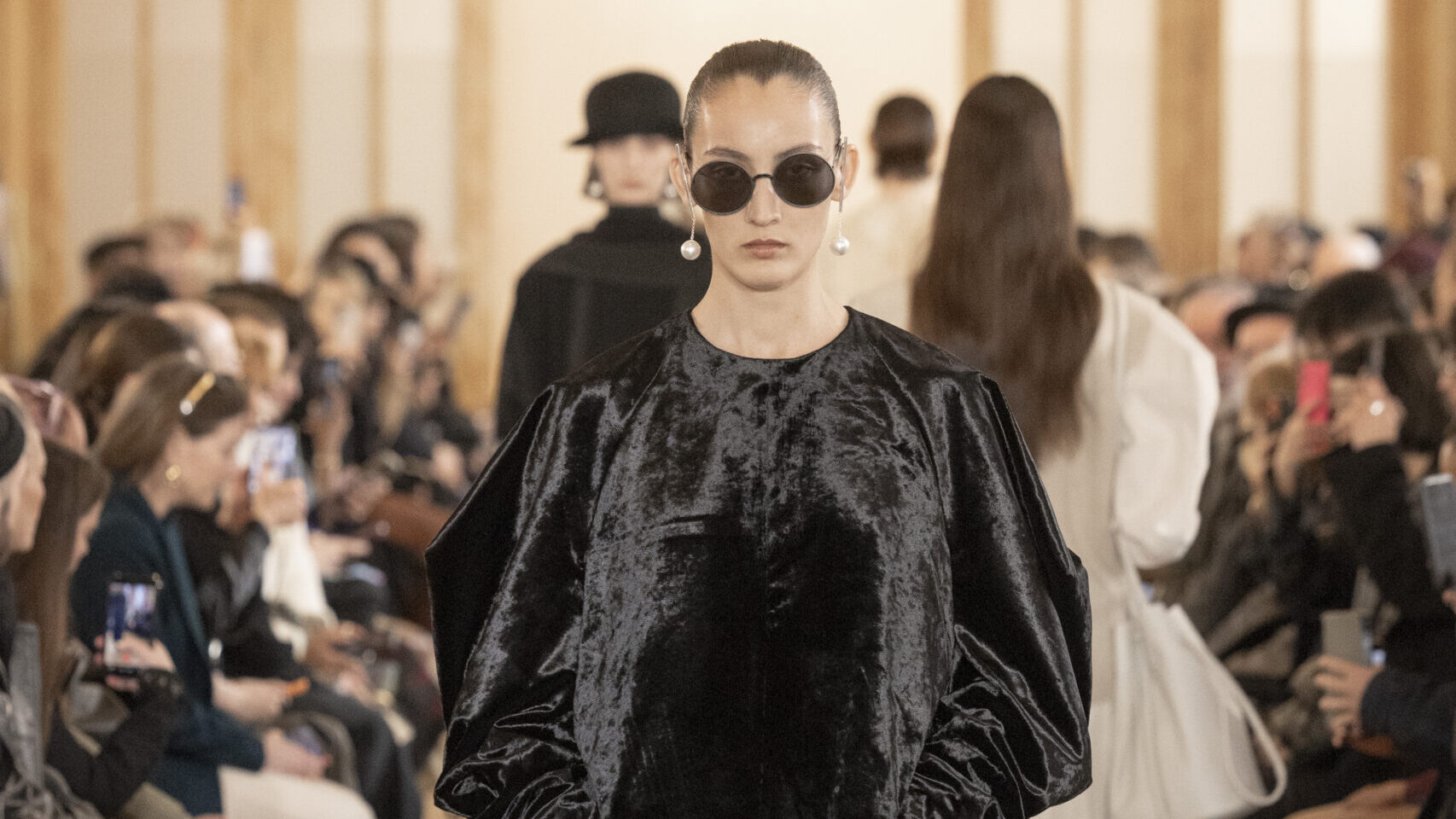
Roomy jackets with commanding shoulders appeared sculpted into dramatic angles, echoing the amphitheater’s curved stone arches. The tailoring felt deliberate and grounded, almost as if the garments themselves carried the weight of centuries of design tradition.
Rather than rigid precision, Wang allowed the shapes to flow.
Soft draping cascaded across the body in folded layers, giving movement to the architectural structure. The result was a balance between strength and softness, a hallmark of Wang’s aesthetic.
Layers, Textures, and Burnished Color
Fabric played a powerful role in bringing the collection to life.
Layer upon layer of folded textiles created depth throughout the runway presentation. Rich brocades appeared alongside more fluid materials, producing garments that felt both luxurious and tactile.
The color palette leaned toward burnished, earthy tones that mirrored the weathered stone of Verona’s ancient architecture. Deep rust, smoky charcoal, muted rose, and warm bronze tones gave the collection a sense of timelessness.
Instead of chasing seasonal trends, Wang leaned into mood and texture. Each look felt like it carried its own quiet story, echoing the romance of opera and the permanence of ancient stone.
The Power of Subtle Drama
What makes Uma Wang’s Fall 2026 collection so compelling is its restraint.
In a fashion landscape often dominated by spectacle, Wang chose nuance. The drama came not from glitter or extravagance but from structure, layering, and thoughtful craftsmanship.
Strong shoulders gave garments presence. Flowing fabrics softened the silhouette. Small twists in tailoring turned minimal looks into something memorable.
Just like the women waiting outside Verona’s opera arena, the collection celebrates individuality through quiet detail.
Fashion as Cultural Dialogue
This season reinforces Uma Wang’s reputation as one of fashion’s most thoughtful storytellers. Rather than treating clothing as decoration, she approaches design as a conversation between culture, architecture, and emotion.
By channeling the historic beauty of Verona’s amphitheater into modern garments, Wang created a collection that feels both ancient and contemporary.
It is fashion that whispers rather than shouts, yet its impact lingers long after the runway lights fade.
