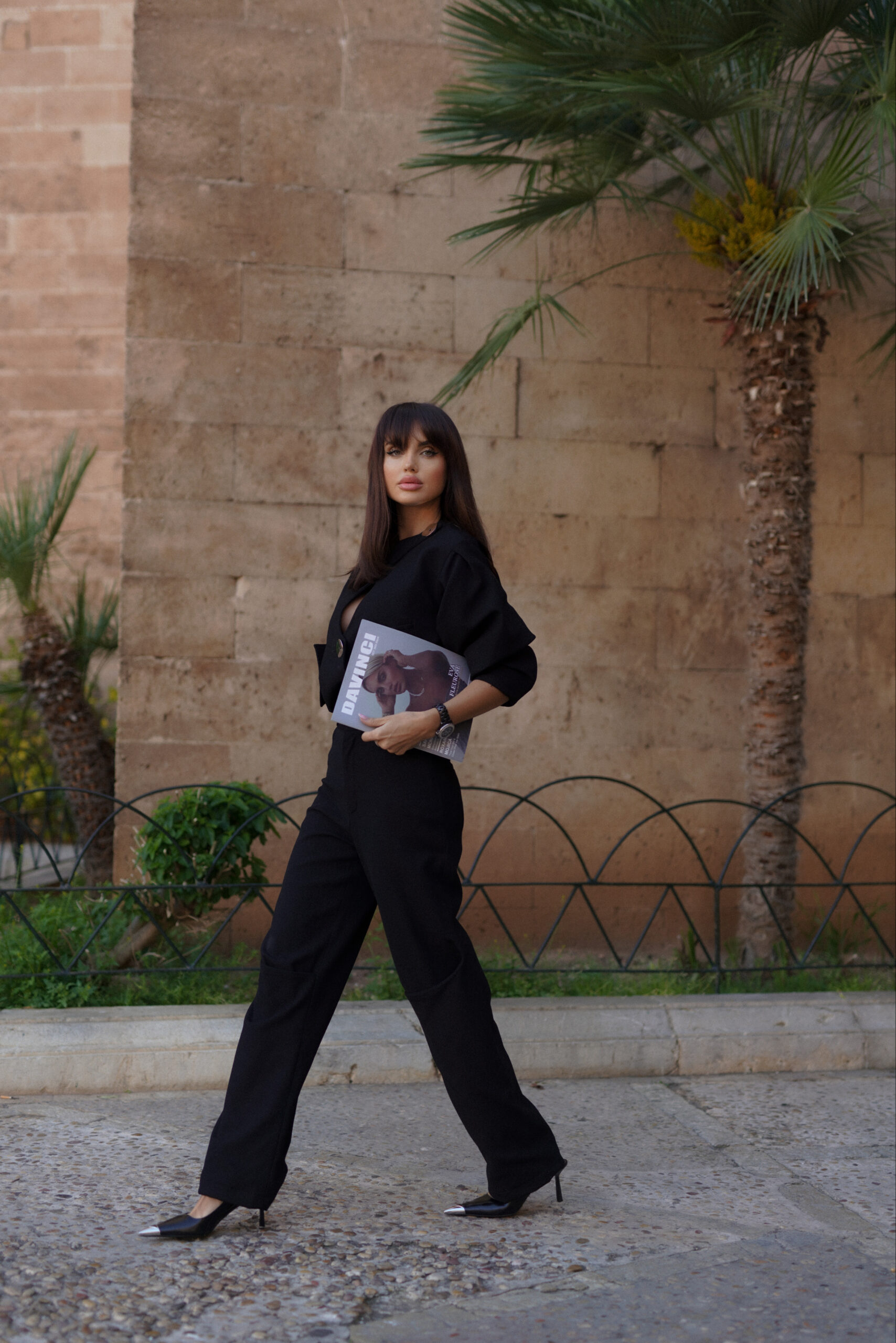


The modeling industry has always been known for pushing beauty standards, but this time, it’s gone further than ever before. The new face of fashion is not a person at all. She’s not just airbrushed or digitally retouched. She’s completely artificial.
In a recent campaign by Guess, featured in the August print issue of Vogue, a stunning blonde model appeared in the brand’s summer collection. Her skin was flawless. Her features were symmetrical. Her presence was captivating. She was also not real. The model was created entirely using artificial intelligence by a company called Seraphinne Vallora.
While the ad included a small label disclosing the use of AI, most readers would have missed it. To the casual eye, she looked like any other fashion model. That’s exactly the problem.
This moment is not just about one brand or one magazine. It marks a shift in the fashion industry’s approach to beauty, marketing, and talent. With AI models entering the scene, questions are rising about what gets lost when technology replaces real people.
The Disappearing Human Element
Models do more than just wear clothes. They bring stories to life. Their personalities, imperfections, and cultural relevance give fashion its edge. From Naomi Campbell’s dominance in the 90s to the rise of plus-size models like Ashley Graham, the industry has been slowly working toward greater diversity and inclusion.
AI threatens to undo much of that progress. The model created for the Guess campaign was thin, white, blonde, and conventionally attractive. It’s a familiar formula. And according to Seraphinne’s founders, attempts to diversify their AI models have not performed well online. Posts featuring models with different skin tones or body types get less engagement, so they are used less often.
This is not just a flaw in technology. It’s a reflection of human bias amplified by algorithms. And it creates a loop where sameness is rewarded and difference is ignored.
Real Work, Replaced
Fashion campaigns have always involved large creative teams. Models, stylists, photographers, makeup artists, and producers all contribute to the final image. AI cuts most of that out.
Seraphinne promotes its services as cost-effective, listing benefits such as avoiding set design, travel, hair and makeup, and the need to hire models. While this might sound appealing to brands, it comes at the expense of real jobs and creative collaboration.
Sara Ziff, founder of the Model Alliance, says this is less about innovation and more about companies trying to cut costs. She warns that as AI becomes more common, the people who give fashion its soul may be pushed aside for digital perfection.
The Mental Health Fallout
It’s not just the fashion industry that’s at risk. So is the mental health of its audience.
Vanessa Longley, CEO of the eating disorder charity Beat, says that repeated exposure to unrealistic body images has a direct impact on self-esteem and body image, especially in young people. AI makes this even more dangerous. Traditional image editing at least began with a real person. AI avatars are built to be flawless from the start. They are not edited versions of reality. They are complete fabrications, designed to represent something no one can be.
The result is a dangerous shift in how beauty is perceived. If this becomes the new normal, even professional models won’t measure up.
Technology as a Tool, Not a Replacement
AI is not going away. It will continue to evolve and enter new spaces. Some experts believe it can be a helpful tool, allowing consumers to visualize clothing on digital avatars that resemble their own body types. If used with intention and inclusivity, AI could actually help people feel more represented.
But right now, the technology is being used to replicate the same beauty standards that the industry has spent years trying to move away from. If diversity is not built into the systems creating these avatars, AI will only reinforce exclusion.
The founders of Seraphinne say their models are meant to offer options, not replace anyone. But the industry has shown time and again that once something becomes cheaper and easier, it quickly becomes the norm.
The Road Ahead
The fashion industry is standing at a critical point. It can choose to embrace AI as a creative partner while protecting the human element that gives fashion its meaning. Or it can chase efficiency and perfection, leaving behind the real people who made this industry matter in the first place.
This isn’t just about the future of modeling. It’s about the future of fashion itself. The runway has always reflected society. If AI takes over, what message will that send about identity, beauty, and worth?
The technology is powerful. But the question is not what it can do. The question is whether we will use it responsibly. Fashion has always been about vision. Let’s make sure it doesn’t lose sight of what really matters.