

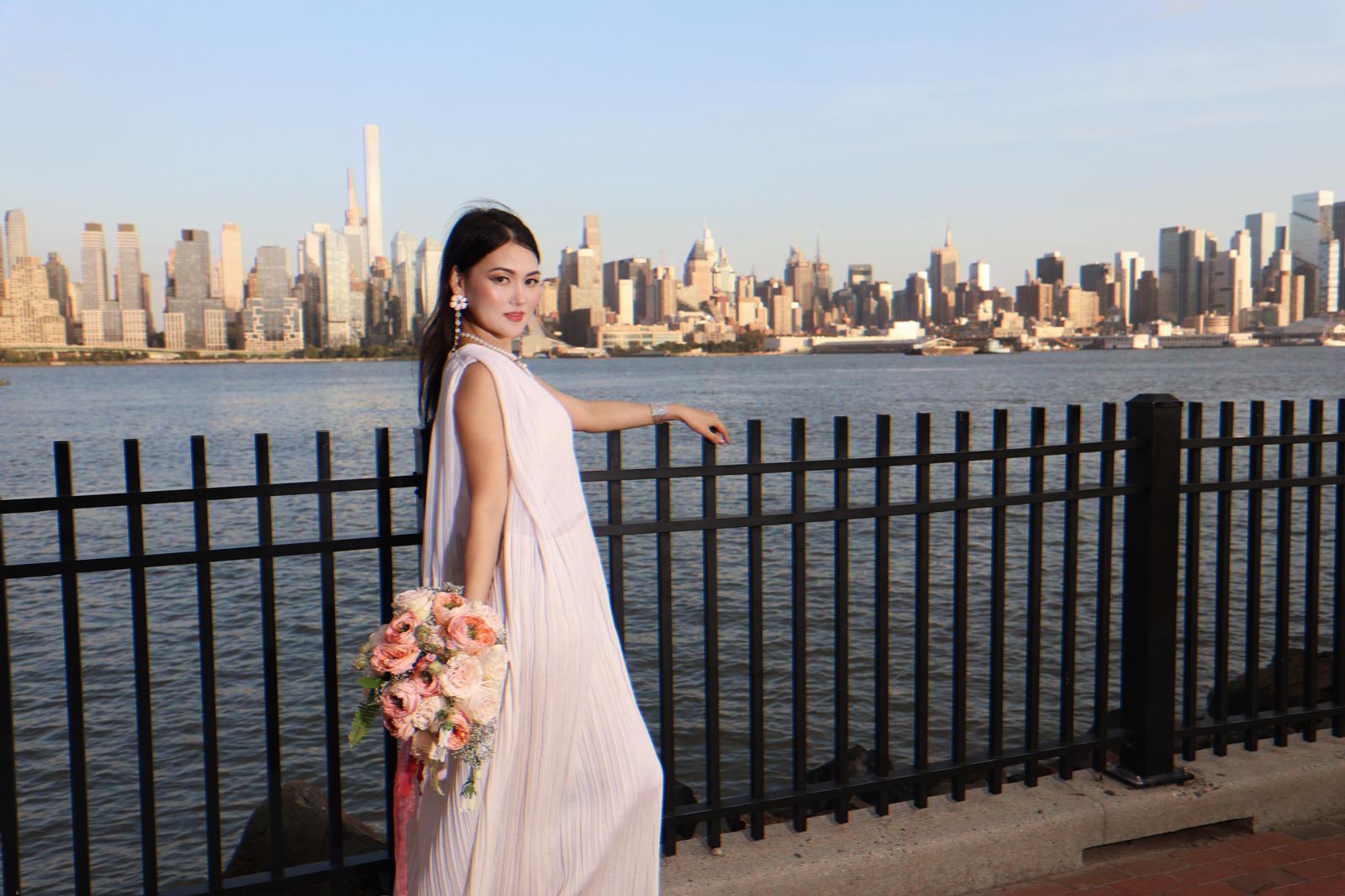
Before she was producing New York Fashion Week shows for Chinese designers, Yuhan Liu was part of the investigative team that uncovered labor abuses in New York nail salons for The New York Times.
Her path to entrepreneurship began in journalism. Liu started her media career at China Daily in New York before moving to Observer Media and later contributing to The New York Times. In 2015, she joined the team behind a landmark series documenting abusive labor practices within the city’s nail salon industry. The reporting became a finalist for the 2016 Pulitzer Prize and helped prompt then-Governor Andrew Cuomo to sign legislation protecting vulnerable immigrant workers across New York State.
It was serious, consequential work. Yet another vision had been quietly taking shape years earlier.
Covering a group exhibition featuring designers from Shenzhen for China Daily’s New York bureau in 2011, Liu kept noticing the same thing. Chinese designers had real talent, creativity, and ambition, the kind that could hold its own on any global stage. Yet most of them couldn’t get meaningful traction outside their home market.
The problem wasn’t quality. It was infrastructure.
That realization stayed with her.
In 2016, Liu founded HAN Media, a New York-based PR and strategic communications agency focused on helping Asian companies establish credibility and visibility in the United States. A year later, she co-founded China Fashion Collective alongside Claire Lin, a specialized platform designed to connect Chinese fashion designers with buyers, editors, investors, showrooms, and global fashion institutions.
Together, the two ventures tackled different sides of the same challenge. HAN Media works across fashion, luxury retail, real estate, technology, e-commerce, and food and beverage brands, helping Asian companies navigate the realities of entering the American market. Its clients have ranged from fashion and lifestyle companies to restaurants and bubble tea brands looking to build visibility and reach new audiences in the United States. China Fashion Collective goes deeper into fashion specifically, creating pathways into New York Fashion Week and the broader fashion ecosystem.
Their first major fashion client was Cai Meiyue, widely considered one of China’s leading bridal designers, who presented her collection at Pier 59 during New York Fashion Week.
What Liu understood from the start was that a runway show in New York wasn’t simply about winning over Western audiences. International visibility and domestic influence feed each other. Recognition abroad often strengthens consumer confidence, media coverage, and retail momentum back home.
That understanding still shapes how China Fashion Collective operates.
Recent projects have included producing a 100-look cashmere presentation for Consinee Group, China’s largest cashmere exporter, at Cipriani Downtown in Manhattan. The organization has also partnered with Sailvan, one of China’s largest cross-border e-commerce companies, helping showcase brands like Coofandy and Ekouaer through large-scale New York Fashion Week presentations.
Behind the scenes, Liu’s role goes well beyond putting on events. She’s often the person connecting brands, sponsors, investors, media outlets, and commercial partners. An early collaboration with Related Companies, the developers behind Hudson Yards, helped bring down production costs for emerging designers, making New York Fashion Week participation financially realistic for brands that otherwise couldn’t have managed it.
That kind of bridge-building has become more important as a new wave of Asian companies looks to break into the American market. The challenge is rarely just language or logistics. Companies must also understand consumer behavior, media positioning, branding expectations, business relationships, and the unwritten rules that quietly shape how Western markets actually work. Through HAN Media, China Fashion Collective, and nearly a decade of relationship-building, Liu has helped companies find their footing across all of it.
Her journalism career and her entrepreneurial one might look unrelated at first glance, but they’re driven by the same instinct: making visible what existing systems tend to overlook.
One did it through investigative reporting.
The other does it through branding, media, relationships, and strategy.
Today, as more Asian brands pursue a global audience, Yuhan Liu continues to build the infrastructure that helps make those opportunities possible.
Photos Courtesy of Han Media


