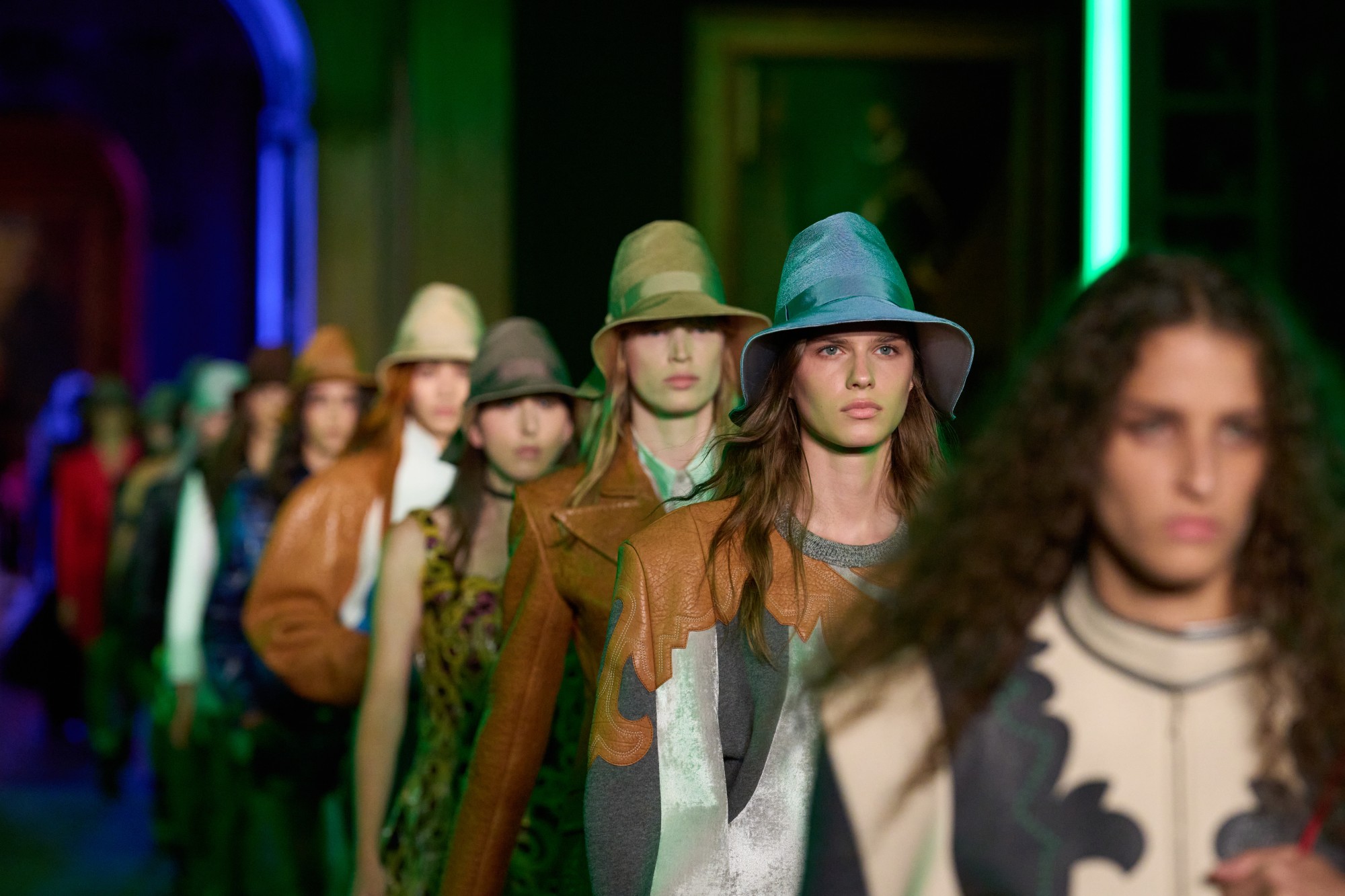
There are fashion shows, and then there are cultural moments that feel larger than clothing itself. The unveiling of the Louis Vuitton Cruise 2027 Collection was exactly that. Under the creative direction of Nicolas Ghesquière, Louis Vuitton delivered a collection that felt like a dialogue between worlds, between eras, between identities, and between two of the most influential cities in fashion history: Paris and New York.

Presented within the historic walls of The Frick Collection, the Cruise 2027 show explored the beautiful contradictions that define New York itself. Uptown and downtown. Past and future. Elegance and rebellion. The collection embraced the idea that New York has never been singular. It is a city built on layered identities, cultural collisions, and constant reinvention. Through Ghesquière’s lens, that complexity became luxury.
The setting itself carried emotional weight. The Frick Collection, known for its celebration of European decorative arts through an American perspective, became the perfect backdrop for a collection rooted in duality. Inside its storied salons, Louis Vuitton connected old-world sophistication with modern American energy. It was less about nostalgia and more about conversation. Fashion speaking to art. History speaking to the future.
At the center of the collection was movement, not just physical movement, but cultural movement. Travel has always been embedded within the DNA of Louis Vuitton, but Cruise 2027 approached travel differently. This was not simply a journey across geography. It was a voyage across identities, aesthetics, and timelines. American wardrobe staples like blue jeans, leather, and jersey fabrics were elevated through French craftsmanship and tailoring. Everyday American style was transformed into something cinematic.
The influence of New York’s pop culture legacy could be felt throughout the collection. Bright colors, exaggerated textures, intricate embellishments, and unexpected references created a wardrobe that felt both rebellious and refined. Slot machines, automobile-inspired detailing, graffiti-inspired embroidery, and echoes of Gilded Age glamour collided in ways that somehow felt completely natural. Ghesquière leaned directly into contradiction, proving once again that luxury today thrives when boundaries disappear.
One of the most compelling elements of the Cruise 2027 collection came through Louis Vuitton’s connection to legendary artist Keith Haring. Deep within the Louis Vuitton archives, the House rediscovered a 1930s leather suitcase that had been transformed into a canvas by Haring himself. That discovery became a foundational inspiration for the collection. Haring’s unmistakable artistic language appeared throughout clothing and accessories, turning garments into living canvases. The collaboration did not feel forced or commercialized. Instead, it honored the rebellious spirit and accessibility of pop art itself.
That balance between accessibility and exclusivity became one of the collection’s strongest themes. New York, as Ghesquière presented it, is universal. It is aspirational while still belonging to everyone. In many ways, Louis Vuitton occupies that same cultural space. Globally recognized, deeply influential, and rooted in storytelling, the brand understands how luxury can simultaneously exist within pop culture while still maintaining craftsmanship and prestige.
The silhouettes throughout Cruise 2027 reflected dynamic modern femininity. Structured tailoring met fluid movement. Sharp leather outerwear was softened by brilliant embroidery and textured finishes. Sequined details mimicked urban graffiti. Passementerie techniques traditionally associated with historic European fashion houses were reinvented with downtown New York attitude. Every piece carried tension between refinement and disruption.
The collection also spoke directly to the idea of American women and their influence on global fashion. Ghesquière framed them as liberated, energetic, and constantly evolving. There was power in the styling choices, but also realism. These were not fantasy garments disconnected from daily life. They were reflections of real wardrobes elevated through extraordinary workmanship.
What made Cruise 2027 especially compelling was how naturally all these references coexisted. Pop art sat comfortably beside grand European tradition. Street culture met museum elegance. Ghosts of old New York collided with futuristic silhouettes. Instead of choosing one narrative, Louis Vuitton embraced all of them simultaneously.
That may ultimately be the true message behind Cruise 2027. Luxury no longer belongs to a single world, aesthetic, or generation. It exists in the intersections. In the collision between heritage and modernity. Between art and commerce. Between Paris and New York.
And in the end, Nicolas Ghesquière reminded the fashion world that the most powerful collections are not just worn. They are experienced.
WATCH FULL SHOW BELOW: